

Executive Coaching for Senior Leaders in Toronto 2026
Toronto's competitive business landscape demands exceptional leadership at every level. Senior executives face mounting pressure to drive organizational performance, navigate complex stakeholder relationships, and build resilient teams capable of sustained innovation. Executive coaching for senior leaders in Toronto has evolved from a discretionary development tool into a strategic necessity for organizations pursuing measurable competitive advantage. The city's diverse economy, spanning financial services, technology, healthcare, and public administration, requires leaders who can operate across cultural contexts while maintaining alignment with organizational mandates and regulatory frameworks.
Why Toronto Senior Leaders Choose Executive Coaching
The unique demands of Toronto's business environment create specific leadership challenges that generic development programs cannot address. Senior leaders must balance stakeholder expectations across diverse constituencies while navigating rapid technological change and evolving workforce dynamics.
Strategic Performance Enhancement
Executive coaching delivers quantifiable improvements in decision-making velocity, strategic clarity, and organizational alignment. Toronto executives working with specialized coaches report significant gains in their ability to execute complex initiatives while maintaining team engagement and cultural health.
- Enhanced capacity to manage cross-functional initiatives
- Improved ability to navigate organizational politics
- Stronger skills in communicating strategic vision
- Better integration of diverse perspectives into decision frameworks
The most effective executive coaching for senior leaders in Toronto incorporates industry-specific expertise. A financial services executive faces fundamentally different challenges than a healthcare administrator or technology founder. Precision matching between leaders and coaches with relevant sector experience ensures interventions address real operational contexts rather than theoretical scenarios.

Addressing Toronto's Leadership Complexity
Toronto's position as Canada's commercial center creates unique leadership demands. Senior executives operate within intricate regulatory environments while managing teams that reflect the city's exceptional cultural diversity. These realities require coaching approaches grounded in evidence-based diagnostics and tailored intervention strategies.
| Leadership Challenge | Coaching Intervention | Measurable Outcome |
|---|---|---|
| Cross-cultural team dynamics | Adaptive communication frameworks | Engagement scores, retention rates |
| Regulatory compliance pressure | Decision-making protocols | Audit results, risk metrics |
| Stakeholder alignment | Strategic communication planning | Initiative adoption rates |
| Innovation barriers | Psychological safety building | Idea generation, implementation speed |
Evidence-Based Approaches to Executive Development
The distinction between effective and ineffective executive coaching lies in methodological rigor. Senior leaders in Toronto increasingly demand coaching programs built on validated assessment tools, clear success metrics, and accountability structures that demonstrate return on investment.
Diagnostic Precision
Advanced leadership assessments identify specific behavioral patterns, cognitive tendencies, and interpersonal dynamics that either accelerate or impede executive effectiveness. These diagnostics move beyond personality profiling to examine how leaders process information, make decisions under pressure, and build organizational capability.
Toronto executives benefit from assessments that consider both universal leadership competencies and context-specific requirements. A senior leader in government administration requires different capabilities than a private sector executive, even when facing similar challenges around team performance or change management.
Intervention Customization
Generic leadership development fails because it ignores the specific operational realities each executive faces. Executive coaching for senior leaders in Toronto succeeds when interventions address actual challenges within the leader's day-to-day environment.
Customized coaching plans address:
- Immediate performance gaps requiring rapid behavioral adjustment
- Strategic capability building for future organizational demands
- Relationship dynamics impacting team effectiveness
- Personal resilience factors affecting sustained performance
The most sophisticated programs integrate coaching with the leader's ongoing responsibilities rather than treating development as separate from operational execution. This integration ensures that skill-building occurs within authentic decision-making contexts where stakes are real and feedback is immediate.
Selecting the Right Executive Coach in Toronto
The executive coaching market in Toronto offers numerous options, but quality varies dramatically. Senior leaders must evaluate potential coaches based on demonstrated expertise, relevant experience, and methodological soundness rather than marketing claims or superficial credentials.
Critical Selection Criteria
Industry Experience: Coaches who have operated in your sector understand the specific pressures, stakeholder dynamics, and strategic imperatives you face. This contextual knowledge accelerates the coaching relationship and ensures interventions translate directly to improved performance.
Evidence-Based Methodology: Effective coaches employ validated assessment tools, structured development frameworks, and clear measurement systems. Avoid coaches who rely primarily on intuition or anecdotal approaches without systematic methods for tracking progress.
Cultural Competence: Toronto's diversity requires coaches who can work effectively across cultural contexts. This goes beyond surface-level awareness to deep understanding of how cultural frameworks shape leadership expectations, communication patterns, and decision-making processes.
Confidentiality and Ethics: Senior executive coaching often involves sensitive organizational information and personal vulnerabilities. Coaches must maintain rigorous confidentiality standards and operate within clear ethical boundaries.

The Matching Algorithm Advantage
Manual coach selection often fails because it relies on limited information and subjective impressions. Sophisticated executive coaching packages employ matching algorithms that consider multiple variables simultaneously: leadership assessment results, specific development objectives, industry context, learning preferences, and coach specializations.
This data-driven matching process significantly increases the probability of productive coaching relationships. When senior leaders work with optimally matched coaches, they experience faster progress, deeper engagement, and more sustainable behavioral change.
Addressing Toxic Leadership Patterns
One of the most critical applications of executive coaching for senior leaders in Toronto involves identifying and transforming toxic leadership behaviors. These patterns, whether rooted in individual psychology or organizational culture, create measurable damage through reduced engagement, increased turnover, and diminished innovation.
Recognition and Intervention
Toxic leadership manifests in various forms: micromanagement that stifles autonomy, inconsistent decision-making that creates uncertainty, failure to provide recognition, or communication patterns that undermine psychological safety. The first step in addressing these patterns is accurate diagnosis through multi-source feedback and behavioral assessment.
Executive coaching interventions for toxic patterns require:
- Structured accountability systems to monitor behavioral change
- Alternative behavior frameworks that accomplish the same objectives through healthier approaches
- Organizational context assessment to identify systemic enablers of toxic behavior
- Stakeholder communication strategies to rebuild damaged relationships
The most challenging aspect of addressing toxic leadership is the leader's own awareness and willingness to change. Effective coaches create sufficient psychological safety for honest self-examination while maintaining clear expectations for behavioral adjustment.
Scalable Leadership Development Programs
Organizations with multiple senior leaders require coaching solutions that deliver consistent quality while accommodating individual needs. Executive coaching for senior leaders in Toronto increasingly involves cohort-based approaches that combine individual coaching with peer learning and organizational alignment.
Organizational Integration
Successful large-scale programs align individual leader development with institutional priorities. This integration ensures that as executives enhance their capabilities, the organization simultaneously builds stronger cultural patterns and operational effectiveness.
| Program Component | Individual Benefit | Organizational Benefit |
|---|---|---|
| Leadership diagnostics | Personal insight | Talent mapping |
| One-on-one coaching | Skill development | Performance improvement |
| Peer learning cohorts | Perspective expansion | Knowledge sharing |
| Action learning projects | Application practice | Strategic initiative advancement |
| Progress measurement | Accountability | ROI demonstration |
Organizations ranging from government agencies to Fortune 500 companies implement these integrated programs to drive systemic leadership improvement. The combination of individual attention and collective development creates multiplier effects that exceed the sum of isolated interventions.
Cost Considerations and ROI
Understanding how much business coaching costs helps organizations budget appropriately for executive development. While premium executive coaching represents significant investment, the return typically manifests through improved decision quality, reduced turnover among high performers, faster strategic execution, and enhanced organizational culture.
Toronto organizations calculate ROI by measuring:
- Performance metrics directly tied to coached leaders
- Team engagement scores in units led by coached executives
- Strategic initiative completion rates and quality
- Retention rates among high-potential talent
- Cultural health indicators across the organization
Government and Public Sector Applications
Public sector organizations in Toronto face distinct leadership challenges that require specialized coaching approaches. Government executives must balance political accountability, public scrutiny, regulatory constraints, and mission-driven mandates while managing complex stakeholder relationships.
Mission-Aligned Development
Executive coaching for senior leaders in Toronto's public sector focuses on enhancing capabilities while maintaining alignment with institutional values and public service principles. Coaches working with government leaders must understand parliamentary systems, accountability frameworks, and the unique pressures of public administration.
Effective public sector coaching addresses:
- Decision-making under political pressure while maintaining professional integrity
- Stakeholder management across elected officials, public constituents, and internal teams
- Change leadership within bureaucratic structures resistant to transformation
- Media relations and public communication during crisis situations
- Ethical leadership in environments where standards exceed private sector expectations
Government agencies increasingly recognize that leadership development coaching represents essential infrastructure for mission accomplishment rather than discretionary spending. Well-developed leaders drive better policy implementation, higher team morale, and improved public service delivery.
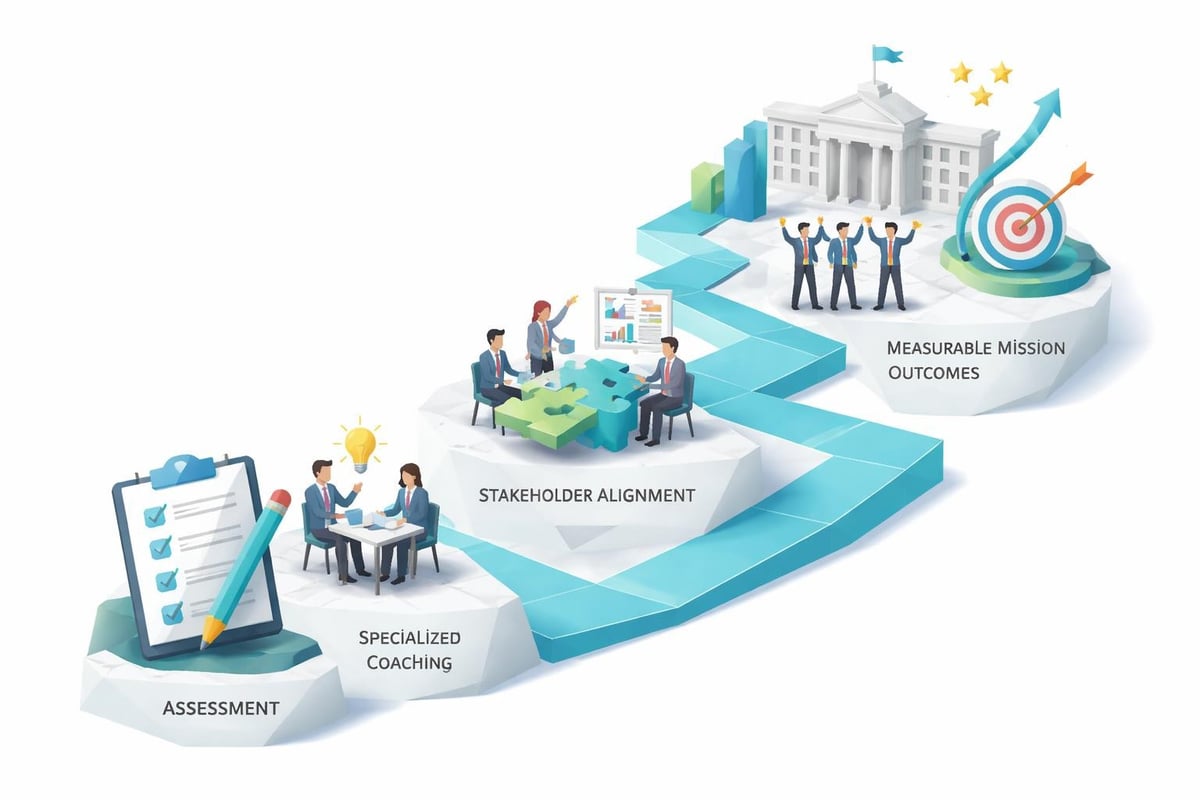
Fortune 500 Executive Coaching Programs
Large corporations operating in Toronto require executive coaching solutions that accommodate scale while delivering personalized attention to senior leaders. These organizations typically implement structured programs combining assessment rigor, coach quality control, and measurement systems that demonstrate business impact.
High-Touch Intervention Design
Fortune 500 companies invest in executive coaching because they recognize leadership quality as a primary driver of competitive advantage. These organizations demand coaching programs that integrate with existing talent management systems while providing specialized interventions for their most critical roles.
Premium corporate programs include:
- Comprehensive 360-degree assessments capturing feedback from multiple stakeholder groups
- Psychometric evaluations revealing cognitive patterns and behavioral tendencies
- Strategic coach matching based on executive level, industry context, and development needs
- Structured development plans with clear milestones and accountability checkpoints
- Progress tracking systems integrated with HR technology platforms
Organizations comparing different providers often evaluate options like Torch coaching versus Noomii coaching to determine which platform offers superior matching algorithms, coach quality, and measurement capabilities for their specific needs.
Building Resilient Leadership Culture
The most strategic application of executive coaching for senior leaders in Toronto involves using individual development as a catalyst for broader cultural transformation. When multiple senior leaders simultaneously enhance their capabilities through coordinated coaching, the organization experiences systemic shifts in how decisions are made, how teams collaborate, and how innovation is pursued.
This cultural impact requires intentional program design that connects individual coaching to organizational priorities. Coaches and internal HR leaders collaborate to ensure development themes align with strategic imperatives while respecting each executive's unique growth trajectory.
Emerging Trends in Executive Development
The executive coaching field continues to evolve through technological advancement, research insights, and changing organizational needs. Toronto senior leaders benefit from staying informed about emerging approaches that enhance coaching effectiveness.
Technology-Enhanced Coaching
While the core coaching relationship remains fundamentally human, technology now augments the development process through several mechanisms. Digital platforms enable more frequent touchpoints between formal sessions, assessment tools provide richer behavioral data, and analytics systems track progress with greater precision.
Forward-thinking organizations explore best AI for business coaching to supplement human coaching rather than replace it. Artificial intelligence tools can analyze communication patterns, provide practice scenarios, and offer between-session support while human coaches provide strategic guidance, emotional intelligence, and accountability.
Neuroscience-Informed Approaches
Recent neuroscience research illuminates how leaders actually change behavioral patterns and develop new capabilities. Executive coaching for senior leaders in Toronto increasingly incorporates insights about habit formation, stress response, decision-making under pressure, and cognitive flexibility.
These neuroscience-informed approaches help executives:
- Understand the neurological basis of their default behavioral patterns
- Design interventions that work with rather than against brain function
- Build sustainable habits through proper repetition and reinforcement
- Manage stress responses that undermine executive effectiveness
- Enhance cognitive capacity for complex strategic thinking
Measuring Coaching Impact
Accountability for development investment requires clear measurement systems that demonstrate coaching effectiveness. Toronto organizations implement various metrics to evaluate whether executive coaching delivers promised results and justifies continued investment.
Quantitative Metrics
Hard metrics provide objective evidence of coaching impact:
- Performance ratings before and after coaching engagement
- 360-degree feedback scores showing stakeholder perception changes
- Team engagement surveys measuring improvements in units led by coached executives
- Strategic objective completion rates for initiatives led by developed leaders
- Retention statistics for high-potential talent reporting to coached leaders
Qualitative Indicators
Numerical metrics tell only part of the story. Qualitative assessment captures nuanced improvements in leadership effectiveness:
- Behavioral observations from direct reports and peers
- Decision-making quality evaluated through case review
- Stakeholder relationship strength assessed through structured interviews
- Strategic thinking capability demonstrated in planning processes
- Cultural contribution measured through values alignment
Organizations implementing comprehensive measurement systems can confidently invest in executive coaching for senior leaders in Toronto because they possess clear evidence of return on investment and organizational impact.
Building Accountability Systems
The difference between coaching that produces lasting change and coaching that generates temporary enthusiasm lies in accountability structure. Senior leaders require systems that sustain focus and reinforce new behaviors long after formal coaching engagements conclude.
Structured Accountability Elements
Effective accountability systems incorporate multiple components:
- Clear development objectives established at program outset
- Regular progress reviews with coach and organizational stakeholders
- Behavioral commitments with specific actions and timelines
- Feedback mechanisms providing real-time performance data
- Consequence frameworks linking development to advancement and compensation
External accountability resources like AccountabilityNow provide additional structure for executives committed to sustained behavioral change. These systems complement internal organizational accountability while offering confidential support for personal development goals.
Sustaining Development Momentum
Executive coaching engagements typically span six to twelve months, but leadership development represents a career-long journey. The most successful programs build capability for ongoing self-directed development that continues after formal coaching concludes.
Leaders sustain momentum through:
- Peer coaching relationships with other developed executives
- Structured reflection practices that promote continuous learning
- Regular feedback solicitation from stakeholder groups
- Personal development plans that evolve with changing responsibilities
- Professional networks that provide ongoing challenge and support
Strategic Investment in Leadership Excellence
Organizations competing in Toronto's dynamic business environment cannot afford leadership mediocrity. Executive coaching for senior leaders in Toronto represents strategic investment in the capabilities that drive organizational performance, cultural health, and sustainable competitive advantage.
The most successful organizations approach executive development systematically rather than reactively. Instead of waiting for leadership failures to manifest, they proactively build capability across their senior team through evidence-based coaching interventions.
This strategic approach delivers measurable returns through enhanced decision quality, improved team performance, stronger stakeholder relationships, and resilient organizational culture capable of navigating complexity and change.
Toronto senior leaders face unprecedented complexity requiring exceptional capabilities across strategic thinking, stakeholder management, and team development. Organizations that invest in evidence-based executive coaching programs position themselves for sustained competitive advantage through enhanced leadership quality at every level. The Noomii Leadership Coaching program delivers precision-matched coaching solutions backed by advanced diagnostics, proven methodologies, and rigorous measurement systems designed specifically for Fortune 500 companies and government agencies pursuing measurable leadership transformation.



Leave a Reply
Want to join the discussion?Feel free to contribute!