Executive Team Leadership Training in Cologne (2026)
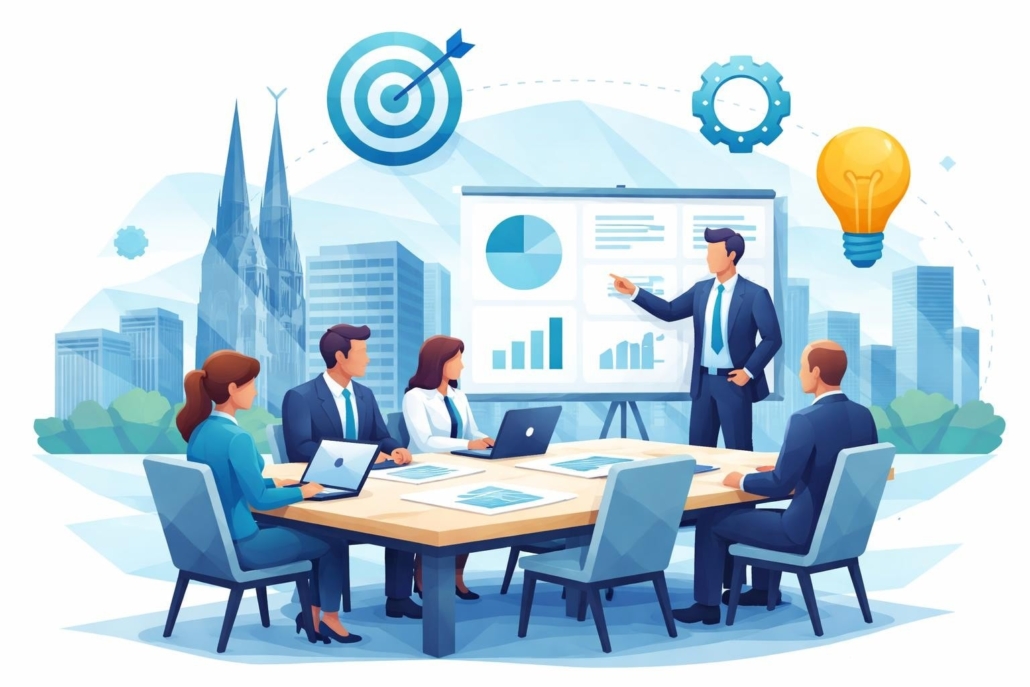
Cologne's position as one of Germany's premier business hubs demands leadership excellence at every organizational level. As companies navigate digital transformation, regulatory complexities, and evolving workforce expectations in 2026, executive team leadership training in Cologne has become critical infrastructure rather than an optional benefit. Organizations that invest in strategic leadership development consistently outperform competitors in retention, innovation, and market adaptation.
Why Cologne Organizations Prioritize Executive Leadership Development
The Rhineland metropolitan region hosts thousands of multinational corporations, mid-sized enterprises, and government agencies requiring sophisticated leadership capabilities. Executive team leadership training in Cologne addresses unique regional challenges including cross-cultural team management, EU compliance requirements, and the integration of hybrid work models that have redefined organizational structures.
Cologne-based organizations face distinct pressures. The city's diverse economic sectors ranging from media and technology to logistics and manufacturing demand leaders who can navigate industry-specific challenges while maintaining cohesive team cultures. Traditional management training no longer suffices when executives must simultaneously drive digital adoption, maintain psychological safety, and deliver measurable business outcomes.
The Business Case for Structured Leadership Interventions
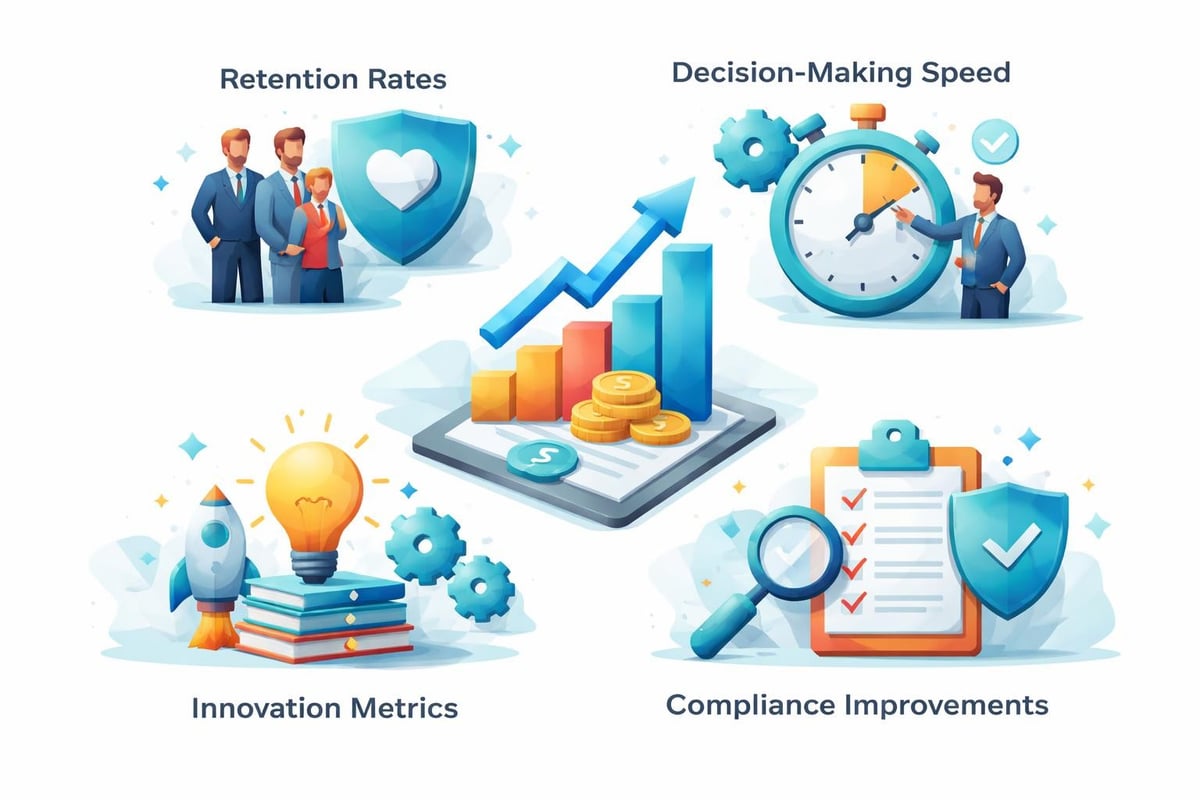
Evidence demonstrates that organizations investing in comprehensive leadership training programs achieve quantifiable improvements across multiple performance indicators:
- Employee retention rates increase by 25-40% when leaders demonstrate competency in emotional intelligence and strategic communication
- Decision-making speed improves by 30% among teams led by executives trained in collaborative frameworks
- Innovation metrics rise significantly when leadership creates psychologically safe environments for experimentation
- Compliance incidents decrease as trained executives better understand governance frameworks and ethical decision-making
These outcomes matter particularly in Cologne's competitive talent market. With unemployment rates near historic lows across skilled sectors, organizations cannot afford leadership failures that drive top performers to competitors. Executive team leadership training in Cologne provides systematic approaches to developing the capabilities that retention and engagement depend upon.
Core Components of Effective Executive Team Programs
The most impactful executive team leadership training in Cologne integrates multiple development methodologies rather than relying on single-dimension approaches. Modern leadership development frameworks emphasize personalization, measurement, and alignment with organizational strategy.
Evidence-Based Assessment and Diagnostics
Effective programs begin with comprehensive evaluation of current leadership capabilities and organizational needs. This diagnostic phase identifies specific behavioral patterns, communication gaps, and strategic blind spots that undermine team performance. Validated assessment tools measure competencies across domains including:
| Assessment Area | Focus | Organizational Impact |
|---|---|---|
| Strategic Thinking | Long-term planning, market analysis, resource allocation | Improved competitive positioning |
| Emotional Intelligence | Self-awareness, empathy, relationship management | Enhanced team cohesion and trust |
| Communication Effectiveness | Clarity, listening, feedback delivery | Reduced misunderstandings and conflicts |
| Change Leadership | Adaptability, resilience, transformation management | Smoother organizational transitions |
| Ethical Decision-Making | Values alignment, integrity, compliance awareness | Stronger governance and risk mitigation |
Assessment data provides the foundation for targeted interventions rather than generic training modules. When organizations understand precisely where leadership gaps exist, they can allocate development resources with surgical precision.
Precision Matching with Specialized Coaches
Generic coaching assignments produce mediocre results. Executive team leadership training in Cologne achieves breakthrough outcomes when organizations match leaders with coaches possessing relevant industry expertise and specialized skill sets. A financial services executive navigating regulatory transformation requires fundamentally different coaching than a manufacturing leader implementing Industry 4.0 technologies.
The Noomii coaching platform demonstrates how proprietary matching algorithms consider dozens of variables including industry background, leadership challenges, personality dynamics, and developmental goals. This precision approach ensures executives work with coaches who understand their specific context and can provide immediately applicable guidance.
Specialized coaching addresses challenges ranging from toxic leadership patterns to executive presence development. Coaches with sector-specific experience accelerate development because they recognize industry nuances that generalist trainers miss entirely.
Implementation Models for Cologne Organizations
Executive team leadership training in Cologne takes multiple forms depending on organizational size, budget constraints, and development urgency. The most effective implementations share common characteristics regardless of specific delivery models.
Customized Intervention Design
Off-the-shelf leadership programs rarely address the unique challenges facing specific organizations. Tailored leadership training in Cologne incorporates organizational culture, strategic priorities, and existing development frameworks into program design.
Customization begins with stakeholder interviews that surface critical issues invisible in standard assessments. HR leaders, C-suite executives, and high-potential managers provide perspectives that shape intervention strategies. This collaborative design process ensures training addresses actual organizational needs rather than theoretical best practices disconnected from operational realities.
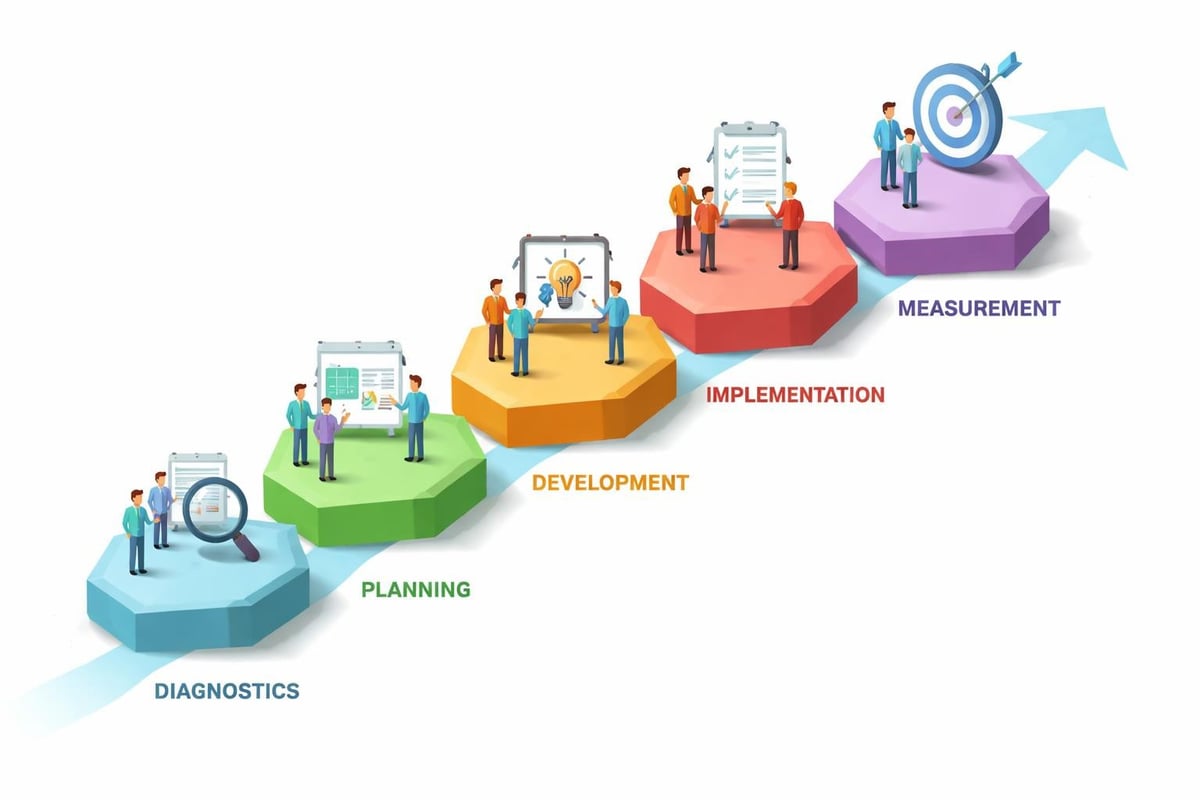
Implementation timelines vary based on complexity and scope:
- Initial diagnostic phase (2-4 weeks): Comprehensive assessment, stakeholder interviews, data analysis
- Program design and coach matching (1-2 weeks): Curriculum development, coach selection, logistics planning
- Active coaching engagement (3-6 months): Regular sessions, skill practice, feedback integration
- Measurement and refinement (ongoing): KPI tracking, program adjustments, impact assessment
This structured approach ensures executive team leadership training in Cologne delivers measurable results rather than merely checking compliance boxes.
Hybrid Learning Architectures
The most sophisticated programs combine multiple learning modalities to accommodate diverse learning styles and scheduling constraints. Cologne executives benefit from practice-oriented training programs that integrate theoretical frameworks with immediate workplace application.
Effective hybrid models include:
- One-on-one executive coaching sessions providing personalized guidance and confidential space for addressing sensitive leadership challenges
- Team-based workshops building collective capabilities and strengthening inter-executive collaboration
- Peer learning cohorts enabling executives to share experiences and solutions across organizational boundaries
- Digital learning modules delivering foundational content flexibly while reserving live sessions for complex skill development
- Action learning projects ensuring executives apply new capabilities to real organizational challenges
This architectural diversity prevents the monotony that undermines engagement in single-format programs. Executives remain motivated when learning experiences vary in format, intensity, and application focus.
Measuring Impact and Demonstrating ROI
Executive team leadership training in Cologne must demonstrate tangible organizational value. Forward-thinking organizations establish clear measurement frameworks before programs launch rather than attempting retrospective impact assessment.
Key Performance Indicators for Leadership Development
Sophisticated measurement strategies track both leading indicators (behavioral changes, skill acquisition) and lagging indicators (business outcomes, cultural metrics). Organizations should monitor multiple data streams:
Individual Leadership Metrics:
- 360-degree feedback score improvements across competency dimensions
- Goal achievement rates for development objectives
- Behavioral change observations from direct reports and peers
- Self-assessment progress on targeted capabilities
Team Performance Indicators:
- Employee engagement scores within teams led by program participants
- Retention rates of high-potential team members
- Project delivery timelines and quality metrics
- Cross-functional collaboration effectiveness measures
Organizational Impact Measures:
- Leadership pipeline strength and succession readiness
- Culture health indicators including psychological safety scores
- Innovation metrics such as new initiative launches and adoption rates
- Compliance incident frequency and severity
| Metric Category | Measurement Timeframe | Expected Improvement |
|---|---|---|
| Individual Competency | 3-6 months | 20-35% score increase |
| Team Engagement | 6-12 months | 15-25% improvement |
| Retention Rates | 12-18 months | 10-20% reduction in turnover |
| Innovation Output | 12-24 months | 30-50% increase in initiatives |
The executive leadership coaching approach emphasizes continuous measurement rather than single-point evaluation. Regular data collection enables program refinement and ensures interventions remain aligned with evolving organizational priorities.
Addressing Common Implementation Challenges
Organizations embarking on executive team leadership training in Cologne encounter predictable obstacles that derail programs without proper mitigation strategies. Understanding these challenges enables proactive solutions rather than reactive crisis management.
Time Constraints and Competing Priorities
Cologne executives consistently cite scheduling conflicts as the primary barrier to development participation. Organizations overcome this challenge by integrating leadership development into existing workflows rather than treating it as separate activity.
Successful programs embed coaching conversations into regular business reviews, link development goals directly to strategic initiatives, and demonstrate immediate performance improvements that justify time investment. When executives recognize training as performance enhancement rather than time drain, participation resistance evaporates.
Resistance to Behavioral Change
Senior leaders sometimes resist feedback suggesting their established approaches require modification. This resistance intensifies when leaders have achieved career success through methods now identified as problematic. Executive coaching packages designed for senior audiences acknowledge past success while creating compelling cases for capability evolution.
Effective coaches frame development as expansion rather than remediation. The message becomes "your proven skills need supplementation for new challenges" rather than "your current approach is insufficient." This reframing preserves executive ego while enabling genuine growth.
Cultural and Language Considerations
Executive team leadership training in Cologne often involves international executives operating in multilingual, multicultural environments. Programs must accommodate diverse communication preferences, cultural norms around authority and feedback, and varying expectations about professional development.
Culturally intelligent coaching recognizes that effective leadership behaviors vary across national and organizational cultures. What constitutes decisive leadership in one context may appear autocratic in another. The top executive coaches in Germany understand these nuances and help leaders develop adaptive capabilities rather than prescriptive behaviors.

Technology-Enabled Development Acceleration
Digital platforms transform executive team leadership training in Cologne by enabling capabilities impossible in traditional formats. Organizations leveraging technology appropriately achieve faster development cycles and deeper impact than those relying exclusively on analog methods.
Data-Driven Coaching Precision
Advanced platforms analyze communication patterns, decision-making tendencies, and behavioral consistency across contexts. This data provides coaches with objective evidence supplementing subjective observations and self-reports. Executives receive specific, actionable feedback grounded in measurable patterns rather than general impressions.
Technology also enables longitudinal tracking showing capability development across months and years. Visual dashboards displaying progress against development goals maintain executive motivation and demonstrate program value to organizational stakeholders. When leadership coaching services incorporate robust analytics, organizations gain unprecedented visibility into development trajectories.
Virtual Collaboration Tools
Cologne's international business environment requires executives to lead distributed teams across time zones and geographies. Executive team leadership training in Cologne increasingly incorporates virtual leadership capabilities as core competencies rather than supplementary skills.
Programs teach executives to build team cohesion through digital channels, facilitate productive virtual meetings, and maintain psychological safety in remote environments. These skills prove essential as hybrid work models become permanent features of organizational life rather than temporary pandemic responses.
Integration with Organizational Development Initiatives
Isolated leadership training rarely produces lasting organizational impact. Executive team leadership training in Cologne achieves maximum effectiveness when integrated with broader talent management, succession planning, and culture transformation initiatives.
Alignment with Strategic Objectives
The most successful programs establish direct connections between leadership capabilities and organizational strategy. If customer experience improvement represents a strategic priority, leadership training emphasizes capabilities enabling executives to champion customer-centric cultures. If digital transformation drives strategic planning, programs develop executives' abilities to lead technological change.
This strategic alignment ensures development investments support business objectives rather than existing as disconnected HR activities. When executives understand how their development contributes to organizational success, engagement and application intensity increase dramatically.
Succession Pipeline Strengthening
Executive team leadership training in Cologne provides critical preparation for succession transitions. Organizations use structured development programs to evaluate executive readiness for expanded responsibilities while simultaneously building capabilities required at next career levels.
Succession-focused programs identify high-potential leaders early, provide stretch assignments that develop strategic thinking, and create mentoring relationships connecting emerging leaders with experienced executives. This systematic approach prevents succession crises when key leaders depart unexpectedly.
Selecting the Right Development Partner
Organizations considering executive team leadership training in Cologne face numerous provider options ranging from boutique consultancies to global training corporations. Management and leadership training providers in Cologne offer varying approaches, expertise levels, and service models.
Critical selection criteria include:
- Industry-specific expertise relevant to organizational challenges and market dynamics
- Proven measurement capabilities demonstrating program impact through objective data
- Coach quality and credifications ensuring participants work with genuinely qualified professionals
- Customization flexibility enabling program adaptation to unique organizational needs
- Scalability supporting development from small leadership teams to enterprise-wide initiatives
- Cultural competence particularly important for international organizations operating in Cologne
Organizations should request detailed case studies, interview potential coaches directly, and verify provider claims through reference checks with similar clients. The investment in thorough provider evaluation pays dividends through superior program outcomes and avoided implementation failures.
The Noomii Advantage for Cologne Organizations
Noomii's Corporate Leadership Program addresses the complete spectrum of executive development needs through integrated solutions combining assessment, matching, coaching, and measurement. The platform's global network includes certified coaches specializing in European business contexts who understand Cologne's unique market dynamics.
Noomii's proprietary matching algorithm considers dozens of variables ensuring executives connect with coaches possessing relevant industry backgrounds, leadership specializations, and cultural competencies. This precision eliminates the trial-and-error approach plaguing traditional coaching arrangements where compatibility issues undermine effectiveness.
The platform's measurement infrastructure tracks leadership development through defined KPIs, enabling organizations to demonstrate ROI with precision rather than anecdotal evidence. This data transparency proves essential for securing ongoing development budgets and building organizational confidence in coaching investments. Organizations can also implement accountability frameworks to ensure coaching commitments translate into sustained behavioral change.
Future Directions in Executive Leadership Development
Executive team leadership training in Cologne continues evolving as organizations confront emerging challenges and technologies enable new development approaches. Forward-thinking organizations prepare leaders for future demands rather than merely addressing current gaps.
Artificial Intelligence and Leadership
The integration of AI into business operations transforms leadership requirements fundamentally. Executives must understand technology capabilities, ethical implications, and organizational change processes associated with AI adoption. Leadership programs increasingly incorporate AI literacy, human-machine collaboration frameworks, and algorithmic decision-making oversight.
Leaders also require capabilities for managing workforces experiencing AI-driven role transformations. Supporting employees through technological disruption while maintaining engagement demands sophisticated change leadership and empathetic communication.
Sustainability and Stakeholder Capitalism
Cologne organizations face mounting pressure to demonstrate environmental responsibility and stakeholder value creation beyond shareholder returns. Executive team leadership training in Cologne increasingly emphasizes sustainable business practices, ESG reporting competencies, and stakeholder management across diverse constituencies.
Leaders learn to balance competing stakeholder interests, communicate sustainability commitments credibly, and embed environmental considerations into strategic planning. These capabilities prove essential as regulatory requirements tighten and stakeholder expectations intensify.
Continuous Learning Cultures
The accelerating pace of business change makes one-time leadership development insufficient. Organizations build continuous learning cultures where development becomes ongoing practice rather than periodic event. This cultural transformation requires executives who model learning behaviors, create psychologically safe environments enabling experimentation, and allocate resources supporting perpetual capability building.
Executive team leadership training in Cologne evolves from fixed-duration programs into continuous development journeys with evolving objectives, changing coach relationships, and adaptive learning modalities. This shift requires different program architectures and measurement approaches than traditional models provide.
Executive team leadership training in Cologne represents strategic investment in organizational capability rather than discretionary spending on professional development. As business complexity intensifies and talent competition escalates, organizations require systematic approaches to building leadership excellence. The Noomii Leadership Coaching platform delivers precision-matched coaching, evidence-based diagnostics, and measurable impact that transforms individual executives and entire organizational cultures, positioning Cologne businesses for sustained success in increasingly demanding markets.



Leave a Reply
Want to join the discussion?Feel free to contribute!