
Marketing for Coaching Business: Strategic Growth Guide
Marketing for coaching business success requires a fundamentally different approach than traditional consulting or software services. Corporate coaching, particularly for mid-market companies, demands strategies that demonstrate tangible ROI, build trust with decision-makers, and differentiate your practice from competitors who focus on theory over results. In 2026, executives expect coaching partners who understand their business challenges and can prove measurable impact through clear KPIs and accountability frameworks.
Building a Foundation for Corporate Coaching Marketing
The cornerstone of effective marketing for coaching business growth starts with positioning. Mid-market companies with 25 to 500 employees face unique challenges that Fortune 500 enterprises and startups do not. These organizations need leadership development that scales without the bureaucracy of large enterprise programs.
Your marketing message must address specific pain points:
- Decision paralysis caused by unclear accountability
- Manager ineffectiveness when leading teams through change
- Communication breakdowns between departments
- Low engagement and retention among high performers
- Execution gaps between strategy and results
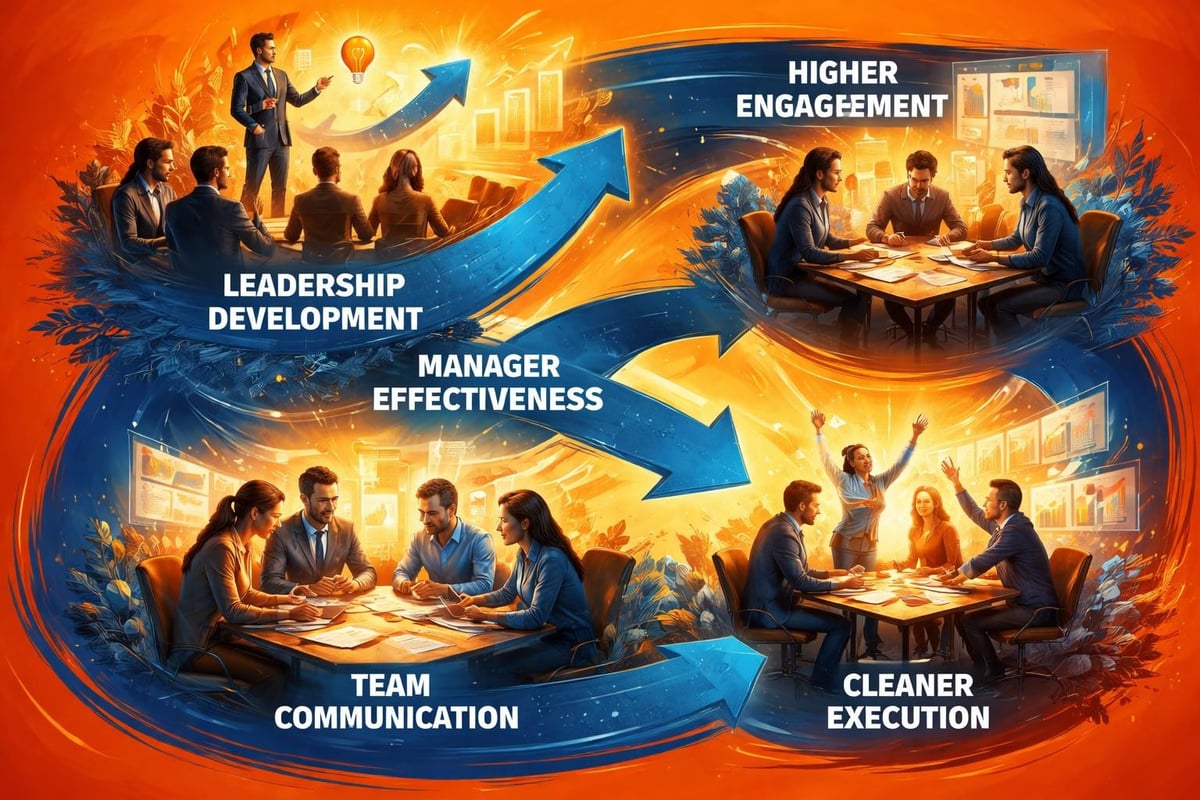
Traditional coaching marketing often emphasizes credentials and methodology. However, corporate buyers care more about outcomes than certifications. Shift your messaging to highlight faster decisions, stronger execution, and measurable business results rather than coaching philosophy.
Content Strategy That Demonstrates Expertise
Digital marketing strategies for executive coaching firms emphasize the importance of showcasing real-world expertise. Create content that proves you understand the operational challenges your prospects face daily.
Develop case studies that include:
- Initial business challenge with specific metrics
- Coaching intervention describing your approach
- Measurable outcomes tied to KPIs
- Time to results showing quick wins and sustained improvement
- Client testimonials from decision-makers
Blog content should address tactical questions executives search for, such as improving team accountability, building psychological safety in teams, or implementing effective operating cadences. Each article demonstrates your practical knowledge while naturally incorporating your coaching methodology.
Leveraging Digital Channels for Client Acquisition
Marketing for coaching business growth in the digital age requires strategic channel selection. Not every platform delivers equal results for corporate coaching services.
| Channel | Best For | Key Metric | Time to ROI |
|---|---|---|---|
| Executive decision-makers | Engagement rate | 3-6 months | |
| SEO Content | Organic discovery | Qualified traffic | 6-12 months |
| Email Campaigns | Nurturing warm leads | Open and click rates | 1-3 months |
| Speaking Events | Authority building | Qualified conversations | 1-2 months |
LinkedIn remains the primary platform for B2B coaching services. Focus on thought leadership rather than promotional posts. Share insights from coaching engagements (anonymized), comment meaningfully on industry challenges, and engage with potential clients' content before pitching services.
Search engine optimization drives consistent, qualified traffic. Target keywords that indicate buying intent: "executive coaching for mid-market companies," "leadership development programs," or "team performance coaching." According to proven marketing strategies for coaching businesses, SEO combined with valuable content creates compounding returns over time.
Email marketing works when you provide genuine value. Send monthly insights on leadership challenges, share relevant case studies, or offer frameworks executives can implement immediately. The goal is staying top-of-mind when coaching needs arise, not aggressive selling.
Differentiation Through Delivery Model
Most marketing for coaching business focuses on what you do. Stand out by emphasizing how you deliver results differently. Corporate buyers have experienced coaching that sounds impressive but delivers minimal business impact.
Highlight your unique delivery approach:
- Live coaching in client meetings versus theoretical workshops
- Month-to-month terms instead of locked annual contracts
- KPI-driven progress tracking rather than subjective assessments
- Aligned incentive options that share risk and reward
- Rapid deployment with results visible in weeks, not quarters
This operational differentiation becomes your marketing advantage. When prospects compare coaching options, delivery model often matters more than price. Businesses appreciate accountability systems that tie coaching to measurable outcomes.

Conversion-Focused Marketing Tactics
Generating awareness means nothing without converting prospects into clients. Digital mastery strategies for coaching business growth emphasize the importance of clear conversion pathways.
Create multiple entry points for different buyer stages:
- Discovery calls for executives exploring options
- Leadership assessments providing immediate value
- Pilot programs reducing perceived risk
- Workshop sessions demonstrating your approach
- ROI calculators quantifying potential impact
Landing pages should address specific challenges rather than generic coaching services. A page targeting "sales team performance coaching" converts better than one promoting general "business coaching." Each page should include clear outcomes, relevant case studies, and a single call-to-action.
Building Authority Through Strategic Partnerships
Marketing for coaching business success accelerates through strategic alliances. Partner with complementary service providers who serve your target market.
HR consulting firms often identify coaching needs but lack delivery capabilities. Management consultants design strategies that require leadership development to execute. Private equity firms need coaching for portfolio company executives during transitions.
These partnerships provide warm introductions to qualified prospects. The referring partner adds credibility since they're endorsing your services. Structure partnerships with clear referral processes and mutual value exchange.
Professional directories like Noomii connect coaches with clients actively seeking services. Maintaining an updated profile with specific expertise areas, client outcomes, and transparent pricing helps prospects find you when they're ready to engage.

Measuring Marketing Effectiveness
Corporate coaching marketing requires the same accountability you bring to client engagements. Track metrics that indicate business development health.
Leading indicators predict future revenue:
- Website traffic from target segments
- LinkedIn profile views from decision-makers
- Discovery call conversion rate
- Email engagement from prospects
- Content downloads and assessment completions
Lagging indicators measure actual results:
- New client acquisition cost
- Average contract value
- Client lifetime value
- Referral rate from existing clients
- Time from first contact to signed agreement
Analyze which marketing activities generate the highest-quality leads. A single speaking engagement at an industry conference might produce more qualified prospects than six months of social media posts. Invest resources accordingly.
Effective marketing for coaching business growth combines strategic positioning, valuable content, and conversion-focused tactics that resonate with corporate decision-makers. The most successful coaches differentiate through delivery models that prove results quickly and tie progress to measurable business outcomes. If you're ready to build accountable leaders and teams with coaching that delivers visible ROI, explore how Noomii connects mid-market companies with practical corporate coaching focused on faster decisions, stronger communication, and cleaner execution across priorities.



Leave a Reply
Want to join the discussion?Feel free to contribute!