
Leadership Coaching for High-Potential Employees Melbourne
Melbourne's competitive business landscape demands a new approach to developing future leaders. Organizations that invest in leadership coaching for high-potential employees in Melbourne gain a decisive advantage in retaining top talent, accelerating succession planning, and building resilient executive pipelines. High-potential employees represent the future of your organization, yet without strategic development interventions, their potential remains untapped or worse, they take their talents elsewhere. Structured coaching programs transform promising professionals into confident, strategic leaders who drive measurable business outcomes while strengthening organizational culture and performance.
Identifying High-Potential Employees Who Warrant Investment
The foundation of effective leadership coaching for high-potential employees in Melbourne begins with precise identification. Organizations often confuse high performers with high-potential talent, yet these categories require different development approaches.
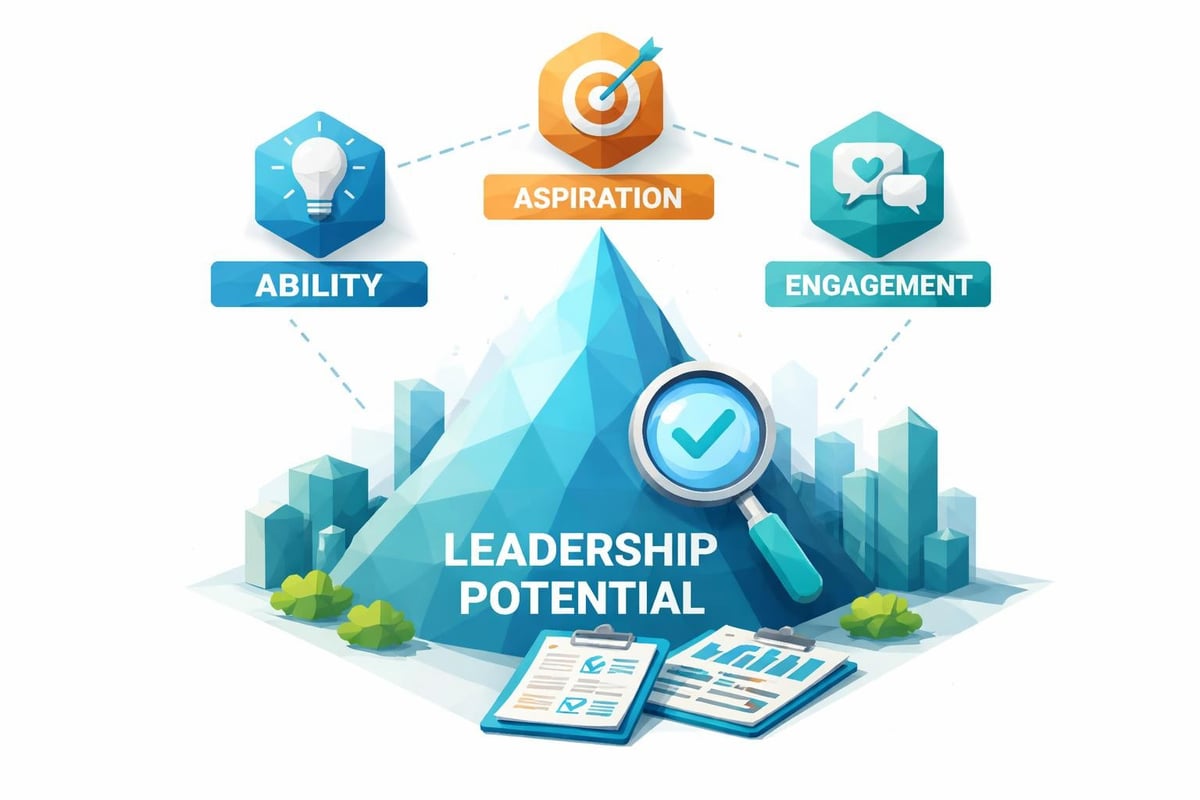
High-potential employees demonstrate three critical characteristics:
- Ability: Superior cognitive capacity, emotional intelligence, and technical competence that exceeds current role requirements
- Aspiration: Genuine desire to assume greater responsibility and lead at higher organizational levels
- Engagement: Deep commitment to organizational success and alignment with company values and mission
Traditional performance metrics fail to capture leadership potential. A comprehensive high-potential leadership program integrates multiple assessment methodologies including behavioral interviews, 360-degree feedback, leadership simulations, and validated psychometric instruments. These diagnostic tools reveal not just what individuals have accomplished, but how they think, adapt, and influence others under pressure.
The Business Case for Targeted Leadership Development
Organizations investing in leadership coaching for high-potential employees in Melbourne report quantifiable returns across multiple performance indicators. Research demonstrates that properly developed high-potential employees deliver 91% more value than their peers and fill critical leadership vacancies 30% faster than external hires.
| Business Impact Area | Measured Improvement | Timeline |
|---|---|---|
| Leadership Readiness | 65% acceleration | 12-18 months |
| Retention Rates | 40% improvement | 24 months |
| Succession Pipeline Strength | 3x depth increase | 18-24 months |
| Organizational Agility | 50% faster adaptation | 6-12 months |
| Employee Engagement Scores | 25-35 point increase | 12 months |
The cost of losing high-potential talent extends beyond recruitment expenses. Departing high-potentials take institutional knowledge, client relationships, and team cohesion with them. Melbourne's tight talent market makes replacement increasingly difficult and expensive, with total turnover costs reaching 150-200% of annual salary for leadership-level positions.
Strategic Coaching Interventions for Rising Leaders
Effective leadership coaching for high-potential employees in Melbourne addresses five developmental domains that distinguish executive-level leaders from individual contributors. Each domain requires customized interventions based on individual assessment results and organizational strategic priorities.
Building Strategic Thinking Capabilities
High-potential employees typically excel at tactical execution but struggle with strategic perspective. Coaching interventions develop their capacity to analyze market dynamics, anticipate competitive threats, and make decisions with incomplete information.
Strategic thinking development focuses on:
- Systems thinking: Understanding how organizational components interconnect and influence business outcomes
- Future orientation: Developing scenario planning skills and long-range perspective
- Strategic resource allocation: Learning to prioritize initiatives based on strategic impact rather than operational urgency
- Stakeholder mapping: Identifying and managing complex stakeholder relationships across organizational boundaries
Coaches challenge high-potential employees to step back from operational details and examine broader patterns. This shift from "what needs to happen today" to "where does the organization need to be in three years" fundamentally changes how emerging leaders approach decisions and allocate their attention.
Developing Executive Presence and Influence
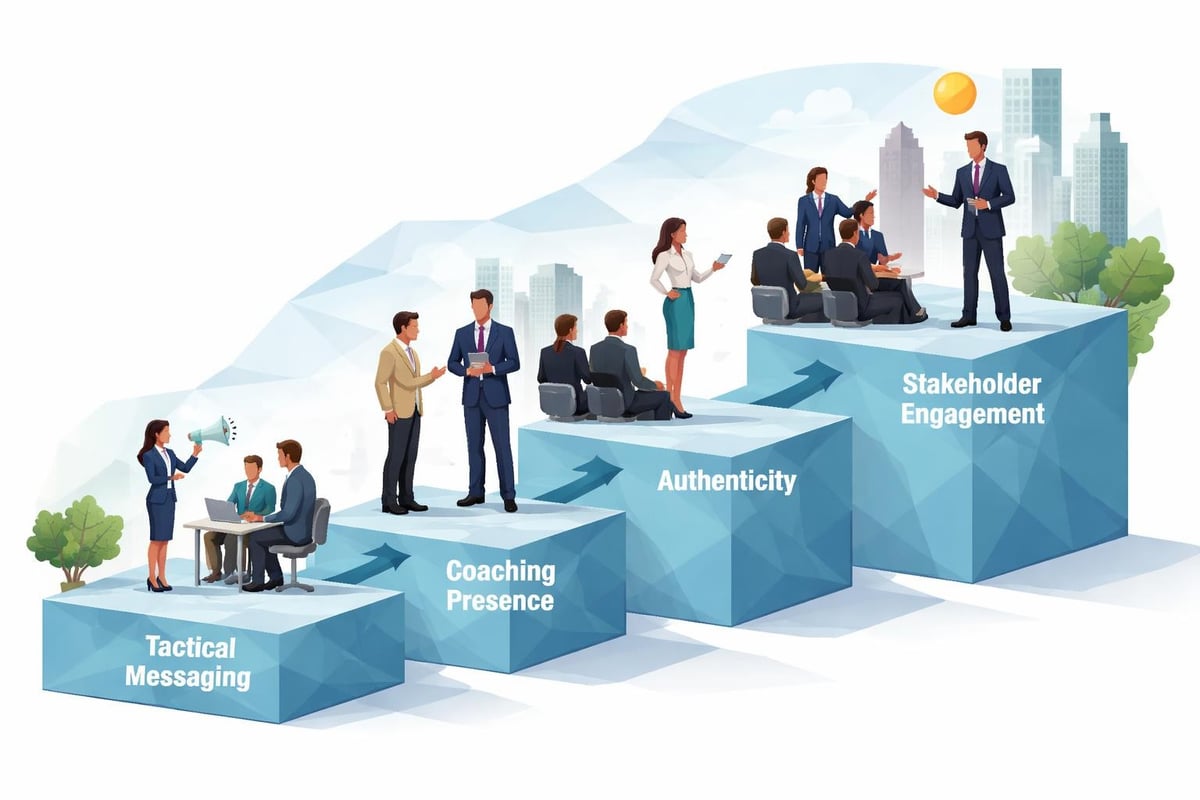
Technical competence alone does not qualify someone for executive leadership. Leadership coaching for high-potential employees in Melbourne specifically addresses executive presence, the intangible quality that inspires confidence and commands attention in boardrooms and high-stakes situations.
High-potential leadership coaching develops communication mastery, gravitas under pressure, and authentic leadership style. Coaches work with individuals to identify and eliminate undermining behaviors, strengthen vocal delivery, and craft compelling narratives that move stakeholders to action.
Executive presence also encompasses emotional regulation and composure during organizational turbulence. High-potential employees learn to project confidence without arrogance, demonstrate vulnerability without appearing weak, and maintain steadiness when others panic. These capabilities prove essential during crisis situations, organizational restructuring, or challenging board presentations.
Customizing Coaching Approaches for Melbourne's Business Environment
Melbourne's unique business ecosystem shapes how organizations approach leadership coaching for high-potential employees in melbourne. The city's concentration of financial services, healthcare, education, and technology sectors creates specific leadership development requirements that generic programs fail to address.
Sector-Specific Leadership Competencies
Different industries demand different leadership capabilities. Financial services leaders require deep regulatory knowledge and risk management expertise. Healthcare executives must navigate complex clinical governance while managing diverse professional workforces. Technology sector leaders face rapid change cycles and intense competition for specialized talent.
Precision coach matching ensures high-potential employees work with coaches who understand their specific industry context. A healthcare high-potential developing clinical governance capabilities requires fundamentally different coaching expertise than a fintech leader building innovation culture. Generic leadership development approaches dilute impact and waste organizational resources.
| Industry Sector | Critical Leadership Competencies | Coaching Focus Areas |
|---|---|---|
| Financial Services | Regulatory compliance, risk assessment, stakeholder trust | Decision-making under uncertainty, ethical leadership |
| Healthcare | Clinical governance, multidisciplinary collaboration | Influence without authority, change management |
| Technology | Innovation culture, rapid scaling, talent retention | Strategic agility, building psychological safety |
| Professional Services | Client relationship management, technical credibility | Business development, delegation, team leverage |
Addressing Toxic Leadership Patterns Early
High-potential employees occasionally demonstrate behaviors that, if unchecked, evolve into toxic leader patterns. Early coaching interventions prevent these destructive tendencies from derailing otherwise promising careers.
Common patterns include excessive control orientation, inability to receive feedback, blame deflection, and creating fear-based team cultures. These behaviors often stem from unexamined beliefs about power, perfectionism, or impostor syndrome. Coaches help high-potential employees recognize these patterns, understand their origins, and develop healthier leadership approaches before they cause significant organizational damage.
Measuring Coaching Impact and ROI
Organizations implementing leadership coaching for high-potential employees in Melbourne demand evidence that investments generate measurable returns. Robust measurement frameworks track individual development, team performance improvements, and organizational outcomes.
Individual Development Metrics
Leadership assessment tools measure growth across specific competencies:
- Pre-coaching and post-coaching 360-degree feedback comparing self-perception with stakeholder observations
- Leadership maturity progression using validated frameworks like Kegan's stages of adult development
- Emotional intelligence improvements measured through standardized instruments
- Strategic thinking capability demonstrated through case analysis and business simulations
Successful coaching programs establish baseline measurements before interventions begin, then track progress at regular intervals. This data-driven approach demonstrates individual growth trajectories and identifies where coaching interventions deliver maximum impact versus where additional support proves necessary.

Organizational Impact Indicators
Individual development matters only when it translates into organizational performance improvements. Leadership coaching for high-potential employees in Melbourne should demonstrate measurable impact on business results and cultural health indicators.
Key organizational metrics include:
- Succession pipeline strength: Percentage of critical roles with ready-now internal candidates
- High-potential retention rates: Comparison of coached versus non-coached retention over 24-36 months
- Promotion velocity: Time required for coached high-potentials to advance versus historical averages
- Team engagement scores: Changes in engagement levels for teams led by coached high-potentials
- Innovation metrics: New initiatives launched, process improvements implemented, revenue from new products
Organizations that integrate these measurements with executive coaching packages create accountability frameworks ensuring coaching investments deliver documented returns. This evidence-based approach transforms leadership development from cost center to strategic investment with quantifiable business impact.
Building Sustainable Leadership Development Systems
One-off coaching engagements produce temporary improvements that fade without systematic reinforcement. Sustainable leadership coaching for high-potential employees in Melbourne embeds development into organizational culture and talent management processes.
Integrating Coaching with Succession Planning
High-potential development programs achieve maximum impact when tightly integrated with succession planning processes. Organizations map critical leadership roles, identify capability gaps between current high-potentials and role requirements, then design coaching interventions addressing specific gaps.
This alignment ensures coaching efforts directly strengthen succession pipelines rather than developing generic leadership skills disconnected from organizational needs. High-potential talent programs that connect individual development with strategic workforce planning demonstrate superior ROI and executive buy-in compared to standalone coaching initiatives.
Integration steps include:
- Mapping high-potential employees against succession planning frameworks
- Conducting gap analyses between current capabilities and future role requirements
- Designing individualized development plans targeting specific succession readiness gaps
- Creating stretch assignments that provide real-world application of coaching insights
- Establishing executive sponsors who provide mentorship alongside formal coaching
Creating Peer Learning Networks
Leadership coaching for high-potential employees in Melbourne gains exponential impact when combined with peer learning networks. High-potential cohorts create safe spaces for vulnerability, shared learning, and mutual accountability that individual coaching alone cannot provide.
Peer learning accelerates development through diverse perspectives, collaborative problem-solving, and normalized vulnerability. High-potential employees discover they share common challenges around delegation, strategic thinking, or executive presence. This realization reduces isolation and builds supportive relationships that persist long after formal coaching concludes.
Leadership coaching programs that combine individual coaching with cohort-based learning activities report higher satisfaction rates and stronger long-term behavior change compared to purely individual coaching models. The peer network becomes a sustaining force that reinforces coaching insights through ongoing dialogue and mutual support.
Selecting the Right Coaching Partner for Your Organization
The quality of coaching delivery determines program success or failure. Organizations seeking leadership coaching for high-potential employees in Melbourne must evaluate potential partners across multiple criteria beyond cost and availability.
Credential Verification and Coach Expertise
Coaching credentials vary widely in rigor and recognition. International Coach Federation (ICF) certification represents the global standard, with Professional Certified Coach (PCC) and Master Certified Coach (MCC) credentials indicating substantial training and supervised practice hours.
Beyond credentials, evaluate:
- Sector-specific expertise relevant to your industry and organizational context
- Track record delivering measurable outcomes with high-potential populations
- Assessment tool proficiency and interpretation capabilities
- Cultural competence for diverse workforce compositions
- Executive-level communication skills and business acumen
The coach matching process should consider high-potential employee preferences, learning styles, and developmental needs. Chemistry between coach and coachee significantly influences engagement and outcomes. Structured matching processes that consider multiple compatibility factors deliver superior results compared to random assignment or availability-based selection.
Ensuring Program Governance and Compliance
Organizations, particularly government agencies and regulated industries, require coaching programs that meet governance and compliance standards. Leadership coaching for high-potential employees in Melbourne should include clear confidentiality protocols, ethical guidelines, and documentation procedures.
Program governance establishes boundaries between coaching conversations and performance management, protects confidential disclosures, and ensures coaching supports rather than contradicts organizational policies. Well-designed programs clarify roles and responsibilities for coaches, participants, HR leaders, and executive sponsors, preventing confusion and maintaining program integrity. Resources like accountability frameworks help organizations establish clear expectations and measure progress toward development goals.
Adapting Coaching for Remote and Hybrid Work Environments
Melbourne organizations increasingly operate in hybrid configurations, requiring leadership coaching for high-potential employees in melbourne to address remote leadership challenges that previous generations never faced.
Virtual Influence and Distributed Team Leadership
Leading distributed teams demands different capabilities than traditional co-located leadership. High-potential employees must learn to build trust without physical proximity, read engagement signals through video interfaces, and maintain team cohesion across geographic and temporal boundaries.
Coaching interventions address:
- Establishing virtual presence and maintaining visibility with remote team members
- Creating psychological safety in digital collaboration spaces
- Managing asynchronous communication and decision-making processes
- Building inclusive meeting practices that engage both in-office and remote participants
- Preventing proximity bias in recognition, development opportunities, and performance evaluation
High-performing team leadership in hybrid environments requires intentional relationship-building practices that replace spontaneous hallway conversations and casual interactions. Coaches help high-potential employees design structured connection points, leverage technology effectively, and create team rituals that build belonging despite physical separation.
Digital Coaching Delivery Considerations
Virtual coaching delivery expands access and scheduling flexibility while introducing unique considerations. Effective digital coaching requires technology proficiency, environmental management, and adapted engagement techniques.
Technology platforms should support video quality sufficient for reading facial expressions and body language. Coaches and participants need private, distraction-free spaces for focused conversations. Digital fatigue considerations may require shorter, more frequent sessions rather than traditional 90-minute appointments.
The shift to digital delivery creates opportunities for innovative coaching approaches including real-time messaging support between sessions, digital resource libraries, and virtual peer learning sessions that connect high-potentials across multiple locations. Organizations that embrace digital-first coaching expand their coach network beyond geographic constraints while providing flexible scheduling that accommodates demanding executive calendars.
Developing high-potential employees through strategic coaching interventions represents one of the highest-impact investments organizations can make in their future leadership capacity. Melbourne organizations that implement evidence-based leadership coaching for high-potential employees in Melbourne build sustainable competitive advantages through stronger succession pipelines, improved retention, and accelerated leadership readiness. Noomii Leadership Coaching delivers precision-matched coaching solutions that combine advanced diagnostics, sector expertise, and measurable impact frameworks, transforming your high-potential employees into the strategic leaders your organization needs to thrive in an increasingly complex business environment.



Leave a Reply
Want to join the discussion?Feel free to contribute!