

Entrepreneur Growth & Leadership Development in Lausanne
Lausanne has emerged as a powerhouse for entrepreneur growth and leadership development in lausanne, combining world-class educational institutions, innovative acceleration programs, and a thriving business ecosystem. Nestled on the shores of Lake Geneva, this Swiss city offers entrepreneurs access to cutting-edge leadership training, strategic coaching, and extensive networks that transform ambitious founders into exceptional business leaders. The concentration of prestigious business schools, accelerators, and coaching organizations creates an environment where leadership excellence becomes not just aspirational but achievable through structured, evidence-based development pathways.
The Lausanne Advantage for Entrepreneurial Leaders
Lausanne's geographical position at the crossroads of European business makes it uniquely positioned to cultivate entrepreneurial talent. The city hosts several internationally recognized institutions that specialize in transforming functional experts into strategic leaders.
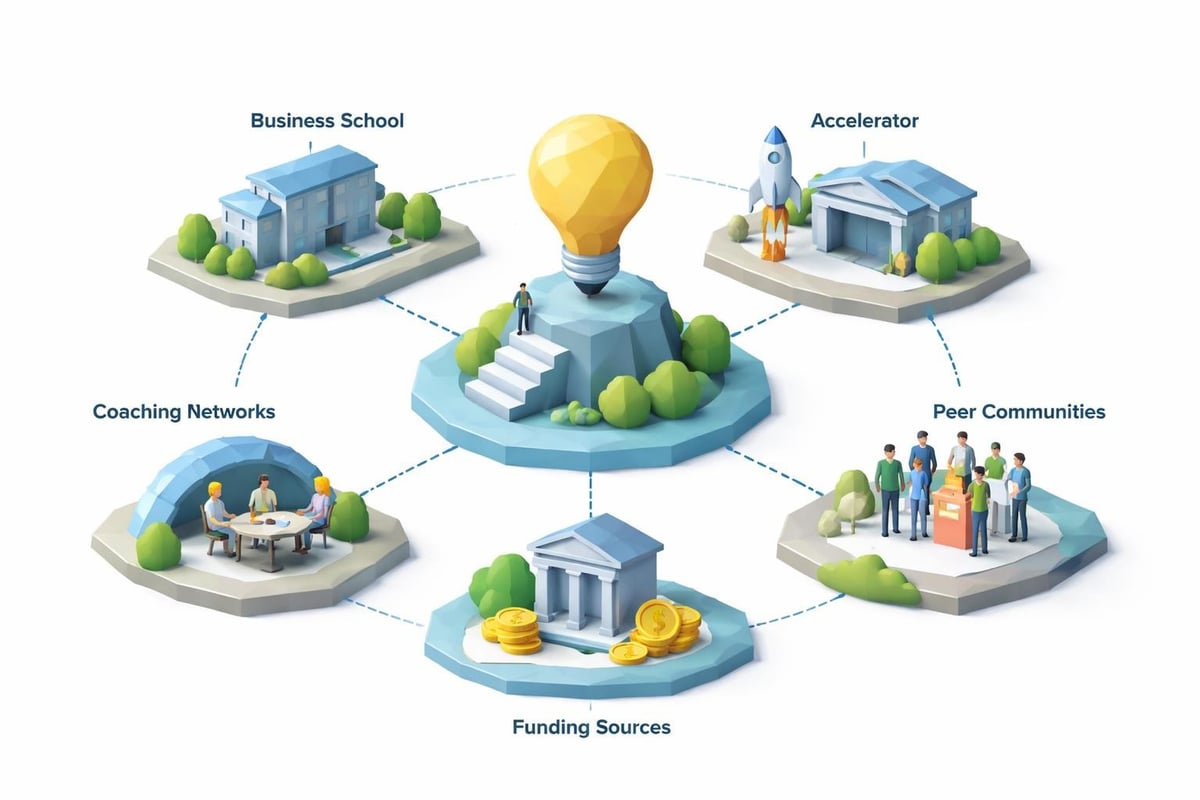
The IMD Business School’s Orchestrating Winning Performance program delivers actionable strategies that help dynamic professionals tackle current challenges while shaping their organizations' futures. This concentration of expertise creates what researchers call a "leadership density effect," where proximity to excellence accelerates individual growth trajectories.
Key advantages of Lausanne's ecosystem include:
- Access to evidence-based leadership methodologies validated by academic research
- Multilingual business environment preparing leaders for global markets
- Strong connections between academia, industry, and entrepreneurial ventures
- Supportive regulatory environment for business experimentation and growth
- Concentration of venture capital and strategic funding sources
Educational Infrastructure Driving Leadership Excellence
The educational infrastructure supporting entrepreneur growth and leadership development in lausanne extends far beyond traditional business degrees. HEC Lausanne, the Faculty of Business and Economics at the University of Lausanne, contributes significantly to developing business leaders through comprehensive executive education programs that bridge academic rigor with practical application.
EPFL’s Leadership and Development department strengthens personal and professional competencies through targeted programs addressing employability, development services, and specialized training. These institutions don't just transfer knowledge-they transform how entrepreneurs think about leadership challenges.
| Institution | Primary Focus | Target Audience | Unique Strength |
|---|---|---|---|
| IMD Business School | Executive Leadership | Senior Leaders & Entrepreneurs | Global perspective, action learning |
| HEC Lausanne | Business Economics | MBA students, Executives | Research-driven insights |
| EPFL | Technical Leadership | Engineers, Scientists, Tech Founders | Innovation and technology integration |
| EHL | Hospitality Leadership | Service Industry Leaders | Customer experience excellence |
The diversity of these offerings ensures entrepreneurs can find precisely the leadership development pathway aligned with their industry, growth stage, and specific challenges.
Tailored Programs for Different Growth Stages
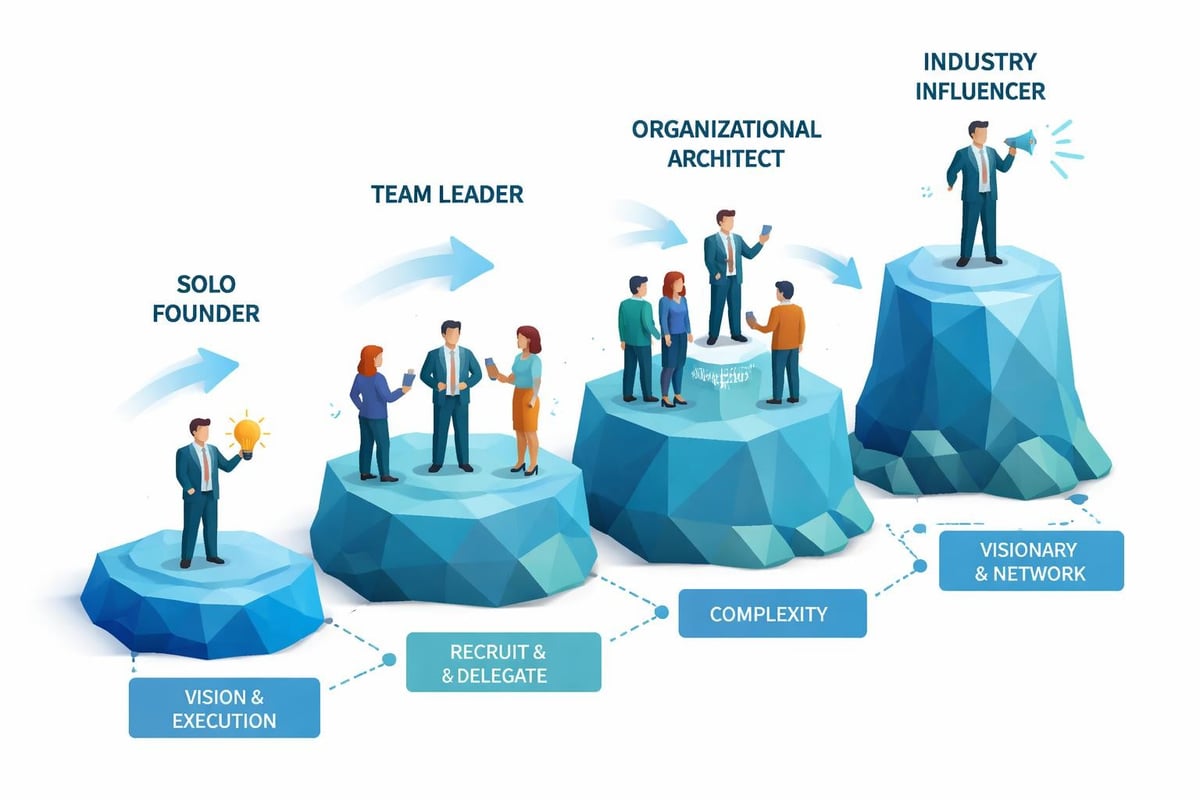
Effective entrepreneur growth and leadership development in lausanne recognizes that founders face distinct challenges at different organizational stages. Early-stage entrepreneurs require fundamentally different support than those scaling established ventures.
From Startup to Scale-Up
GENILEM provides personalized support to entrepreneurs and early-stage companies, offering project diagnostics and a comprehensive three-year acceleration program that helps turn visions into thriving businesses. This structured approach addresses the reality that most leadership failures occur during critical transition points-when founders must evolve from hands-on operators to strategic executives.
The LeadiNNg to Scale-Up program, a collaboration between Innovaud and IMD, specifically targets tech companies transitioning from promising startups to fast-growing scale-ups. This program acknowledges that scaling requires different leadership competencies than launching.
Critical competencies for scaling entrepreneurs:
- Strategic delegation and building effective leadership teams
- Creating organizational structures that support rapid growth
- Maintaining company culture while expanding headcount
- Navigating complex stakeholder relationships and governance
- Making data-driven decisions under increasing uncertainty
- Managing personal transition from founder to CEO role
Understanding psychological safety examples becomes essential during scaling phases, as team dynamics fundamentally shift when organizations grow beyond direct founder oversight.
Executive Leadership Transitions
Experienced managers ready to transition into senior leadership roles face unique challenges that require specialized support. IMD’s Program for Executive Development emphasizes expanding perspective beyond functional expertise-a critical shift many technically brilliant entrepreneurs struggle to make.
This transition demands what researchers call "identity evolution." Entrepreneurs must reframe their self-concept from "the person who knows how to do everything" to "the leader who knows how to develop others who do everything." This psychological shift often proves more challenging than acquiring new technical skills.
Building Inner Leadership Strength
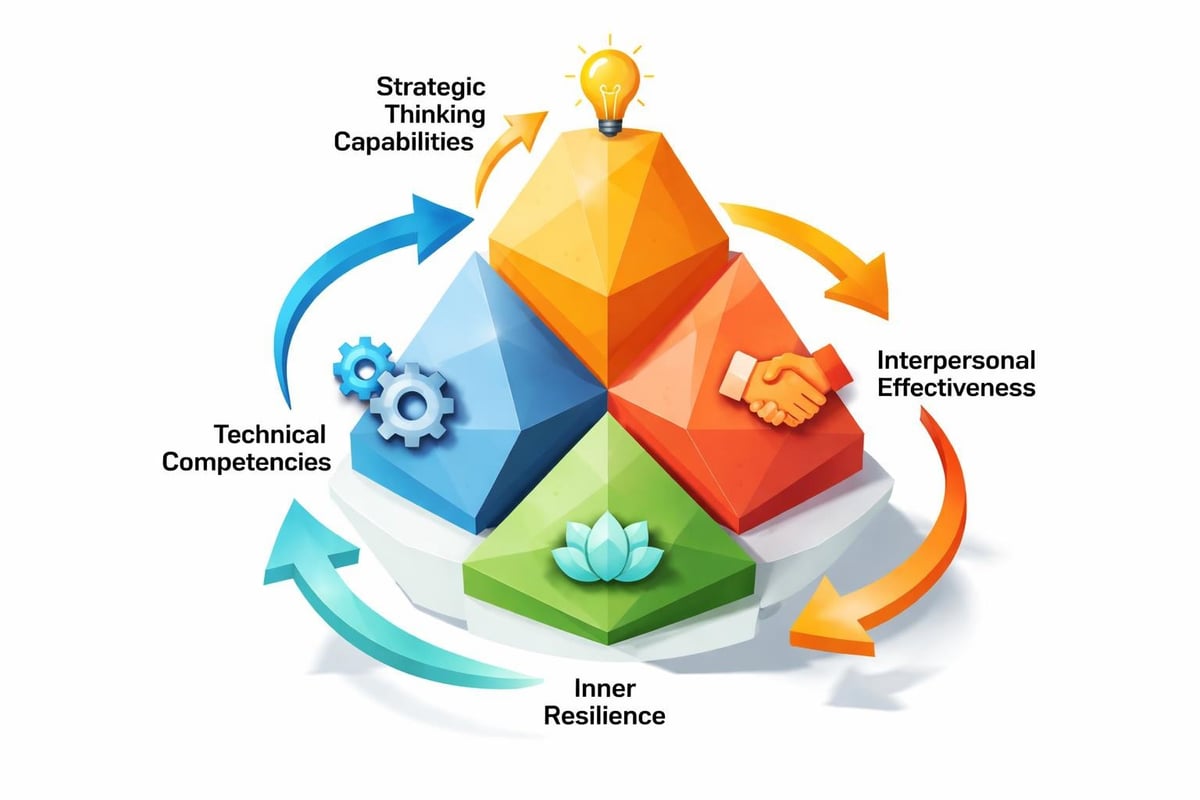
Sustainable entrepreneur growth and leadership development in lausanne goes beyond external skills to cultivate internal leadership qualities that sustain performance under pressure.
Developing Authentic Authority
The High Performance Leadership program at IMD focuses specifically on developing inner strength and confidence to become truly authoritative, high-performing leaders. This inner development proves particularly crucial for entrepreneurs who face constant questioning of their decisions, strategies, and capabilities.
Building authentic authority requires:
- Deep self-awareness of personal strengths, limitations, and triggers
- Capacity to remain centered during organizational turbulence
- Confidence grounded in competence rather than bravado
- Ability to acknowledge uncertainty while maintaining directional clarity
- Emotional regulation that prevents reactivity from undermining credibility
Organizations working with toxic leader patterns understand that leadership problems often stem from underdeveloped inner capacities rather than malicious intent. Entrepreneurs under extreme pressure may default to controlling, dismissive, or aggressive behaviors that undermine team performance.
Faith-Based Leadership Perspectives
The Lausanne Movement’s Leadership Development episode emphasizes developing leaders for personal and societal transformation, engaging in changing systems and structures beyond organizational walls. This values-based approach reminds entrepreneurs that leadership influence extends far beyond quarterly earnings.
Integrating purpose-driven leadership with business performance creates what researchers term "sustainable motivation"-the capacity to maintain extraordinary effort over extended periods without burnout. Entrepreneurs who connect their ventures to larger missions demonstrate greater resilience during inevitable setbacks.
Evidence-Based Coaching for Measurable Growth
While traditional education provides foundational knowledge, personalized coaching delivers the customized support that accelerates entrepreneur growth and leadership development in lausanne. The coaching industry has evolved significantly, moving from generalized advice to precision interventions backed by validated assessments and measurable outcomes.
Precision Matching for Maximum Impact
Generic coaching approaches fail to address the specific challenges entrepreneurs face in particular industries, organizational contexts, and growth stages. Advanced leadership executive coaching now leverages sophisticated matching algorithms that pair leaders with coaches possessing relevant sector expertise and specialized skills.
This precision matching considers multiple dimensions:
| Matching Dimension | Why It Matters | Impact on Results |
|---|---|---|
| Industry Experience | Coach understands market dynamics, competitive pressures | 40% faster problem resolution |
| Growth Stage Expertise | Relevant experience with startup, scale-up, or enterprise challenges | Higher strategy implementation success |
| Leadership Style Compatibility | Natural rapport and communication effectiveness | Deeper self-awareness development |
| Specific Challenge History | Coach has successfully addressed similar issues previously | More targeted, efficient interventions |
| Cultural and Language Fluency | Eliminates communication barriers, understands context | Stronger trust and openness |
Organizations seeking to understand how much does business coaching cost should recognize that precision matching significantly improves return on investment by reducing time to results and increasing the likelihood of sustainable behavioral change.
Structured Intervention Frameworks
Effective entrepreneur growth and leadership development in lausanne employs structured frameworks rather than unguided conversation. These frameworks ensure comprehensive assessment, targeted development plans, measurable progress tracking, and accountability mechanisms that drive actual change.
Components of effective coaching interventions:
- Initial diagnostic assessments identifying specific strengths and development areas
- Clear goal-setting aligned with both personal aspirations and organizational needs
- Regular progress evaluation against predetermined success metrics
- Structured exercises and assignments between coaching sessions
- Stakeholder feedback integration to validate perceived versus actual change
- Adjustment protocols when initial approaches prove ineffective
The shift toward accountability-driven coaching has transformed outcomes across industries. Programs incorporating regular accountability checkpoints demonstrate 3.5 times higher goal achievement rates than those relying solely on periodic coaching conversations. Resources like https://accountabilitynow.net/ provide frameworks for embedding systematic accountability into leadership development initiatives.
Addressing Critical Leadership Challenges
Entrepreneurs in Lausanne's competitive ecosystem face predictable leadership challenges that, if left unaddressed, can derail otherwise promising ventures. Effective development programs tackle these issues directly rather than hoping they resolve organically.
Navigating Difficult Transitions
Leadership transitions-whether from founder to CEO, individual contributor to manager, or technical expert to strategic executive-represent vulnerability points where even talented entrepreneurs stumble. These transitions require not just new skills but fundamental identity shifts that challenge self-concept and trigger resistance.
Research on Google Project Aristotle psychological safety revealed that team effectiveness depends more on how members interact than on individual talent levels. Entrepreneurs must learn to create environments where teams feel safe challenging assumptions, admitting mistakes, and proposing unconventional solutions.
Transforming Problematic Leadership Patterns
High-pressure entrepreneurial environments sometimes cultivate leadership behaviors that initially drive results but ultimately damage organizational health. Recognizing and addressing these patterns early prevents long-term cultural damage.
Common problematic patterns include:
- Micromanagement stemming from perfectionism – Inability to delegate effectively, creating bottlenecks
- Dismissiveness of team input – Undermining engagement and losing access to distributed intelligence
- Volatile emotional reactions – Creating uncertainty that paralyzes decision-making
- Chronic overwork expectations – Driving burnout and turnover that disrupts continuity
- Conflict avoidance – Allowing small issues to metastasize into major problems
Specialized approaches like toxic leader transformation provide structured methodologies for addressing entrenched patterns without requiring leader replacement. These interventions work when leaders possess genuine desire to change and receive appropriate support throughout the transformation process.
Creating Scalable Leadership Development Systems
Organizations experiencing rapid growth cannot rely solely on individual coaching for executive team members. Scalable systems extend leadership development throughout the organization, creating bench strength that supports sustainable expansion.
Building Internal Leadership Capacity
Sophisticated entrepreneur growth and leadership development in lausanne creates multiplier effects by developing leaders who develop other leaders. This cascading approach builds organizational capability that persists beyond any individual's tenure.
Elements of scalable leadership systems:
- Clearly defined leadership competency models aligned with organizational values
- Assessment tools that identify high-potential talent across levels
- Structured development pathways with clear progression criteria
- Mentoring programs connecting emerging leaders with experienced executives
- Regular leadership forums creating peer learning communities
- Performance metrics that reward leadership development alongside business results
Organizations implementing comprehensive systems report 60% higher promotion-from-within rates and significantly lower regrettable turnover among high-potential employees.
Integration with Organizational Strategy
Leadership development initiatives that operate independently from business strategy waste resources and miss opportunities. Effective programs align individual growth with institutional priorities, ensuring development efforts directly support organizational objectives.
This alignment requires:
| Strategic Need | Leadership Capability Required | Development Approach |
|---|---|---|
| Market expansion | Cross-cultural leadership, adaptability | International assignments, cultural competency training |
| Innovation acceleration | Creative problem-solving, risk tolerance | Innovation labs, failure analysis sessions |
| Digital transformation | Technology fluency, change management | Digital upskilling, transformation case studies |
| Customer experience enhancement | Empathy, service orientation | Customer immersion programs, feedback integration |
| Operational excellence | Process thinking, continuous improvement | Lean training, efficiency metrics dashboards |
Connecting leadership development directly to business outcomes transforms it from a "nice to have" benefit to a strategic necessity that boards and investors recognize as essential infrastructure.
Measuring Leadership Development Impact
Quantifying the return on leadership development investments has historically challenged organizations. Modern approaches employ sophisticated metrics that demonstrate tangible impact on organizational performance, moving beyond subjective satisfaction ratings.
Defining Success Metrics
Effective measurement of entrepreneur growth and leadership development in lausanne requires multilevel metrics capturing individual behavior change, team performance improvements, and organizational outcomes.
Individual-level metrics:
- 360-degree assessment score improvements across defined competencies
- Achievement of specific development goals within target timeframes
- Behavioral change validation through stakeholder interviews
- Self-reported confidence and capability assessments
- Engagement and retention of the developing leader
Team-level metrics:
- Employee engagement scores for teams led by program participants
- Team performance against key operational or strategic objectives
- Turnover rates within teams before and after leader development
- Innovation metrics like ideas generated, tested, and implemented
- Collaboration effectiveness measures across functional boundaries
Organizational-level metrics:
- Leadership bench strength and succession planning readiness
- Promotion-from-within rates at management and executive levels
- Time-to-productivity for newly promoted leaders
- Cultural health indicators aligned with desired values
- Financial performance correlated with leadership quality indices
Organizations tracking these comprehensive metrics consistently demonstrate 3-5x return on investment in leadership coaching within 18-24 months, with returns accelerating over time as developed leaders influence broader organizational populations.
Continuous Improvement Protocols
Static leadership development programs quickly become obsolete as business environments evolve. Leading organizations implement continuous improvement protocols that regularly evaluate program effectiveness and adapt methodologies based on evidence.
These protocols include quarterly program reviews analyzing metric trends, annual deep-dive assessments comparing results across cohorts, regular participant feedback collection through multiple channels, benchmarking against external best practices and emerging research, and rapid experimentation with new approaches in controlled pilot groups.
The commitment to evidence-based refinement distinguishes transformational programs from those that merely check compliance boxes without driving meaningful change.
The Future of Leadership Development in Lausanne
Entrepreneur growth and leadership development in lausanne continues evolving as new technologies, methodologies, and business challenges emerge. Forward-thinking organizations position themselves to capitalize on these trends rather than reacting after competitors gain advantages.
Technology-Enhanced Development
Artificial intelligence, virtual reality, and advanced analytics are transforming how organizations assess leadership capabilities and deliver development interventions. These technologies don't replace human coaching but enhance its effectiveness through better diagnostics, personalized content delivery, and continuous progress monitoring.
Emerging technologies enable:
- Real-time leadership behavior analysis providing immediate feedback
- Simulation environments where leaders practice difficult conversations safely
- Predictive analytics identifying future leadership needs before gaps emerge
- Personalized learning pathways adapting to individual progress rates
- Global coaching access eliminating geographical constraints
Organizations exploring best AI for business coaching should view technology as amplifying human expertise rather than replacing the relationship-based trust essential for deep development work.
Integrated Ecosystem Approaches
The most sophisticated entrepreneur growth and leadership development in lausanne leverages the complete ecosystem rather than isolated program elements. This integration connects academic institutions, coaching organizations, peer networks, industry associations, and funding sources into coherent development journeys.
Entrepreneurs participating in integrated ecosystems access multidimensional support addressing knowledge gaps, skill development, network building, resource acquisition, and emotional resilience simultaneously. This holistic approach recognizes that leadership challenges rarely fit neatly into single categories requiring isolated solutions.
Lausanne's unique combination of world-class educational institutions, specialized acceleration programs, and evidence-based coaching creates unparalleled opportunities for entrepreneurs committed to leadership excellence. The Noomii Leadership Coaching program delivers precision-matched coaching that transforms leadership challenges into measurable organizational improvements, combining advanced diagnostics with targeted interventions that align individual growth with institutional priorities. Whether addressing specific leadership patterns, preparing for critical transitions, or building scalable development systems, Noomii's global network of certified coaches provides the expertise and accountability that turns leadership potential into tangible business results.



Leave a Reply
Want to join the discussion?Feel free to contribute!