Gemini Prompts to Help Life Coaches Scale in 2026

Life coaches face a persistent challenge: delivering personalized, transformative experiences while serving more clients. The traditional one-to-one coaching model creates a ceiling on growth that can trap talented practitioners in a cycle of trading time for money. Google Gemini offers life coaches a practical solution through carefully crafted prompts that automate administrative tasks, personalize client communications, and scale knowledge delivery without sacrificing quality. Using gemini prompts to help life coaches scale is becoming essential for practitioners who want sustainable growth in 2026.

Automating Client Intake and Assessment

The initial client experience sets the foundation for successful coaching relationships. Gemini can transform how coaches gather background information, assess readiness, and match clients with appropriate programs.

Create intake prompts that generate customized welcome sequences based on client responses. For example, instruct Gemini to analyze intake form data and produce a personalized onboarding email that acknowledges specific challenges mentioned by the client. This approach saves hours weekly while making each prospect feel genuinely understood.

Key intake automation tasks:

  • Generate personalized welcome emails based on client goals
  • Create custom assessment questionnaires for different coaching niches
  • Summarize lengthy client histories into actionable coaching notes
  • Produce readiness evaluations that identify ideal starting points

A well-designed prompt might ask Gemini to review a client’s responses about career transitions and generate three potential coaching pathways with different time commitments and outcomes. The strategic expansion of your coaching practice requires systems that qualify and segment clients efficiently.

Client intake workflow automation

Scaling Session Preparation and Follow-Up

Session preparation and post-session summaries consume significant coach time. Gemini prompts to help life coaches scale this critical workflow by generating relevant discussion frameworks and comprehensive follow-up materials.

Pre-Session Framework Generation

Before each session, prompt Gemini to create discussion guides based on the client’s previous sessions, stated goals, and current challenges. A sophisticated prompt reviews session notes from the past month and suggests three high-impact questions tailored to the client’s progression stage.

Session Phase Automation Opportunity Time Saved Per Client
Pre-session research Generate discussion frameworks 15-20 minutes
Session notes Real-time transcription summary 10-15 minutes
Follow-up materials Create action plans and resources 20-25 minutes
Progress tracking Compile achievement summaries 10-12 minutes

For business coaches working with entrepreneurs, Gemini can analyze financial data or business metrics mentioned in sessions and generate specific discussion points around KPIs and growth opportunities.

Post-Session Action Plans

After sessions, coaches spend considerable time creating action plans and resource lists. Design prompts that instruct Gemini to convert session notes into structured action plans with specific tasks, deadlines, and accountability measures. Similar to how ChatGPT prompts help coaches grow revenue, Gemini can transform raw session content into polished deliverables.

The integration of generative AI tools in professional coaching demonstrates measurable improvements in coach productivity and client satisfaction when implementation follows best practices.

Creating Scalable Group Coaching Content

Group programs offer coaches the opportunity to serve multiple clients simultaneously while maintaining high value. Gemini excels at generating discussion topics, exercises, and reflection prompts for group settings.

Design prompts that create weekly discussion themes aligned with your program curriculum. For a twelve-week leadership development program, instruct Gemini to generate opening questions, small-group activities, and individual reflection exercises for each session topic.

Group coaching automation capabilities:

  1. Generate weekly discussion guides with opening questions
  2. Create breakout room activities for virtual group sessions
  3. Produce individual reflection exercises aligned with group themes
  4. Develop peer feedback frameworks for accountability partnerships
  5. Design celebration protocols that recognize member progress

The Gemini coaching group prompt offers a foundation for creating structured support systems that maintain personal connection at scale. Career coaches can adapt these frameworks for job search accountability groups or networking skill development cohorts.

Personalizing Client Communications at Scale

Maintaining meaningful communication with dozens or hundreds of clients requires sophisticated systems. Gemini prompts to help life coaches scale personalized touchpoints without creating overwhelming workload.

Newsletter and Update Generation

Monthly client newsletters typically require hours of writing and personalization. Create prompts that instruct Gemini to generate newsletter content segments based on common client themes, seasonal considerations, and coaching philosophy. Then customize individual sections for different client segments.

A powerful approach involves prompting Gemini to analyze your recent blog posts, podcast episodes, or social media content and extract the most relevant insights for different client personas. This ensures newsletter content aligns with your broader thought leadership while remaining actionable.

Personalized communication workflow

For coaches offering entrepreneurship coaching, segment newsletters by business stage: startup phase clients receive different insights than scaling-phase entrepreneurs.

Developing Knowledge Products and Resources

Digital products extend coaching impact beyond one-to-one sessions. Gemini accelerates the creation of workbooks, mini-courses, and assessment tools that generate passive revenue.

Prompt Gemini to transform your coaching frameworks into self-guided worksheets. For example, if you teach time management using the work-life buckets method, instruct Gemini to create a comprehensive workbook with reflection questions, planning templates, and implementation checklists.

Product Type Gemini Application Revenue Potential
Assessment tools Generate scoring frameworks and interpretations $27-97 per assessment
Mini-courses Create lesson outlines and scripts $197-497 per course
Workbooks Develop exercises and worksheets $17-47 per workbook
Templates Design frameworks and planning tools $7-27 per template

The daily life coach gem creation process demonstrates how coaches can package their methodology into accessible formats that serve clients between sessions. These resources also support the strategies for scaling coaching businesses by creating multiple revenue streams.

Optimizing Marketing and Content Strategy

Consistent content marketing attracts ideal clients but demands significant time investment. Gemini prompts to help life coaches scale content production while maintaining authentic voice and valuable insights.

Blog and Social Media Content

Design prompts that convert coaching session themes into blog post outlines or social media series. Instruct Gemini to identify common client questions from your notes and develop comprehensive content that addresses these pain points.

For maximum efficiency, create a master prompt that generates a month of content ideas based on seasonal client challenges, current events affecting your niche, and your core coaching frameworks. Then use follow-up prompts to develop each idea into complete posts.

Content automation workflow:

  • Analyze client questions to identify trending topics
  • Generate content calendars aligned with seasonal coaching themes
  • Create post outlines that follow proven engagement structures
  • Develop caption variations for different social platforms
  • Produce email sequences that nurture prospects toward consultation calls

Implementing proven steps to scale your coaching business becomes significantly easier when content production no longer consumes all available marketing time. The best AI for business coaching includes tools that maintain consistency across all client touchpoints.

Marketing automation system

Implementing Quality Control and Human Touch

While gemini prompts to help life coaches scale operational aspects, maintaining authentic connection requires intentional human oversight. Establish review protocols that ensure AI-generated content aligns with your coaching philosophy and client needs.

Create a quality checklist for all Gemini outputs:

  1. Accuracy verification: Confirm advice matches your methodology
  2. Tone consistency: Ensure voice reflects your authentic style
  3. Personalization review: Add specific details that demonstrate genuine attention
  4. Ethical alignment: Verify recommendations support client autonomy and growth
  5. Compliance check: Ensure content meets coaching ethics standards

The most successful coaches using professional prompts for coaching treat AI as a sophisticated assistant rather than a replacement for professional judgment. They spend time saved on automation deepening client relationships and refining coaching skills.

For coaches working with corporate clients, accountability systems like those offered at AccountabilityNow complement AI efficiency by ensuring measurable progress and genuine transformation remain central to the coaching relationship.

Measuring Impact and Iterating Prompts

Scaling effectively requires tracking which prompts produce the best outcomes. Establish metrics for evaluating Gemini’s contribution to client satisfaction, operational efficiency, and revenue growth.

Key Performance Indicators

Track these metrics to assess scaling success:

  • Client acquisition cost reduction through automated marketing
  • Time saved per client through session preparation automation
  • Client satisfaction scores for AI-assisted communications
  • Revenue per coach hour as efficiency improves
  • Group program enrollment rates using scaled content

Refine prompts based on performance data. If automated follow-up emails generate lower engagement than manual versions, adjust prompts to incorporate more personalization triggers or emotional resonance.

The framework for scaling to six figures emphasizes continuous optimization of systems and processes. Regular prompt refinement ensures AI assistance evolves with your practice.

Professional coaches like those at Noomii understand that scaling requires both technological leverage and human expertise. The combination produces sustainable growth that serves more clients without sacrificing coaching quality.


Implementing gemini prompts to help life coaches scale transforms practice growth from overwhelming to achievable. The strategies outlined here automate time-consuming tasks while preserving the personalized attention that makes coaching effective. Noomii connects corporate clients with experienced coaches who deliver measurable results through practical, ROI-focused coaching engagements. Whether you need executive coaching, leadership development, or team facilitation, Noomii’s month-to-month approach ensures you get visible results without long-term risk.

Business Scalability and Leadership Coaching in Berlin

Berlin has emerged as a powerhouse for organizational development, where international corporations and fast-growing startups converge to tackle leadership challenges head-on. The demand for business scalability and leadership coaching in Berlin reflects the city’s unique position as a hub for innovation, requiring executives to balance rapid growth with sustainable team development. Organizations seeking competitive advantage recognize that leadership effectiveness directly correlates with their ability to scale operations, enter new markets, and build resilient cultures capable of navigating constant change.

The Strategic Imperative for Leadership Development in Scaling Organizations

Scaling a business requires more than operational efficiency. It demands leaders who can adapt their management approach as organizational complexity increases. Companies experiencing hypergrowth face distinct challenges that traditional training programs fail to address.

Why Traditional Training Falls Short

Leadership workshops and seminars provide foundational knowledge but rarely translate into behavioral change. Executives return to their desks facing the same decision-making pressures, interpersonal conflicts, and strategic uncertainties that existed before the training session. Research demonstrates that lasting leadership transformation requires personalized intervention, accountability structures, and ongoing support that generic programs cannot deliver.

Business scalability and leadership coaching in Berlin addresses this gap by providing tailored solutions that evolve with organizational needs. Professional coaches work directly with executives to identify behavioral patterns that limit growth, develop new decision-making frameworks, and build competencies aligned with company objectives.

Organizations partnering with digital 1:1 business coaching providers recognize that individual leader development creates ripple effects throughout the entire organizational structure. When C-suite executives improve their communication patterns, middle managers gain clarity on expectations, and frontline teams experience increased psychological safety.

Leadership development impact on organizational scaling

Evidence-Based Diagnostics: The Foundation of Effective Coaching

Precision in leadership development starts with accurate assessment. Organizations waste resources deploying generic coaching programs that fail to address root causes of performance gaps or cultural dysfunction.

Advanced leadership diagnostics identify specific behavioral patterns, decision-making biases, and interpersonal dynamics that either accelerate or impede business growth. These assessments measure competencies across multiple dimensions:

  • Strategic thinking and systems awareness
  • Emotional intelligence and self-regulation
  • Communication effectiveness and influence
  • Conflict resolution and negotiation skills
  • Adaptability and resilience under pressure
  • Team building and talent development capabilities

The most effective business scalability and leadership coaching in Berlin integrates validated assessment tools with sector-specific benchmarks. This approach ensures coaching interventions address actual performance gaps rather than assumed development needs.

Assessment Type Primary Focus Organizational Impact
360-Degree Feedback Multi-perspective performance review Identifies blind spots in leadership behavior
Behavioral Analysis Decision-making patterns and stress responses Predicts performance under scaling pressure
Cultural Alignment Values and organizational fit Ensures leadership consistency during growth
Competency Mapping Skills gaps across leadership levels Targets development resources effectively

Systemic business coaching practitioners emphasize the interconnected nature of leadership challenges. Addressing a single executive’s communication style may reveal deeper organizational patterns requiring team-level intervention.

Matching Leaders with Specialized Coaching Expertise

Not all coaches possess the experience necessary to guide leaders through complex scaling challenges. A founder navigating Series B funding faces different pressures than a government agency director managing public sector transformation.

Precision matching algorithms analyze both leader requirements and coach credentials to create optimal partnerships. Factors considered in the matching process include:

  1. Industry sector experience and domain knowledge
  2. Specific challenge expertise (mergers, turnarounds, hypergrowth)
  3. Leadership level and organizational complexity
  4. Cultural and communication preferences
  5. Geographic location and time zone compatibility

Business scalability and leadership coaching in Berlin benefits from the city’s diverse coaching community, which includes professionals with backgrounds in technology, finance, manufacturing, and public service. Organizations gain access to coaches who understand the specific operational realities of their industry.

The value of specialized matching becomes evident when addressing toxic leadership patterns that threaten organizational culture. Coaches experienced in behavioral intervention design targeted plans that shift destructive patterns while preserving the leader’s valuable strategic contributions.

Designing Intervention Plans That Drive Measurable Change

Generic coaching engagements often lack clear success metrics, making ROI calculation impossible. Effective programs establish specific objectives, track progress against defined indicators, and adjust approaches based on real-time feedback.

Structured Coaching Frameworks for Business Growth

Intervention plans should address both immediate performance gaps and long-term leadership capacity building. A comprehensive framework includes:

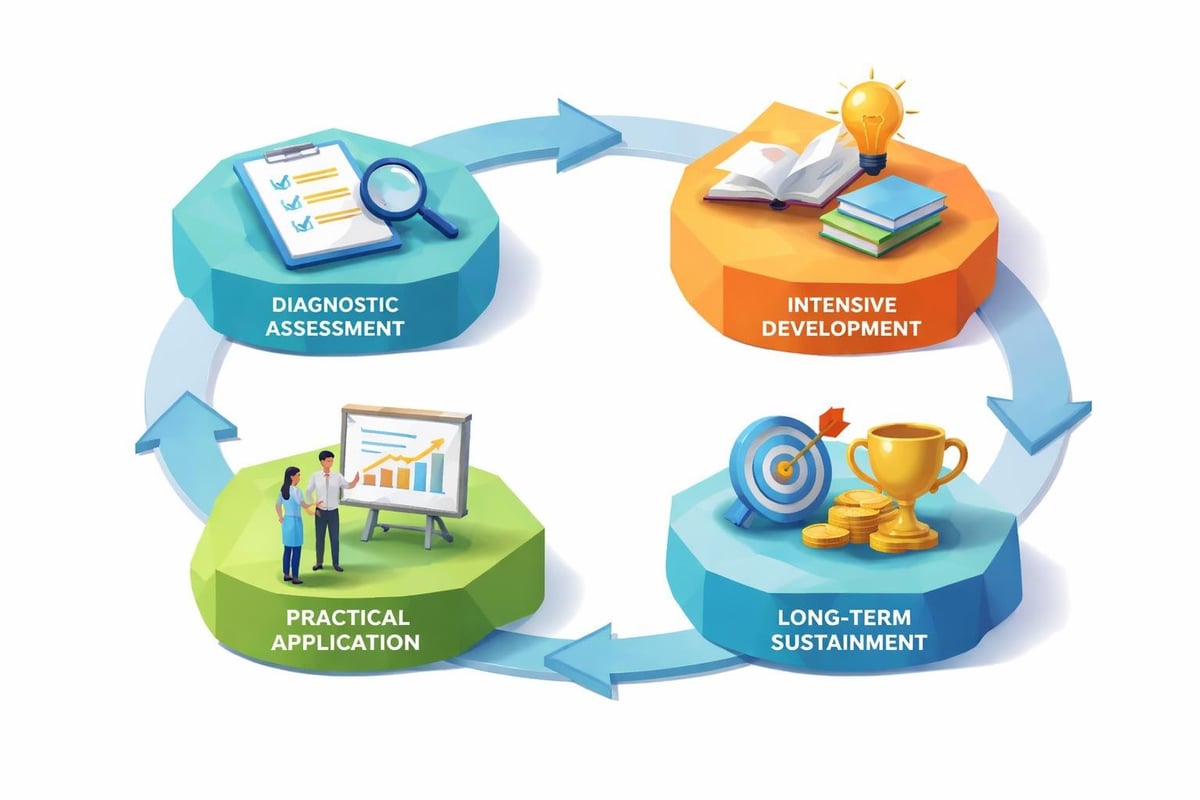
Phase 1: Diagnostic and Goal Setting (Weeks 1-3)
Conduct assessments, establish baseline metrics, and define success criteria aligned with organizational objectives.

Phase 2: Intensive Development (Months 1-6)
Implement weekly coaching sessions, practice new behaviors, and receive real-time feedback on leadership decisions.

Phase 3: Application and Integration (Months 6-9)
Apply learned competencies to high-stakes situations while gradually reducing coaching frequency.

Phase 4: Sustainment and Accountability (Months 9-12)
Establish peer accountability systems, measure cultural impact, and plan for ongoing development.

Leadership presence development programs in Berlin emphasize the integration of mindfulness practices with strategic leadership skills. This holistic approach helps executives manage the psychological demands of scaling while maintaining decision-making clarity.

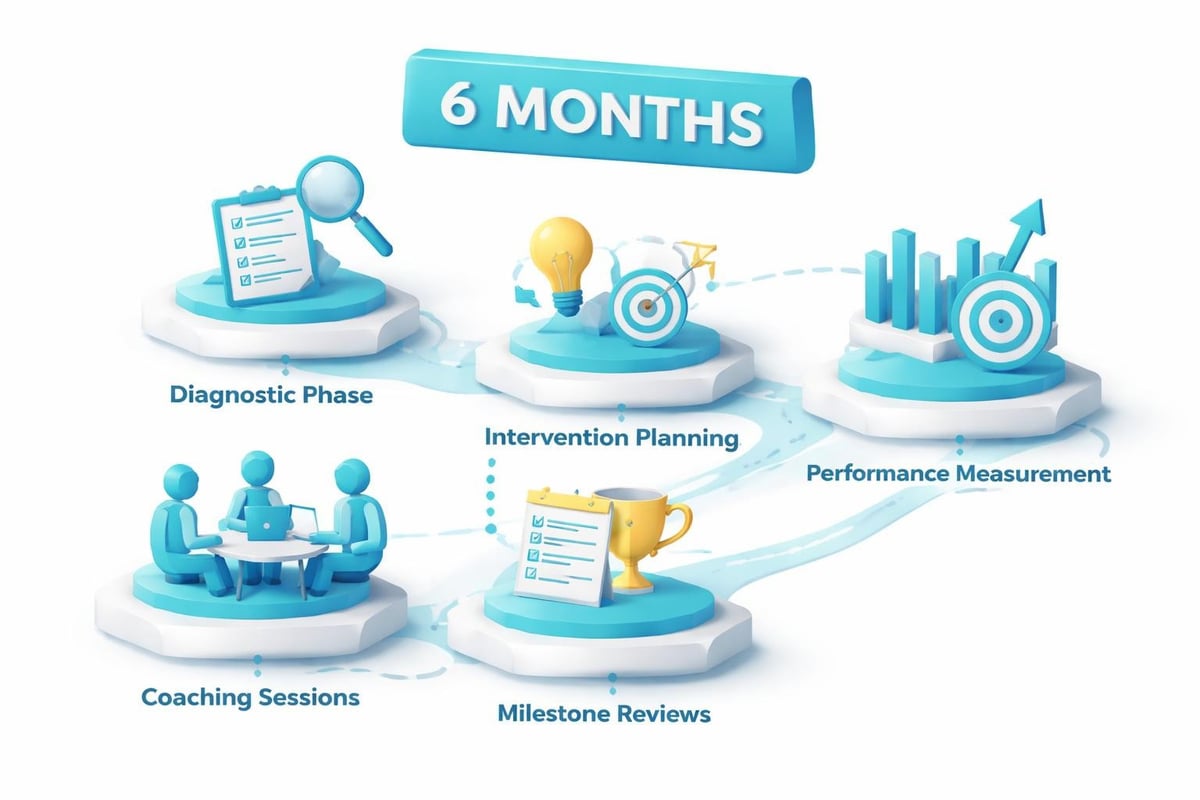
Coaching intervention timeline and milestones

Compliance, Governance, and Ethical Leadership Standards

Organizations operating in regulated industries face additional complexity when implementing leadership development programs. Financial services, healthcare, and government agencies must ensure coaching interventions align with compliance requirements and ethical standards.

Business scalability and leadership coaching in Berlin addresses these concerns through structured governance frameworks that document coaching objectives, maintain confidentiality protocols, and track outcomes against regulatory expectations.

Key Compliance Considerations

Professional coaching engagements in regulated environments require clear boundaries around:

  • Confidentiality vs. organizational reporting obligations
  • Data privacy and assessment storage requirements
  • Conflict of interest disclosures
  • Professional certification and credentialing standards
  • Documentation and audit trail maintenance

Organizations partnering with executive coaching providers who understand these requirements minimize legal risk while maximizing development impact. Coaches trained in compliance-aware methodologies design interventions that strengthen leadership effectiveness without creating regulatory exposure.

The intersection of building psychological safety and compliance requirements presents particular challenges. Leaders must create environments where team members feel safe raising concerns while maintaining appropriate information boundaries and escalation protocols.

Measuring Impact: KPIs and ROI for Leadership Development

Executive coaching represents a significant organizational investment. Demonstrating tangible returns requires rigorous measurement frameworks that connect leadership behavior changes to business outcomes.

Quantitative Metrics for Coaching Success

Metric Category Specific Indicators Measurement Method
Engagement Employee satisfaction scores, retention rates Quarterly surveys, HR analytics
Performance Revenue per employee, project completion rates Financial systems, project management tools
Culture Collaboration index, innovation metrics 360-degree feedback, cultural assessments
Leadership Decision quality, strategic alignment Peer review, board evaluations

Business scalability and leadership coaching in Berlin increasingly incorporates AI-driven analytics to track behavioral patterns and predict coaching impact. Machine learning algorithms identify correlations between specific leadership interventions and organizational performance shifts.

Qualitative indicators provide essential context for quantitative data. Focus groups, testimonials, and case studies reveal how coaching influences decision-making processes, team dynamics, and organizational culture in ways that numbers alone cannot capture.

Calculating True ROI on Leadership Investment

The formula for coaching ROI extends beyond simple cost-benefit analysis:

ROI = (Performance Gains – Coaching Investment) / Coaching Investment × 100

Performance gains include increased revenue, reduced turnover costs, improved productivity, and avoided crisis expenses. Organizations with top executive coaching firms report average ROI ranging from 500% to 700% when properly measured.

A Berlin-based technology company reduced executive turnover by 40% after implementing targeted leadership coaching for its senior team. The retained talent contributed strategic insights worth millions in avoided recruitment costs and preserved institutional knowledge.

Scaling Coaching Across Organizational Levels

While C-suite coaching delivers concentrated impact, sustainable business scalability requires leadership development across all organizational tiers. The challenge lies in maintaining coaching quality while expanding program reach.

Tiered Coaching Models for Enterprise Deployment

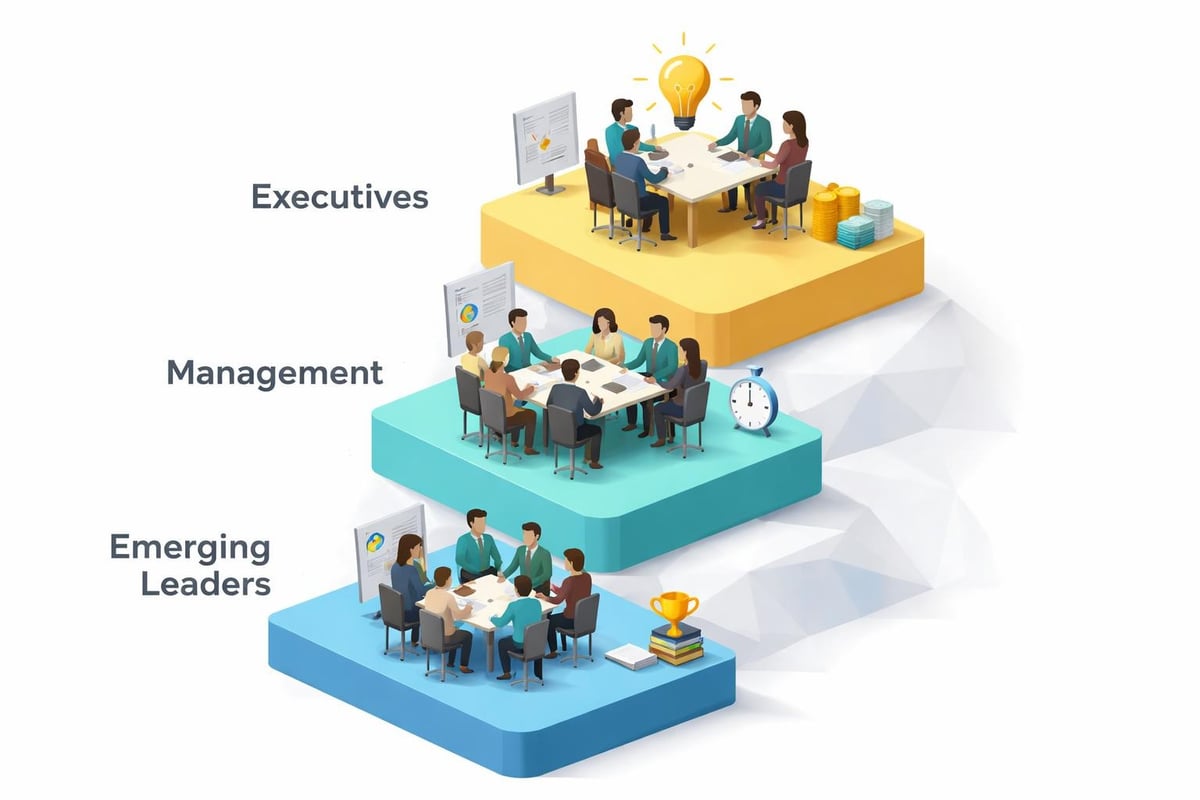
Executive Tier: Intensive 1:1 Coaching
Reserved for C-suite and senior vice presidents facing high-stakes decisions, major transitions, or performance challenges requiring specialized intervention.

Management Tier: Group Coaching Plus Individual Sessions
Mid-level managers participate in cohort-based learning supplemented with monthly individual coaching to address specific development needs.

Emerging Leaders Tier: Peer Coaching and Mentorship
High-potential individual contributors receive structured peer coaching training and mentorship from senior leaders.

This cascading model ensures business scalability and leadership coaching in Berlin programs reach the leaders who most influence day-to-day operations while controlling costs and maintaining quality standards.

Hypergrowth leadership programs specifically address the unique pressures facing companies scaling from 50 to 500 employees. These intensive interventions help leaders transition from hands-on management to strategic oversight.

Multi-tier organizational coaching structure

The Berlin Advantage: Why Location Matters for Leadership Development

Berlin’s unique ecosystem provides distinct advantages for organizations investing in leadership coaching. The city combines international business sophistication with a culture of experimentation and direct communication.

Cultural Factors Influencing Coaching Effectiveness

German business culture values precision, data-driven decision-making, and systematic approaches to problem-solving. These characteristics align naturally with structured coaching methodologies that emphasize assessment, clear objectives, and measurable outcomes.

The city’s international workforce brings diverse leadership perspectives that enrich coaching conversations. Executives working with mindfulness-based leadership coaches in Berlin access approaches integrating Eastern contemplative practices with Western strategic frameworks.

Berlin’s startup ecosystem creates a laboratory for testing innovative leadership approaches. Coaches working with high-growth companies develop cutting-edge interventions that later prove valuable for established corporations facing disruption.

Integration with Organizational Development Frameworks

Leadership coaching delivers maximum value when integrated with broader talent development systems. Standalone coaching initiatives risk creating isolated pockets of excellence that fail to shift organizational culture.

Effective integration requires alignment across multiple touchpoints:

  • Recruitment and onboarding processes
  • Performance management systems
  • Succession planning frameworks
  • Compensation and recognition programs
  • Learning and development pathways

HR leaders partnering with business scalability and leadership coaching in Berlin providers create ecosystems where coaching reinforces organizational values, competency models align with strategic priorities, and development investments compound over time.

Systemic coaching approaches view individual leaders as elements within larger organizational systems. Interventions designed from this perspective address both personal development and structural factors that enable or constrain leadership effectiveness.

Leveraging Technology for Program Scale

Digital platforms enable coaching programs to reach distributed teams while maintaining personalized intervention quality. Video conferencing, asynchronous messaging, and AI-powered insights create flexible coaching models suited to modern work environments.

Technology also enhances program administration through automated scheduling, progress tracking, and data visualization tools. Administrators monitor coaching engagement rates, identify leaders requiring additional support, and generate reports demonstrating program impact to stakeholders.

The most sophisticated platforms incorporate management and coaching integration features that help leaders apply coaching skills in daily interactions with their teams. This multiplier effect extends coaching benefits far beyond the primary coaching relationship.

Addressing Complex Leadership Challenges Through Specialized Interventions

Certain leadership situations demand specialized coaching expertise that goes beyond general professional development. Organizations facing these challenges require coaches with proven track records in specific intervention types.

Common Complex Scenarios Requiring Expert Coaching

Toxic Leadership Transformation
When valuable executives display abrasive behaviors that damage team morale, specialized interventions preserve talent while eliminating destructive patterns. These high-stakes engagements require coaches skilled in behavioral psychology and organizational dynamics.

Post-Merger Integration
Combining leadership teams from different organizational cultures creates predictable conflicts requiring skilled facilitation. Coaches help executives navigate competing priorities, establish shared vision, and build trust across formerly separate entities.

Crisis Leadership
Financial distress, public scandals, or operational failures demand leadership approaches distinct from normal business conditions. Coaches with crisis experience help executives maintain composure, communicate effectively, and make sound decisions under extreme pressure.

Rapid Scaling Leadership
Companies doubling or tripling in size annually require leaders who can build systems, delegate effectively, and maintain culture while managing chaos. Business scalability and leadership coaching in Berlin addresses these challenges through structured frameworks proven in high-growth environments.

Organizations seeking solutions to these complex scenarios benefit from precision coach matching systems that connect them with professionals possessing relevant specialized experience and demonstrated success with similar challenges.

Future-Proofing Leadership Through Adaptive Capacity Building

The accelerating pace of technological change, market disruption, and workforce evolution demands a new leadership competency: adaptive capacity. Leaders must develop comfort with ambiguity, skill in rapid learning, and resilience in the face of continuous change.

Forward-thinking coaching programs emphasize meta-skills that transcend specific business contexts:

  1. Learning agility and intellectual flexibility
  2. Emotional regulation under uncertainty
  3. Systems thinking and pattern recognition
  4. Collaborative problem-solving across diverse teams
  5. Ethical decision-making amid competing priorities

These competencies enable leaders to navigate challenges that cannot be anticipated or planned for in traditional strategic frameworks. Business scalability and leadership coaching in Berlin increasingly incorporates scenario planning, simulation exercises, and reflective practices that build these adaptive capacities.

Management consulting integration with leadership coaching creates powerful synergies. Strategic advisors identify organizational challenges requiring leadership intervention, while coaches develop the executive capabilities necessary to implement recommended changes effectively.

The convergence of coaching, strategy, and operational execution creates comprehensive transformation programs that address business challenges from multiple angles simultaneously. This integrated approach delivers superior results compared to isolated initiatives focused on single organizational dimensions. Organizations establishing robust accountability frameworks ensure that coaching insights translate into sustained behavioral change and measurable business results.


Business scalability and leadership coaching in Berlin represents a strategic investment in organizational capacity that compounds over time. When implemented with precision diagnostics, expert coach matching, and rigorous measurement frameworks, leadership development programs deliver substantial returns through improved decision-making, stronger cultures, and enhanced competitive positioning. Noomii Leadership Coaching provides organizations with the structured approach, global coach network, and proven methodologies necessary to transform leadership challenges into competitive advantages, ensuring sustainable growth and lasting organizational impact.

Claude Prompts to Build Coaching Systems That Scale

Coaching businesses thrive on structure, but building robust systems takes time most coaches don’t have. Whether you’re managing executive development programs, leadership assessments, or team facilitation, the administrative overhead can pull focus from what matters: delivering measurable client results. Using claude prompts to help coaches build systems offers a practical solution, enabling you to automate repetitive tasks, standardize processes, and scale operations without sacrificing quality or personal touch.

Why Systems Matter for Coaching Organizations

Every successful coaching practice runs on invisible infrastructure. Business coaches who scale beyond individual sessions rely on documented intake processes, session templates, follow-up sequences, and client progress tracking. Without these systems, growth stalls or quality deteriorates.

Mid-market companies seeking corporate coaching need partners who demonstrate operational excellence. When you use claude prompts to help coaches build systems, you signal professionalism and readiness to handle complex engagements. You create repeatable workflows that deliver consistent outcomes, whether you’re coaching one manager or facilitating leadership development across 50 employees.

The Hidden Cost of Manual Processes

Manual documentation drains productive hours. After every coaching session, you face note-taking, action item tracking, follow-up email drafting, and progress report generation. Multiply this across multiple clients, and you’re spending 10-15 hours weekly on administration rather than coaching.

Systems eliminate this friction. Well-crafted prompts transform Claude into your operations assistant, handling documentation while you focus on client transformation.

Administrative tasks before and after system automation

Essential Claude Prompts for Building Coaching Systems

The best practices for prompt engineering emphasize clarity, context, and role definition. When developing claude prompts to help coaches build systems, you need templates that deliver consistent output across varied scenarios.

Client Intake and Assessment Workflows

Start with a comprehensive intake prompt that transforms raw client information into structured profiles:

Prompt: “You are an executive coaching intake specialist. Based on the following client responses, create a detailed coaching profile including: primary objectives, current challenges, leadership style assessment, team dynamics, success metrics, and recommended coaching approach. Format as a structured brief suitable for session planning.”

This single prompt standardizes how you process new clients, ensuring nothing falls through cracks regardless of engagement size.

Session Documentation Templates

Effective accountability structures require detailed session records. Use this systematic approach:

Documentation Element Prompt Function Output Format
Session summary Capture key discussion points Structured bullets
Action commitments Track client accountability items Dated task list
Progress indicators Measure against KPIs Metric table
Follow-up items Schedule next touchpoints Calendar entries

Prompt: “Transform these session notes into a professional executive coaching recap including: key insights discussed, action items with owners and deadlines, progress on previous commitments, observable behavioral shifts, and recommended focus areas for next session.”

Automating Your Coaching Operations

Beyond individual sessions, scaling coaching practices requires systems that handle complex organizational scenarios. Claude prompts to help coaches build systems excel at creating operational frameworks for team coaching and leadership development programs.

Team Coaching Session Frameworks

When facilitating team sessions, consistency matters. Develop a prompt that structures facilitation guides:

Prompt: “Create a 90-minute team coaching session plan for addressing [specific challenge]. Include: opening question, main discussion framework, breakout activity instructions, decision-making protocol, action item capture method, and closing commitment structure. Format for easy facilitation.”

This transforms preparation time from two hours to fifteen minutes while maintaining quality standards comparable to manual planning.

Leadership Assessment Processing

360-degree feedback generates massive data. Systemize the analysis:

  • Data synthesis: Convert raw survey responses into leadership themes
  • Gap identification: Highlight discrepancies between self-perception and team feedback
  • Development prioritization: Rank improvement areas by impact and feasibility
  • Action planning: Generate specific behavioral experiments tied to assessment insights

Leadership development system workflow

Building Content and Marketing Systems

Creating coaching content systematically establishes thought leadership. Use claude prompts to help coaches build systems that generate consistent educational material for prospects and clients.

Thought Leadership Production

Prompt: “Based on this coaching session theme [insert topic], create: one LinkedIn post highlighting a leadership insight, three discussion questions for manager training, one case study framework demonstrating business impact, and two follow-up conversation starters for ongoing coaching relationships.”

This single prompt produces five content assets from one coaching insight, multiplying your marketing efficiency.

Lead Generation Workflows

Generating coaching leads requires systematic outreach. Develop prompts that personalize at scale:

Prompt: “Draft a personalized outreach email to [company name] addressing [specific business challenge visible in recent news/earnings]. Reference their situation, connect to measurable coaching outcomes we deliver (faster decisions, stronger execution, higher retention), and propose a specific next step. Tone: professional, results-focused, no fluff.”

Combine this with lead qualification prompts that score prospects against your ideal client profile, focusing effort where ROI potential is highest.

Implementing Your System Stack

Successful executive coaches don’t just collect prompts. They build integrated systems where outputs from one prompt feed into the next, creating seamless operational flow.

The Five-Layer System Architecture

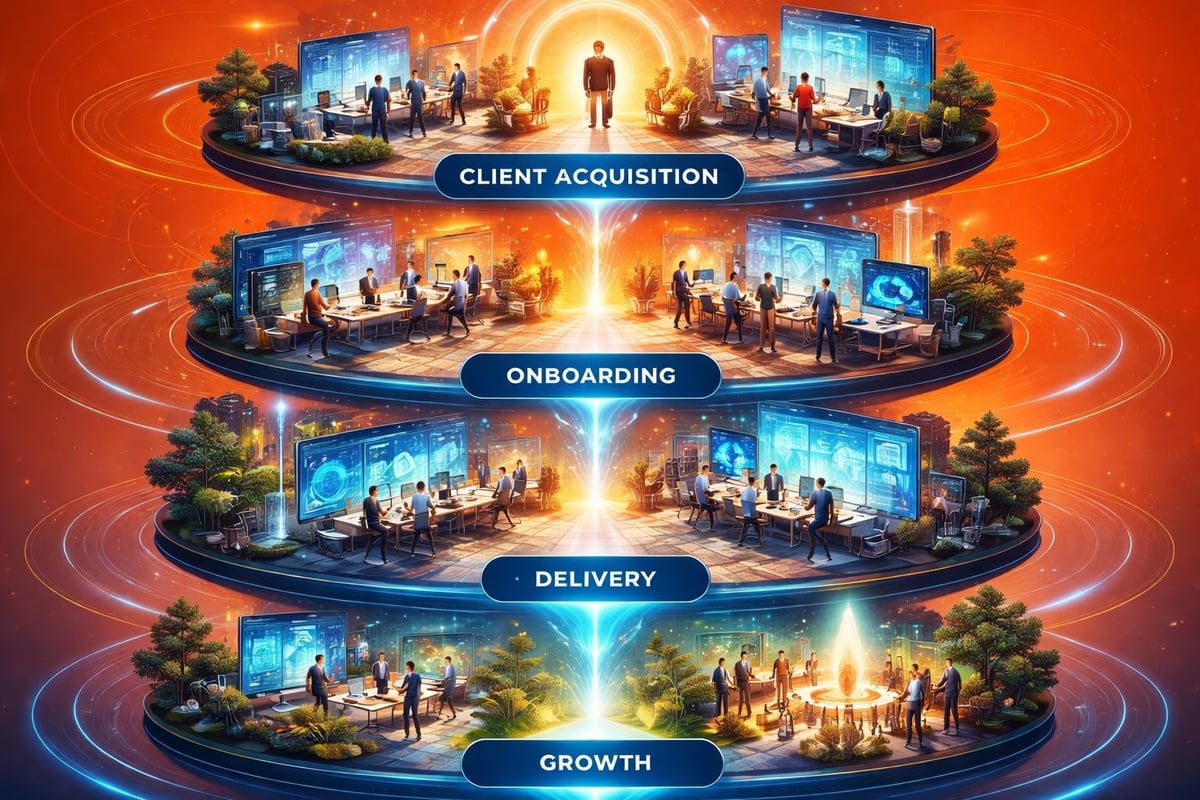
  1. Client acquisition layer: Lead qualification, outreach personalization, discovery call preparation
  2. Onboarding layer: Intake processing, contract generation, kickoff session planning
  3. Delivery layer: Session documentation, progress tracking, accountability follow-up
  4. Measurement layer: KPI dashboard creation, ROI reporting, stakeholder updates
  5. Growth layer: Client success stories, referral request templates, expansion opportunity identification

Each layer connects through standardized data formats, ensuring information flows without manual transfer. When you use AI for business coaching strategically, these systems compound efficiency gains across your practice.

Integrated coaching system layers

Advanced System Optimization Techniques

As your systems mature, refine prompts based on actual outputs. The prompt engineering best practices emphasize iteration. Track which prompts generate usable first drafts versus those requiring heavy editing.

Building Prompt Libraries

Organize your claude prompts to help coaches build systems into categorical libraries:

  • Client management prompts: 12-15 variations covering different coaching scenarios
  • Content creation prompts: 8-10 templates for various marketing channels
  • Assessment processing prompts: 5-7 frameworks for different evaluation types
  • Program design prompts: 6-8 structures for workshops, training modules, and facilitation guides

Version control matters. When a prompt consistently delivers better results, archive previous versions but maintain access for reference. This creates institutional knowledge independent of individual memory.

Integration with Existing Tools

Your systems should complement, not replace, existing platforms. Claude excels at generating content that populates your CRM, project management software, or communication tools. Design prompts with output formats matching your tech stack requirements.

For companies using psychological safety frameworks, create prompts that translate session insights into safety metric tracking suitable for your existing dashboards.

Measuring System Effectiveness

Systems justify themselves through measurable impact. Track these metrics:

Metric Before Systems With Systems Target Improvement
Admin hours/week 12-15 3-5 70% reduction
Client onboarding time 4-6 hours 1-2 hours 65% reduction
Session prep time 45-60 min 15-20 min 70% reduction
Follow-up completion rate 60-70% 95%+ 35% improvement

When entrepreneurship coaching clients ask about operational leverage, these numbers tell the story. Systems free capacity for revenue-generating activities while improving client experience through consistency and thoroughness.


Building scalable coaching systems transforms how you deliver value, whether you’re developing individual leaders or facilitating team transformations. Using claude prompts to help coaches build systems creates repeatable processes that maintain quality while freeing your focus for strategic client work. If you’re ready to move beyond administrative overhead and deliver corporate coaching with measurable KPIs and visible ROI, Noomii offers month-to-month executive coaching, leadership development, and team facilitation that ties directly to business outcomes. We coach live in your meetings, track progress against clear metrics, and stay because results are undeniable.

Business Growth & Accountability Programs in Adelaide

Adelaide’s competitive business landscape demands more than traditional management approaches. Organizations across South Australia increasingly recognize that sustainable growth stems from accountability frameworks combined with strategic leadership development. Business growth and accountability programs in Adelaide provide the structured interventions necessary to transform organizational performance, whether you’re leading a government agency, scaling a startup, or managing enterprise-level teams.

Why Adelaide Businesses Need Structured Accountability Programs

The South Australian economy continues to evolve, presenting unique challenges for organizations navigating workforce transformation, regulatory compliance, and market expansion. Leaders who implement business growth and accountability programs in Adelaide gain measurable advantages over competitors relying solely on informal development approaches.

Accountability programs create systematic frameworks that translate strategic objectives into daily actions. These programs establish clear performance metrics, regular check-ins, and transparent reporting mechanisms that eliminate ambiguity around expectations and deliverables.

The Accountability Gap in Traditional Business Development

Most organizations operate with significant accountability gaps that undermine growth initiatives. Employees may understand high-level goals but lack clarity on their specific contributions or the consequences of missed targets. This disconnect creates environments where strategic plans remain documents rather than actionable roadmaps.

Common accountability failures include:

  • Inconsistent follow-through on strategic initiatives
  • Absence of clear ownership for critical outcomes
  • Limited visibility into team performance metrics
  • Weak correlation between individual actions and organizational results
  • Cultural tolerance for missed deadlines and vague commitments

Structured accountability programs address these failures by creating visible systems that track progress, celebrate achievements, and identify obstacles before they derail strategic objectives. Business Growth Programs in South Australia offer frameworks that help organizations implement these systematic approaches effectively.

Accountability framework components

Components of Effective Growth and Accountability Programs

Successful business growth and accountability programs in Adelaide share core elements that distinguish them from generic training initiatives. These programs integrate assessment, planning, execution, and measurement into cohesive frameworks that deliver sustainable results.

Evidence-Based Leadership Diagnostics

Growth begins with accurate understanding of current capabilities and limitations. Advanced diagnostic tools evaluate leadership effectiveness, team dynamics, and organizational culture to establish baseline measurements. These assessments identify specific behavioral patterns, communication gaps, and decision-making weaknesses that constrain performance.

Organizations implementing psychological safety frameworks often discover that leadership behaviors inadvertently suppress innovation and honest feedback. Diagnostic assessments reveal these hidden patterns, enabling targeted interventions that transform workplace cultures.

Assessment Type Focus Area Business Impact
Leadership Competency Analysis Individual executive capabilities Improved decision quality, strategic thinking
Team Dynamics Evaluation Collaboration patterns, conflict resolution Enhanced productivity, reduced turnover
Cultural Health Metrics Organizational values alignment Stronger engagement, innovation capacity
Performance KPI Tracking Results against defined objectives Revenue growth, operational efficiency

Precision Matching and Tailored Interventions

Generic coaching programs fail because they ignore the nuanced requirements of different industries, organizational structures, and leadership challenges. The Australian Centre for Business Growth emphasizes the importance of matching business leaders with programs specifically designed for their growth stage and industry context.

Precision matching connects leaders with experienced coaches who possess relevant sector expertise and specialized skills in addressing specific challenges. A manufacturing executive facing supply chain disruption requires different interventions than a healthcare administrator managing regulatory compliance issues.

Critical matching criteria include:

  1. Industry sector experience and regulatory knowledge
  2. Specific leadership challenge expertise (conflict resolution, strategic planning, change management)
  3. Organizational size and complexity alignment
  4. Cultural compatibility and communication style
  5. Track record addressing similar challenges

This targeted approach ensures every coaching interaction delivers maximum relevance and practical application. Programs that integrate executive coaching frameworks with accountability structures create exponential impact by combining expert guidance with systematic follow-through.

Implementation Models for Adelaide Organizations

Business growth and accountability programs in Adelaide operate across various implementation models, each designed for different organizational needs and resource constraints.

Workshop-Based Acceleration Programs

Intensive workshop programs compress learning and planning into focused sessions that generate immediate action plans. The Small Business Fundamentals Program demonstrates how concentrated workshops build capabilities in strategic areas like financial management, marketing effectiveness, and operational systems.

These programs work exceptionally well for small to mid-sized businesses requiring rapid capability development without lengthy engagement timelines. Participants develop concrete implementation plans during workshop sessions, then receive accountability check-ins to ensure consistent execution.

Ongoing Coaching and Accountability Partnerships

Organizations addressing complex leadership challenges or cultural transformation benefit from extended coaching relationships with built-in accountability mechanisms. These programs typically span 6-12 months, combining regular coaching sessions with performance tracking and milestone reviews.

Structured accountability programs that include daily stand-ups and weekly workshops create rhythms that embed new behaviors into organizational routines. The combination of external accountability and peer support generates momentum that sustains progress through inevitable obstacles.

Program implementation timeline

Hybrid Models for Enterprise Organizations

Large organizations and government agencies require scalable approaches that accommodate multiple leadership levels simultaneously. Hybrid models combine group workshops for broad capability building with individualized coaching for key executives and team leaders.

These programs integrate compliance requirements, governance standards, and organizational policies into coaching frameworks. Government agencies particularly benefit from structured approaches that align leadership development with public service values and accountability standards.

Measuring Impact and Return on Investment

Business growth and accountability programs in Adelaide must demonstrate tangible value through measurable outcomes. Organizations investing in leadership development expect clear evidence that interventions generate meaningful business results.

Defining Key Performance Indicators

Effective measurement begins with establishing specific KPIs that connect leadership behaviors to business outcomes. These metrics should track both leading indicators (behavioral changes, skill development) and lagging indicators (financial performance, employee retention, customer satisfaction).

Essential measurement categories:

  • Leadership Effectiveness: 360-degree feedback scores, decision quality metrics, strategic initiative completion rates
  • Team Performance: Productivity metrics, collaboration scores, project delivery timelines
  • Cultural Health: Employee engagement scores, psychological safety assessments, retention rates
  • Business Results: Revenue growth, profitability improvements, market share expansion, operational efficiency gains

Organizations that implement toxic leader transformation programs often see dramatic improvements in team morale and productivity within 90 days, demonstrating how addressing specific leadership dysfunction generates measurable cultural and business impact.

Tracking Progress Through Program Milestones

Accountability programs succeed through consistent progress monitoring against defined milestones. Monthly reviews assess advancement toward goals, identify emerging obstacles, and adjust strategies based on real-world feedback.

Month Focus Area Success Metrics Accountability Mechanism
1-2 Assessment & Planning Diagnostic completion, goal clarity Baseline reports, action plan approval
3-4 Initial Implementation Behavior changes, early wins Weekly check-ins, peer accountability
5-6 Refinement & Scaling Expanded application, team adoption Monthly reviews, stakeholder feedback
7-12 Sustainability & ROI Sustained performance, business results Quarterly assessments, ROI calculation

This structured approach ensures programs maintain momentum and deliver progressively expanding benefits throughout the engagement period.

Industry-Specific Applications in Adelaide

Different sectors within Adelaide’s economy require customized approaches to business growth and accountability programs that reflect their unique challenges and opportunities.

Wine Industry Growth Programs

South Australia’s wine sector faces distinct pressures around market differentiation, export expansion, and operational efficiency. The Wine Industry Association’s Business Growth Program provides specialized coaching that addresses these sector-specific challenges while building leadership capabilities.

Wine enterprise leaders benefit from accountability structures that track progress on expansion initiatives, brand development, and operational improvements while maintaining focus on quality and heritage values that define premium positioning.

Technology and Startup Ecosystem

Adelaide’s growing technology sector requires accountability programs that balance rapid scaling with sustainable business practices. The South Australian startup ecosystem provides resources for entrepreneurs, but sustained growth demands structured accountability that ensures execution keeps pace with vision.

Technology leaders often struggle with transition from founder-driven operations to professional management structures. Business growth and accountability programs in Adelaide help tech executives develop systematic leadership approaches that support scaling without compromising innovation cultures.

Sector-specific program elements

Government and Public Sector Leadership

Public sector organizations operate within stringent accountability frameworks that demand transparent governance and measurable outcomes. Leadership programs for government agencies must align with public service values while addressing practical challenges around team motivation, change management, and stakeholder engagement.

Programs designed for government leaders incorporate compliance requirements seamlessly into development frameworks, ensuring accountability structures reinforce rather than conflict with existing governance mechanisms. This integration creates cohesive approaches that strengthen both leadership capability and organizational integrity.

Selecting the Right Program for Your Organization

Adelaide organizations considering business growth and accountability programs face numerous options with varying approaches, costs, and commitment requirements. Making informed selections requires evaluating programs against specific organizational needs and current readiness levels.

Assessment of Organizational Readiness

Successful program implementation depends on organizational readiness across multiple dimensions. Leadership commitment, resource availability, and cultural openness to change all influence program outcomes. Organizations should honestly assess their current state before committing to intensive development initiatives.

Readiness evaluation questions:

  1. Does executive leadership demonstrate visible commitment to accountability and growth?
  2. Are adequate resources (time, budget, personnel) available to support program participation?
  3. Does organizational culture support honest feedback and behavioral change?
  4. Are clear business objectives defined that leadership development should advance?
  5. Do existing systems provide baseline data for measuring program impact?

Organizations scoring high on readiness indicators achieve significantly better results from structured programs than those attempting transformations without foundational elements in place.

Evaluating Program Features and Provider Capabilities

Different programs emphasize various components of the accountability and growth equation. Some focus primarily on skills training, others on strategic planning, and still others on behavioral coaching and cultural transformation. The right choice depends on which gaps most constrain your organization’s performance.

Critical program evaluation criteria include:

  • Evidence-based methodologies: Programs built on validated assessment tools and proven coaching frameworks
  • Customization capabilities: Ability to adapt standard approaches to your specific industry and organizational context
  • Coach qualifications: Experience levels, certifications, and sector expertise of program facilitators
  • Measurement systems: Robust tracking mechanisms that demonstrate progress and ROI
  • Scalability: Capacity to serve multiple leadership levels and team sizes simultaneously
  • Integration support: Assistance incorporating program elements into existing development systems

Organizations benefit from programs that combine structured accountability mechanisms with flexibility to address emerging challenges and opportunities as they arise during the engagement period.

Building Sustainable Accountability Cultures

The ultimate value of business growth and accountability programs in Adelaide extends beyond individual leader development to transformation of organizational cultures. Programs that embed accountability into daily operations create self-sustaining improvement systems that continue generating value long after formal interventions conclude.

Establishing Clear Ownership and Transparency

Accountability cultures require unambiguous ownership for every significant organizational outcome. Leaders must define who owns what results, establish transparent tracking mechanisms, and create regular forums for progress reporting. This clarity eliminates the diffusion of responsibility that allows critical initiatives to stall.

Transparency operates as the foundation for accountability. When performance data, progress updates, and challenge areas are visible across teams, peer accountability naturally reinforces formal structures. Organizations that embrace transparency see accelerated problem-solving as obstacles become shared challenges rather than isolated failures.

Creating Rhythms of Accountability

Sustainable accountability depends on predictable rhythms that build checking progress into organizational routines. Weekly stand-ups, monthly reviews, and quarterly strategic assessments create multiple accountability layers that catch issues at appropriate intervention points.

These rhythms transform accountability from episodic events into continuous processes. Leaders develop habits of preparation, reporting, and adjustment that become automatic rather than burdensome.

Recognizing Progress and Addressing Obstacles

Effective accountability systems balance celebration of progress with direct confrontation of obstacles and underperformance. Recognition reinforces positive behaviors and builds momentum, while honest dialogue about challenges enables timely course corrections.

Organizations implementing managing and coaching frameworks discover that combining accountability with developmental support generates superior results compared to punitive approaches. Leaders held accountable within supportive environments demonstrate greater resilience, creativity, and sustained performance improvement.


Business growth and accountability programs in Adelaide provide the structured frameworks organizations need to transform leadership effectiveness and operational performance. By combining evidence-based diagnostics, precision coaching, and systematic accountability mechanisms, these programs deliver measurable results that compound over time. Whether your organization faces challenges with toxic leadership patterns, strategic execution gaps, or cultural transformation needs, Noomii Leadership Coaching offers tailored programs that align individual development with institutional priorities. Our precision matching process connects your leaders with experienced coaches who deliver targeted interventions supported by robust accountability structures, ensuring your investment in leadership development generates tangible business results.

Claude Prompts to Help Coaches Run Webinars in 2026

Webinars remain one of the most effective tools for coaches to demonstrate expertise, build trust, and convert prospects into clients. However, planning and executing a compelling webinar requires balancing content quality, audience engagement, and conversion optimization. Artificial intelligence, specifically Claude, has emerged as a powerful assistant for coaches who need to streamline webinar creation without sacrificing quality. Using strategic claude prompts to help coaches run webinars can transform how you approach every stage of the process, from initial concept to post-event follow-up.

Crafting Webinar Topics That Attract Your Ideal Clients

The foundation of any successful webinar starts with a topic that resonates with your target audience’s specific pain points and aspirations. Generic topics produce generic results, while focused, benefit-driven topics drive registrations and engagement.

Identifying High-Value Topics

A well-structured prompt helps Claude analyze your coaching niche and generate topics that align with business outcomes. For example:

Prompt: “I work with mid-market company managers who struggle with accountability and execution. Generate five webinar topics that address common leadership challenges and promise measurable improvements. Each topic should include a clear benefit statement and suggested webinar duration.”

This approach ensures your webinar addresses real problems your audience faces daily. Business coaches frequently use this method to create webinars that speak directly to organizational pain points rather than theoretical frameworks.

  • Benefit-focused titles that promise specific outcomes
  • Time-bound solutions addressing urgent challenges
  • Role-specific content tailored to manager, executive, or team leader needs
  • Measurable results that connect to KPIs and ROI

Testing Topic Variations

Claude can also help you A/B test different title formulations to determine which generates higher registration rates. This saves countless hours of manual brainstorming while providing data-driven options.

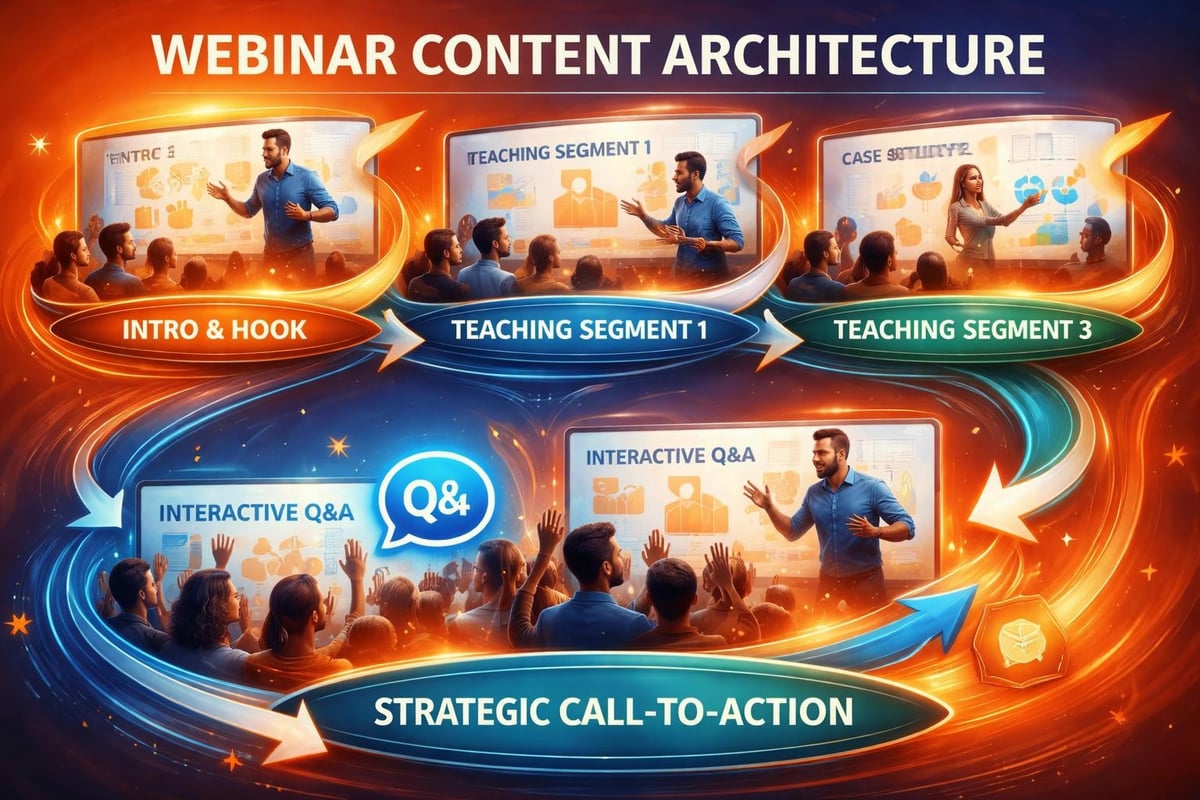
Webinar content structure

Building Registration Pages That Convert Browsers Into Attendees

Your registration page serves as the gateway to webinar success. Converting casual browsers into committed attendees requires compelling copy that builds anticipation and demonstrates value. Leveraging claude prompts to help coaches generate leads extends naturally to webinar registration optimization.

Prompt: “Write registration page copy for a 60-minute webinar titled ‘[Your Title].’ The page should include: a headline that creates urgency, three bullet points highlighting what attendees will learn, a brief bio establishing my credibility in corporate coaching, and a clear call-to-action. The audience consists of managers at mid-market companies seeking practical leadership solutions.”

Registration Element Purpose Claude Assistance
Headline Capture attention and promise value Generate 5-10 variations testing different angles
Bullet points Specific learning outcomes Create benefit-driven statements with measurable results
Speaker bio Establish credibility Craft concise authority positioning
CTA Drive registration Test urgency-driven vs. value-driven language

This structured approach ensures every element of your registration page works together to maximize conversions. For coaches focused on leadership development, positioning the webinar as a solution to specific organizational challenges significantly increases registration rates.

Designing Interactive Content That Maintains Engagement

Maintaining audience attention throughout your webinar requires strategic content structure and planned interaction points. Static presentations lose attention within fifteen minutes, while interactive webinars keep participants engaged and increase conversion rates.

Structuring Your Content Flow

Prompt: “Create a detailed 60-minute webinar outline on ‘[Topic]’ for managers struggling with team accountability. Include: opening hook (3 minutes), problem identification (7 minutes), three main teaching segments with real-world examples (35 minutes total), interactive polls at strategic points, Q&A integration (10 minutes), and closing call-to-action (5 minutes). Each segment should build toward the next logically.”

This framework ensures your content flows naturally while incorporating engagement mechanisms. Creating engaging webinars requires balancing education with interaction, and Claude excels at mapping this balance.

  • Opening hooks that establish relevance immediately
  • Interactive polls placed every 12-15 minutes
  • Case study integration showing real results with measurable outcomes
  • Q&A checkpoints that address concerns before they become barriers

Developing Supporting Materials

Claude can generate slide outlines, speaker notes, and handout templates that reinforce your key messages. This ensures consistency across all webinar materials while saving preparation time.

Creating Post-Webinar Follow-Up Sequences

The webinar itself represents just one touchpoint in your client acquisition process. Strategic follow-up transforms interested attendees into paying clients. Using claude prompts to help coaches run webinars extends to nurturing these warm leads effectively.

Prompt: “Develop a five-email follow-up sequence for webinar attendees. Email 1 (immediate): thank you and replay link. Email 2 (day 2): additional resource related to key teaching point. Email 3 (day 4): case study showing results. Email 4 (day 6): addressing common objections. Email 5 (day 9): clear offer with urgency. Each email should be conversational, provide value, and include a soft call-to-action until the final email.”

This systematic approach prevents leads from going cold while building trust through continued value delivery.

Follow-up email sequence

Optimizing Promotional Strategies Across Channels

Driving registrations requires multi-channel promotion with consistent messaging adapted to each platform’s unique characteristics. Claude can help develop platform-specific promotional content that maintains brand voice while optimizing for each channel’s best practices.

Social Media Promotion

Prompt: “Create promotional posts for LinkedIn, Facebook, and Twitter announcing my upcoming webinar on ‘[Topic].’ Each post should: highlight a specific pain point the webinar solves, include relevant statistics about the problem, mention one actionable takeaway attendees will learn, and include a registration call-to-action. Adapt tone and length for each platform’s audience.”

For coaches specializing in executive coaching, LinkedIn often delivers the highest-quality registrations when messaging emphasizes business outcomes and ROI.

Channel Optimal Post Length Key Focus Best Posting Time
LinkedIn 150-200 words Professional outcomes, data Tuesday-Thursday, 7-9 AM
Facebook 100-150 words Community building, stories Wednesday-Friday, 1-3 PM
Twitter 120-280 characters Quick insights, urgency Monday-Friday, 12-1 PM
Email 200-300 words Detailed benefits, exclusivity Tuesday, 10 AM or Thursday, 2 PM

Email Campaign Development

Your existing email list represents your warmest audience for webinar promotion. ChatGPT prompts to help coaches automate business processes can be adapted for Claude to generate email campaigns that segment audiences based on previous engagement.

Measuring Success and Iterating for Better Results

Effective webinar strategies require continuous improvement based on performance data. Claude can help analyze results and suggest specific improvements for future webinars.

Prompt: “Based on these webinar metrics (registration rate: 22%, attendance rate: 38%, engagement score: 6.7/10, conversion rate: 12%), identify three specific improvements I should implement for my next webinar. For each improvement, explain the likely impact and provide a concrete implementation strategy.”

This data-driven approach ensures each webinar performs better than the last. Companies working with accountability-focused coaching benefit significantly from tracking these metrics, as demonstrated by organizations like AccountabilityNow that emphasize measurable business results.

Webinar performance dashboard

Repurposing Webinar Content for Maximum Impact

A single webinar contains multiple content assets waiting to be extracted and repurposed. Using claude prompts to help coaches create content allows you to transform one webinar into weeks of valuable content.

Prompt: “I recorded a 60-minute webinar on ‘[Topic].’ Generate a content repurposing plan that includes: five blog post topics extracted from main teaching points, ten social media posts highlighting key insights, three short video scripts (under 2 minutes each), one comprehensive guide expanding on the webinar content, and five email newsletter topics. Each piece should stand alone while driving interest in the full webinar replay.”

This maximizes the return on your webinar preparation investment while maintaining consistent visibility across channels. The same principles that make chatgpt prompts to help coaches run webinars effective apply equally to content repurposing strategies.


Strategic use of claude prompts to help coaches run webinars transforms a time-intensive process into a streamlined system that delivers consistent results. By applying these prompts across topic selection, registration optimization, content development, follow-up sequences, and performance analysis, you create webinars that educate, engage, and convert. If you’re ready to implement coaching strategies that deliver measurable business results without long-term contracts, Noomii Corporate Coaching offers hands-on support that ties directly to your KPIs and drives visible outcomes for your leadership team.

Business Performance Coaching for SMEs in Perth 2026

Small and medium enterprises in Perth face unprecedented challenges in 2026. Between talent retention pressures, economic volatility, and the constant need to innovate, business owners must operate at peak efficiency while simultaneously developing their leadership capabilities. Business performance coaching for SMEs in Perth has emerged as a critical strategic investment, delivering measurable improvements in revenue, operational efficiency, and organizational culture. This specialized approach combines executive development with practical business strategy, creating sustainable competitive advantages for companies navigating Western Australia’s dynamic marketplace.

Why Perth SMEs Need Specialized Performance Coaching

The Perth business environment presents unique challenges that generic coaching programs cannot adequately address. Local SMEs compete for talent in a tight labor market while managing the complexities of resource sector volatility and geographic isolation from eastern markets.

Business performance coaching for SMEs in Perth addresses these specific regional factors while focusing on universal growth principles. Unlike traditional consulting, performance coaching develops internal capabilities rather than creating dependency on external advisors. This approach builds resilience and adaptive capacity within leadership teams.

Research demonstrates the tangible value of professional coaching interventions. Studies on the real ROI of business coaching for SMEs reveal productivity gains averaging 53% and revenue improvements of 48% among coached businesses compared to non-coached counterparts.

The Performance Gap in SME Leadership

Most SME founders excel at technical skills within their industry but lack formal training in strategic leadership, financial management, or organizational development. This competency gap becomes critical as businesses scale beyond 15-20 employees.

Common performance barriers include:

  • Decision-making paralysis when facing complex strategic choices
  • Operational firefighting that prevents strategic thinking
  • Talent development deficits leading to high turnover
  • Financial blind spots obscuring profitability levers
  • Communication breakdowns between leadership and teams

Performance coaching systematically addresses these gaps through structured interventions, accountability frameworks, and skill-building exercises tailored to each leader’s developmental stage.

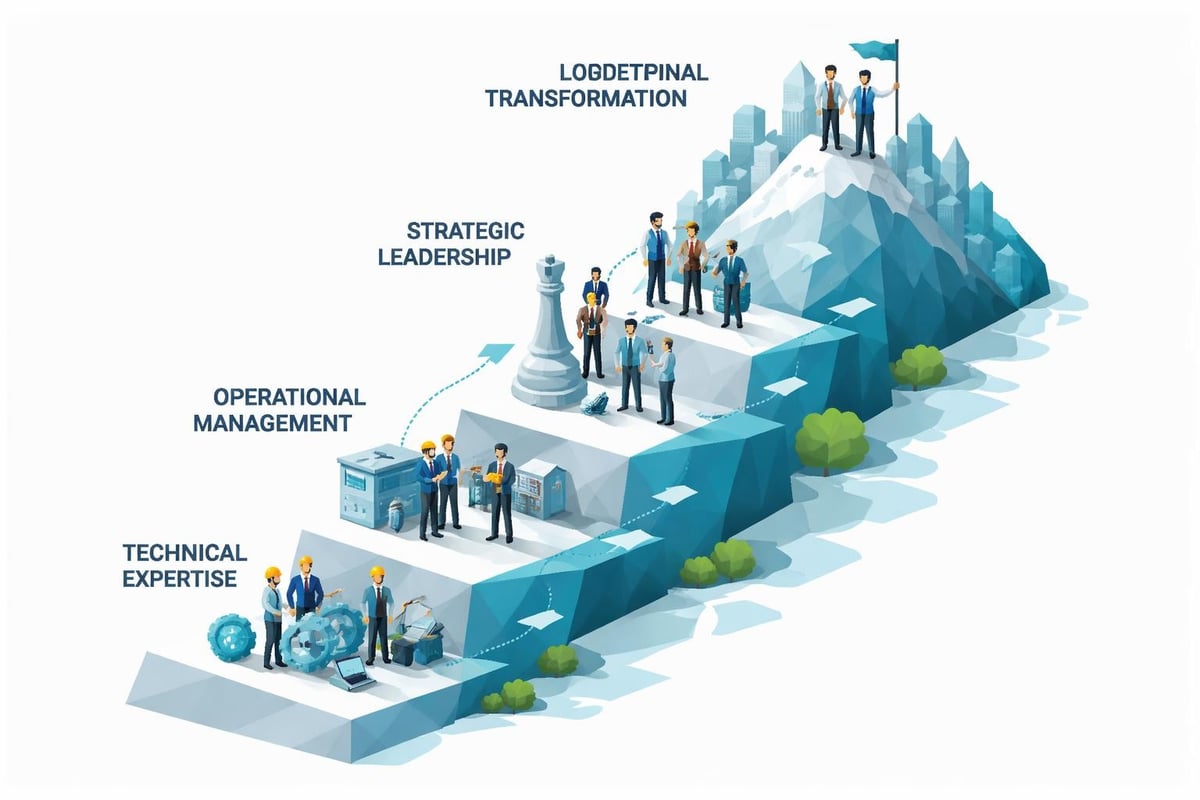
SME leadership capability progression

Core Components of Effective Business Performance Coaching

Business performance coaching for SMEs in Perth requires a multidimensional approach that integrates leadership development, strategic planning, and operational excellence. The most effective programs combine assessment, intervention, and measurement within a structured framework.

Evidence-Based Diagnostic Assessment

Professional coaching begins with comprehensive diagnostics that identify strengths, vulnerabilities, and growth opportunities across multiple dimensions. Tailored business coaching programs utilize validated assessment tools to establish baseline measurements and prioritize intervention areas.

Assessment domains typically include:

  • Leadership competencies and behavioral patterns
  • Organizational culture and employee engagement
  • Strategic clarity and goal alignment
  • Financial health and profitability drivers
  • Operational efficiency and process effectiveness
  • Market positioning and competitive dynamics

These diagnostics provide objective data that prevents coaching from becoming purely subjective or opinion-based. The assessment phase typically reveals blind spots that leaders hadn’t recognized, creating immediate value through enhanced awareness.

Precision Matching Between Coaches and Business Leaders

The relationship between coach and client determines coaching effectiveness more than any other variable. Generic matching processes that ignore industry expertise, leadership style compatibility, and specialized skill requirements consistently underdeliver results.

Matching Criteria Impact on Outcomes Why It Matters
Industry Experience High Context-specific insights accelerate problem-solving
Leadership Style Alignment Medium-High Reduces friction and builds trust faster
Specialized Skills High Addresses unique challenges (turnarounds, scaling, etc.)
Communication Preferences Medium Ensures productive dialogue and feedback exchange
Geographic Understanding Medium Perth-specific market knowledge adds relevance

Advanced matching algorithms now enable what was previously achievable only through extensive manual vetting. Noomii’s precision coach matching technology connects SME leaders with coaches possessing the exact expertise required to address their specific challenges, from conflict resolution to strategic transformation.

Targeted Intervention Plans With Accountability Structures

Effective business performance coaching for SMEs in Perth moves beyond conversations to create actionable intervention plans with defined milestones, metrics, and accountability checkpoints. Personalized business coaching approaches emphasize goal setting and decision-making frameworks that translate insights into measurable business improvements.

Intervention plans typically span 6-12 months and include:

  1. Strategic clarity sessions defining vision, mission, and 3-year objectives
  2. Leadership capability building through targeted skill development
  3. Team alignment workshops creating shared understanding and commitment
  4. Process optimization initiatives eliminating inefficiencies
  5. Financial performance reviews identifying profitability levers
  6. Progress assessments measuring advancement against KPIs

The accountability component distinguishes coaching from mentoring or advising. Regular check-ins, progress tracking, and consequence frameworks ensure implementation rather than just ideation.

Measuring ROI and Business Impact

Business performance coaching for SMEs in Perth must demonstrate tangible returns to justify the investment. Forward-thinking organizations establish measurement frameworks before coaching begins, enabling clear attribution of results.

Key Performance Indicators for Coaching Programs

Different SMEs prioritize different outcomes based on their growth stage and strategic priorities. Mature organizations focus on profitability and efficiency, while rapid-growth companies emphasize scalability and talent development.

Financial Metrics:

  • Revenue growth rate
  • Gross and net profit margins
  • Cash flow stability
  • Revenue per employee
  • Customer acquisition cost vs. lifetime value

Operational Metrics:

  • Employee productivity indices
  • Process cycle time reductions
  • Quality defect rates
  • Customer satisfaction scores
  • Delivery timeline adherence

Leadership Metrics:

  • 360-degree feedback improvements
  • Employee engagement scores
  • Voluntary turnover rates
  • Succession readiness
  • Decision-making speed and quality

Organizations working with strategy coaching specialists implement data-driven decision-making frameworks that track these metrics systematically, revealing coaching impact with statistical confidence.

The Compounding Effect of Leadership Development

Business performance coaching creates value beyond immediate metrics through enhanced decision-making capabilities that compound over time. Leaders who develop strategic thinking skills, emotional intelligence, and systems perspectives make better choices across thousands of decisions annually.

This compounding effect explains why coached businesses often outperform peers by widening margins in years two and three post-intervention. The initial capability development creates momentum that accelerates as leaders apply new frameworks to increasingly complex challenges.

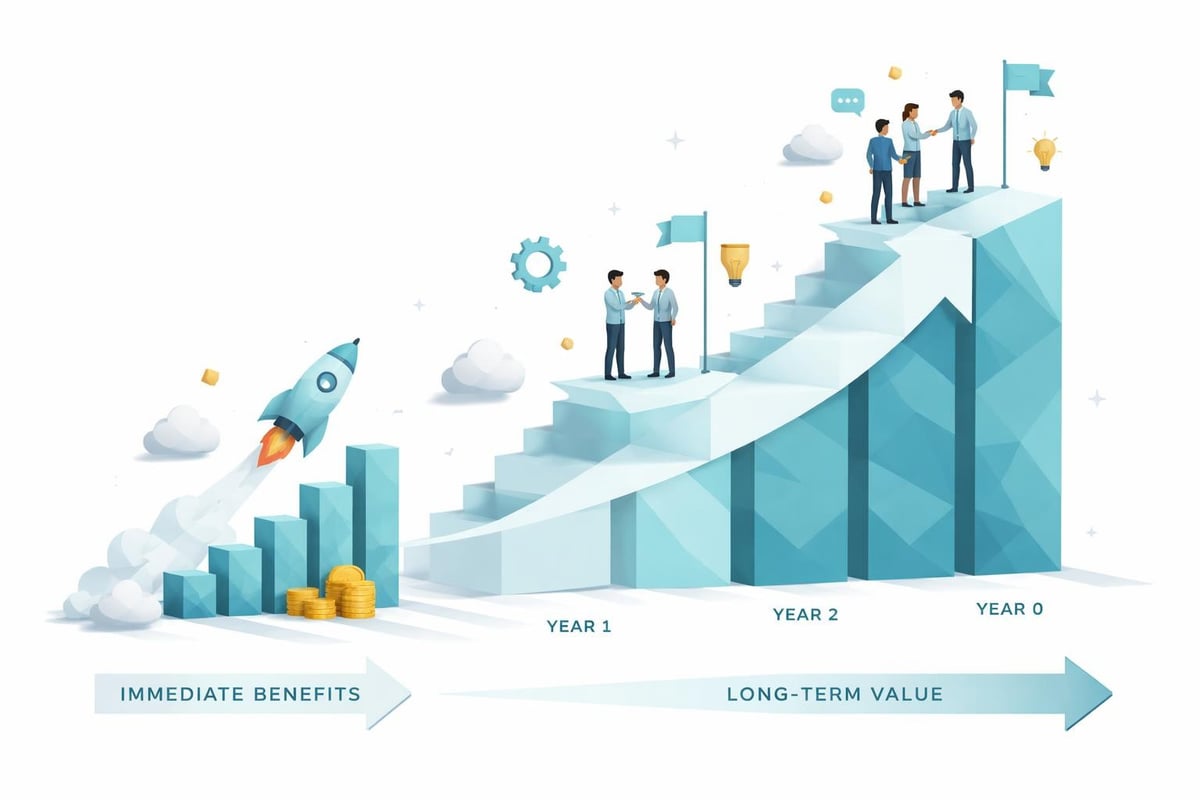
Coaching ROI timeline

Scaling Leadership Across Growing Organizations

As Perth SMEs expand from 20 to 50 to 100+ employees, leadership requirements fundamentally shift. What worked brilliantly at smaller scale becomes inadequate, creating performance plateaus and cultural strain.

From Individual Leadership to Leadership Systems

Business performance coaching for SMEs in Perth increasingly focuses on building leadership systems rather than developing only the CEO or managing director. Scalable organizations distribute leadership capabilities across multiple levels, creating bench strength and reducing key-person dependencies.

This transition requires:

  • Middle management development programs that build supervisory skills
  • Cross-functional team leadership capabilities for project management
  • Delegation frameworks that empower without losing accountability
  • Communication systems ensuring alignment across growing teams
  • Culture codification that maintains values during rapid expansion

Leadership executive coaching approaches address these systemic requirements through cohort-based programs that develop leadership teams collectively rather than individuals in isolation.

Addressing Toxic Leadership Patterns Before They Scale

Growing organizations sometimes promote technically excellent individuals into leadership roles without assessing their interpersonal capabilities. This creates toxic leadership patterns that undermine culture, drive talent away, and limit organizational potential.

Common toxic patterns include:

  • Micromanagement that stifles initiative and creativity
  • Inconsistent feedback creating confusion and anxiety
  • Credit-taking while deflecting blame
  • Favoritism that damages team cohesion
  • Communication avoidance during critical situations

Early intervention through specialized coaching prevents these patterns from becoming embedded in organizational culture. Programs focused on toxic leader transformation use assessment, feedback, and skill-building to redirect destructive behaviors before they cause irreparable damage.

Selecting the Right Coaching Partner for Your Perth SME

The Perth market offers numerous coaching options, from individual practitioners to comprehensive corporate programs. Selecting the appropriate partner requires evaluating credentials, methodology, track record, and cultural fit.

Evaluation Criteria for Coaching Providers

Not all coaching delivers equivalent value. SME leaders should assess potential partners across multiple dimensions before committing to long-term engagements.

Evaluation Factor Questions to Ask Red Flags
Credentials What certifications and training? Vague credentials, no verifiable background
Track Record What results with similar SMEs? No case studies, unwilling to provide references
Methodology What frameworks and processes? Purely intuitive, no structured approach
Measurement How is progress tracked? No metrics, resistance to accountability
Specialization What industries and challenges? Generalist claiming expertise in everything
Chemistry Does communication feel natural? Misaligned values, uncomfortable dynamic

Perth-based business coaching services offer local market knowledge and accessibility for face-to-face interactions, while national and international providers bring broader perspectives and specialized expertise.

The Advantage of Network-Based Coaching Platforms

Traditional coaching selection involved time-consuming research, trial sessions, and hoped-for chemistry. Modern platforms streamline this process through algorithmic matching based on objective criteria and validated compatibility factors.

Network-based platforms provide:

  1. Broader talent pools accessing coaches across specializations
  2. Transparent credentialing with verified qualifications and client results
  3. Matching algorithms identifying optimal coach-client pairings
  4. Quality assurance through platform standards and client feedback
  5. Scalability options for organizations needing multiple coach relationships

This approach particularly benefits SMEs lacking HR infrastructure to manage extensive coach vetting processes independently. Coaching programs designed for work-life balance and goal clarification integrate seamlessly with platform-based matching to deliver comprehensive support.

Coach selection framework

Advanced Coaching Methodologies for Competitive Advantage

Business performance coaching for SMEs in Perth has evolved beyond basic goal-setting and accountability conversations. Leading-edge methodologies incorporate behavioral science, data analytics, and evidence-based interventions that create measurable competitive advantages.

Psychological Safety as a Performance Foundation

Organizations with high psychological safety outperform competitors across innovation, quality, and employee retention metrics. This climate where team members feel safe taking interpersonal risks enables the candid communication, creative problem-solving, and rapid learning essential for competitive performance.

Building psychological safety requires deliberate leadership behaviors including:

  • Framing work as learning challenges rather than execution tasks
  • Acknowledging personal fallibility and modeling vulnerability
  • Actively inviting participation and dissenting viewpoints
  • Responding productively to failure and mistakes
  • Sanctioning behavior that undermines team safety

Coaches trained in psychological safety frameworks help SME leaders recognize patterns that inadvertently create fear-based cultures, then develop alternative approaches that unlock team potential.

Scaling Methodologies for High-Growth SMEs

Perth SMEs pursuing aggressive growth trajectories face distinct challenges requiring specialized coaching approaches. Scaling methodologies like those from Performance 7 provide structured frameworks for managing hypergrowth while maintaining operational excellence and cultural integrity.

These methodologies typically address:

  • Strategic rhythm establishing planning and review cadences
  • Execution disciplines ensuring consistent implementation
  • Cash management preventing growth-induced cash crises
  • Talent acquisition building recruitment systems for scale
  • Brand positioning evolving from local to regional/national presence

The structured nature of scaling methodologies complements coaching’s personalized development focus, creating comprehensive support for expansion-focused organizations.

Technology-Enhanced Coaching Delivery

Advanced coaching programs now incorporate technology platforms that extend impact between sessions, track progress automatically, and provide data-driven insights previously unavailable. Business coaching with proven systems leverages digital tools for assessments, goal tracking, and resource delivery.

Technology enhancements include:

  • Mobile apps for daily micro-commitments and habit formation
  • Dashboard analytics revealing trends across multiple metrics
  • Video coaching enabling flexible scheduling and geographic independence
  • AI-powered insights identifying patterns in behavior and results
  • Resource libraries providing just-in-time learning materials

These tools amplify coaching effectiveness without replacing the essential human relationship that drives transformation.

Industry-Specific Coaching Considerations

While core leadership principles apply universally, business performance coaching for SMEs in Perth must account for industry-specific dynamics, regulatory environments, and competitive pressures that shape optimal approaches.

Professional Services Firms

Accounting practices, legal firms, engineering consultancies, and similar professional services businesses face unique challenges around talent leverage models, partnership structures, and client relationship management.

Coaching for professional services emphasizes:

  • Transitioning from technical expert to business leader
  • Developing business development and client management skills
  • Building leveraged service delivery models
  • Creating sustainable partnership governance structures
  • Managing work-life integration in deadline-driven environments

The billable hour model creates particular tensions between business development time and revenue generation that coaching helps navigate strategically.

Retail and Hospitality Businesses

Perth’s retail and hospitality sectors contend with thin margins, high employee turnover, and intense competition. Performance coaching in these industries focuses on operational excellence, customer experience differentiation, and team motivation.

Key coaching themes include:

  • Creating systemized operations that reduce owner dependency
  • Building positive workplace cultures that retain talent
  • Developing customer loyalty programs and community connections
  • Managing cash flow volatility and seasonal fluctuations
  • Implementing technology for efficiency without losing personal touch

The customer-facing nature of these businesses requires leadership approaches that energize frontline teams and create consistent brand experiences.

Construction and Trades Businesses

Project-based businesses face distinct challenges around estimating accuracy, project management, subcontractor coordination, and safety compliance. Coaching for construction and trades SMEs addresses both technical project execution and business management capabilities.

Critical development areas include:

  • Accurate estimating and project pricing methodologies
  • Project management systems ensuring on-time, on-budget delivery
  • Safety culture development and regulatory compliance
  • Cash flow management across lumpy project timelines
  • Succession planning as founders transition from tools to management

The physical risk inherent in these industries makes leadership development around safety culture particularly critical for long-term viability.

The Future of Business Performance Coaching in Perth

Business performance coaching for SMEs in Perth continues evolving as technology, research, and market dynamics create new possibilities and requirements. Forward-thinking organizations consider emerging trends when designing coaching strategies.

Data-Driven Personalization

Advances in psychometrics, behavioral analytics, and machine learning enable increasingly precise personalization of coaching interventions. Rather than applying generic frameworks, future coaching will prescribe specific activities based on individual learning styles, personality profiles, and developmental readiness.

This precision reduces wasted effort on interventions mismatched to recipient characteristics while accelerating progress through optimally sequenced development activities.

Integrated Organizational Development

Leading organizations increasingly integrate coaching within comprehensive organizational development strategies rather than treating it as isolated intervention. This integration connects leadership development with culture initiatives, strategic planning, performance management, and succession planning.

The integrated approach ensures coaching advances organizational priorities systematically rather than creating disconnected individual development that may or may not align with business needs.

Hybrid Delivery Models

The future combines in-person intensive sessions with ongoing virtual support, creating flexibility without sacrificing relationship depth. Perth’s geographic position makes hybrid models particularly valuable, enabling access to specialized international expertise while maintaining local connections.

Technology platforms facilitate this hybrid approach through video conferencing, asynchronous communication tools, and digital resource repositories that maintain momentum between face-to-face engagements. To maximize accountability and sustainable habit formation, many organizations complement their coaching programs with proven accountability frameworks like those offered through AccountabilityNow.


Business performance coaching for SMEs in Perth delivers measurable competitive advantages when implemented strategically with qualified partners using evidence-based methodologies. The investment pays dividends through enhanced leadership capabilities, improved financial performance, and stronger organizational cultures that attract and retain talent in competitive markets. The Noomii Corporate Leadership Program provides Perth SMEs with precision-matched executive coaches, validated assessment tools, and scalable frameworks that address your unique challenges while delivering measurable ROI. Our evidence-based approach ensures your leadership development investment creates sustainable competitive advantages across every organizational level.

Claude Prompts to Help Coaches Create Offers

Crafting compelling coaching offers requires strategic thinking, market awareness, and the ability to articulate value in ways that resonate with potential clients. Many coaches struggle to package their expertise into structured offerings that balance deliverability with profitability. Claude AI provides a powerful solution by helping coaches think through every element of offer creation, from pricing psychology to outcome framing. Using claude prompts to help coaches create offers streamlines the entire process, transforming vague ideas into concrete service packages that drive client acquisition and revenue growth.

Understanding the Foundation of Strong Coaching Offers

Before diving into specific prompts, coaches must recognize what makes an offer genuinely compelling. The strongest coaching packages combine clear outcomes, defined timelines, specific deliverables, and transparent pricing. Corporate clients especially demand clarity around ROI and measurable business impact.

Traditional coaching offers often fail because they focus on process rather than results. Clients invest in transformation, not sessions. When building authority in the coaching space, your offers must communicate concrete value from the first impression.

Structuring Your Core Service Offerings

Claude excels at helping coaches structure multiple service tiers that serve different client segments. A well-designed prompt can generate package frameworks that address varying budget levels, commitment readiness, and organizational complexity.

Key components to include in offer structure prompts:

  • Target client profile and pain points
  • Specific business outcomes you deliver
  • Session frequency and duration
  • Additional deliverables (assessments, resources, scorecards)
  • Pricing models and payment terms
  • Success metrics and accountability mechanisms

Service tier framework

Essential Claude Prompts for Offer Development

The following prompts help coaches transform expertise into marketable packages. Each prompt addresses a specific aspect of offer creation, ensuring comprehensive coverage of all critical elements.

Prompt 1: Core Offer Definition

“I’m a [your coaching specialty] coach working with [target client type]. My clients typically struggle with [specific challenges]. Help me design a flagship coaching offer that delivers [desired outcome] within [timeframe]. Include recommended session structure, deliverables, pricing tiers, and success metrics.”

This foundational prompt generates a complete offer framework. Customize it by adding your unique methodology, constraints, or market positioning. The more context you provide, the more tailored the output.

Prompt 2: Package Differentiation Strategy

“Create three distinct coaching packages for [client type] at different price points: entry-level ($X-Y), mid-tier ($Y-Z), and premium ($Z+). For each tier, define what’s included, what’s excluded, ideal client profile, and the specific business outcomes each package delivers. Ensure clear differentiation that justifies price increases.”

This prompt helps coaches avoid the common trap of offering nearly identical packages at different price points. Clear differentiation drives clients toward higher-value options while providing accessible entry points. Companies exploring business coaching solutions benefit from transparent tier structures.

Prompt 3: Outcome-Focused Messaging

Prompt Element What to Include Why It Matters
Target audience Specific role, company size, industry Precision drives relevance
Current state Specific pain points and challenges Creates emotional connection
Desired state Measurable outcomes and improvements Establishes clear value
Timeframe Realistic transformation period Sets proper expectations
Proof points Data, testimonials, case studies Builds credibility

“Transform my coaching offer description from process-focused to outcome-focused. Current description: [paste your description]. Rewrite it emphasizing measurable business results, specific improvements in [key areas], and the tangible ROI clients can expect within [timeframe].”

Prompt 4: Pricing Psychology and Positioning

Pricing coaching services challenges even experienced practitioners. Claude prompts to help coaches create offers should address pricing strategy explicitly, considering market positioning, value perception, and client acquisition costs.

“Analyze my coaching offer priced at $[amount] for [duration/deliverables]. Considering my target market of [client description], competitors typically charge [range], and my unique differentiators are [list], recommend optimal pricing strategy. Include rationale for pricing level, payment plan options, and how to present pricing to maximize perceived value.”

This approach ensures pricing aligns with market realities while reflecting genuine value delivery. When scaling your coaching practice, sustainable pricing becomes critical to long-term business health.

Advanced Prompts for Specialized Offer Types

Beyond standard coaching packages, specialized offers address specific organizational needs and buying preferences. These prompts help coaches develop offerings that stand out in competitive markets.

Corporate Pilot Program Design

“Design a 90-day pilot coaching program for mid-market companies (25-500 employees) that demonstrates clear ROI and leads to longer-term engagement. Include kickoff process, weekly deliverables, key performance indicators we’ll track, success criteria for continuing beyond the pilot, and pricing structure that shares risk with the client.”

This prompt creates low-commitment entry points that address corporate buyers’ need to validate coaching effectiveness before major investment.

Pilot program structure

Workshop and Group Coaching Offers

Prompt structure for scalable group offerings:

  1. Define group size and participant profile
  2. Specify core topic and learning objectives
  3. Outline session format and duration
  4. Detail pre-work and post-session resources
  5. Establish pricing per participant versus flat fee
  6. Include follow-up and reinforcement strategy

“Create a half-day workshop offer on [topic] for [participant type] groups of 8-15 people. Include pre-workshop assessment, facilitation agenda with timing, interactive exercises, key takeaways, post-workshop action planning template, and 30-day follow-up accountability system. Recommend pricing for this package.”

Retainer and Ongoing Support Models

“Design a month-to-month retainer coaching offer for [client type] that provides ongoing support without long-term contracts. Include what’s covered in the monthly retainer, how many sessions/hours, additional services available, how we measure ongoing value, and exit terms that make clients feel secure choosing this flexible arrangement.”

This prompt addresses the growing preference for flexible, results-based engagements. Companies increasingly favor coaching arrangements that align incentives and minimize commitment risk.

Refining Offers Through Client Feedback Integration

The most effective claude prompts to help coaches create offers incorporate real market feedback. Use these prompts after initial client conversations to refine positioning and packaging.

Objection-Based Refinement

“I’ve received these common objections to my coaching offer: [list objections]. Help me restructure my offer, messaging, or pricing to address these concerns while maintaining profitability and value integrity. Suggest specific modifications to offer components that would eliminate these barriers to purchase.”

Common Objection Potential Offer Modification Implementation Strategy
“Too expensive” Add entry-tier option or payment plan Create 3-month versus 6-month packages
“Uncertain ROI” Include pilot program with clear metrics Offer first month with performance guarantee
“No time commitment” Design micro-engagements or asynchronous options Bundle short sessions with video resources
“Need budget approval” Provide ROI calculator and business case template Create executive summary with financial projections

Competitive Differentiation Analysis

“Compare my coaching offer [describe offer] with typical competitor offerings in [market/niche]. Identify gaps where competitors are stronger and unique advantages where I excel. Suggest specific modifications to my offer that capitalize on differentiation opportunities and address competitive weaknesses.”

When generating coaching leads, clearly differentiated offers convert at significantly higher rates than generic packages.

Testing and Validating New Offers

Before full launch, validate offer concepts through structured prompts that anticipate implementation challenges and client reception.

“I’m considering launching this new coaching offer: [describe offer]. What are the top 10 questions potential clients will ask? For each question, provide a compelling answer that reinforces value. Also identify potential delivery challenges I should address before launch.”

This validation step prevents costly mistakes and ensures operational readiness. Coaches who attract more clients consistently test offers before major marketing investments.

Offer validation process

Creating Offer Assets and Sales Enablement

“Generate a complete sales asset package for my [offer name] coaching program. Include: one-page overview for initial conversations, detailed proposal template, FAQ document addressing common objections, email sequence for nurturing interested prospects, and discovery call script that qualifies fit and presents the offer effectively.”

Comprehensive sales enablement ensures consistent messaging and professional presentation across all client touchpoints. Content creation strategies should align with offer positioning for maximum impact.


Strategic offer creation separates thriving coaching practices from those struggling to gain traction. Using claude prompts to help coaches create offers accelerates development while ensuring market relevance and profitability. When you’re ready to transform coaching expertise into structured, high-converting programs that deliver measurable business results, Noomii provides the corporate coaching infrastructure mid-market companies trust. With month-to-month terms, clear KPIs, and hands-on facilitation that drives accountability, Noomii helps organizations build leaders who execute on priorities and deliver visible ROI.

Strategic Business Planning for Solopreneurs in Melbourne

Running a solo business in Melbourne’s competitive landscape demands more than entrepreneurial passion and technical expertise. Strategic business planning for solopreneurs in Melbourne requires a deliberate approach that balances immediate revenue generation with long-term sustainability, leadership development, and measurable outcomes. The most successful solo operators treat their ventures as scalable enterprises, not just self-employment vehicles. They build systems, develop leadership capabilities, and create frameworks that allow them to compete effectively against larger organizations while maintaining the agility that defines solopreneurship.

Why Strategic Planning Matters More for Solo Operators

Solopreneurs face unique challenges that multi-person organizations rarely encounter. You serve as the CEO, marketing director, operations manager, and finance controller simultaneously. Without strategic planning, this juggling act becomes reactive firefighting rather than proactive growth management.

Strategic business planning for solopreneurs in Melbourne provides the structure needed to make decisions from a leadership perspective rather than an employee mindset. This distinction separates successful solo ventures from those that remain stagnant or fail within the first three years.

The Leadership Gap in Solo Ventures

Most solopreneurs possess deep expertise in their craft but lack formal leadership training. This creates blind spots in decision-making, resource allocation, and long-term vision. The comprehensive guide to strategic planning emphasizes that successful solo businesses require the same strategic rigor as corporations.

Consider these critical leadership competencies for solo operators:

  • Strategic decision-making under resource constraints
  • Self-accountability without external oversight structures
  • Vision articulation that guides daily priorities
  • Risk assessment balanced against growth opportunities
  • Emotional regulation during challenging business cycles

Leadership competencies for solo business owners

When leadership gaps exist, even technically brilliant solopreneurs struggle to scale beyond their personal capacity. Building psychological safety within your own decision-making processes creates the foundation for sustainable growth.

Building Your Strategic Foundation

Effective strategic business planning for solopreneurs in Melbourne begins with clarity about your business model, target market, and value proposition. Without these foundational elements, tactical planning becomes guesswork.

Market Positioning and Competitive Analysis

Melbourne’s diverse economy offers countless opportunities for specialized solo ventures. However, this abundance creates intense competition within virtually every niche. Your strategic plan must answer three fundamental questions:

  1. Who specifically benefits from your expertise?
  2. What problem do you solve better than alternatives?
  3. Why should clients choose you over established competitors?

The Melbourne-based strategy sessions provide focused guidance for answering these questions within your specific market context. Many solopreneurs waste resources pursuing broadly defined markets rather than dominating narrow niches where their expertise creates undeniable value.

Market Approach Resource Efficiency Competitive Advantage Revenue Predictability
Broad generalist Low Minimal Unstable
Niche specialist High Strong Consistent
Hybrid approach Medium Moderate Variable

Financial Architecture and Resource Allocation

Strategic planning requires honest assessment of your financial position and resource allocation decisions. Solopreneurs often underinvest in strategic assets while overspending on tactical tools that deliver minimal ROI.

Your financial architecture should include:

  • Operating reserves covering 6-12 months of expenses
  • Strategic investment budget for skill development and market positioning
  • Technology infrastructure that scales with revenue growth
  • Professional support network including accounting, legal, and coaching expertise

The 24-hour business planning approach demonstrates how focused financial planning accelerates decision-making and reduces strategic drift. Solopreneurs who delay financial clarity typically struggle with pricing, profitability, and sustainable growth.

Operational Systems That Scale

Strategic business planning for solopreneurs in Melbourne must address the operational reality of limited time and attention. The systems you build today determine whether you can double revenue without doubling working hours.

Time Leverage Through Process Design

Successful solo operators systematize repeatable activities and preserve cognitive energy for high-value decisions. This requires mapping your core business processes and identifying automation opportunities.

High-priority processes to document:

  • Client acquisition and onboarding workflows
  • Service delivery frameworks and quality standards
  • Financial management and invoicing procedures
  • Marketing content creation and distribution systems
  • Professional development and skill upgrading pathways

Many solopreneurs resist process documentation, viewing it as corporate bureaucracy. However, documented processes create the foundation for delegation, automation, and eventual scaling beyond solo operations.

Scalable business systems

Technology Stack Optimization

Your technology infrastructure should enable strategic priorities rather than create complexity. Evaluate each tool against three criteria: does it save time, increase revenue, or reduce risk? Tools that fail these tests consume resources without strategic benefit.

The strategic support services available to Melbourne solopreneurs emphasize technology choices aligned with business model requirements. A consulting solopreneur needs different tools than a product-based business or service provider.

Leadership Development as Competitive Advantage

While strategic business planning for solopreneurs in Melbourne often focuses on operations and finance, leadership capability separates exceptional solo ventures from mediocre ones. Investing in your leadership development creates compounding returns across every business function.

Decision-Making Frameworks Under Uncertainty

Solo operators make dozens of strategic decisions weekly without the benefit of executive teams or advisory boards. Developing robust decision-making frameworks reduces decision fatigue and improves outcome quality.

Effective solopreneurs implement structured decision processes:

  1. Define the decision clearly including success criteria and constraints
  2. Gather relevant data without succumbing to analysis paralysis
  3. Identify viable alternatives beyond the obvious first options
  4. Assess risks and opportunities for each alternative
  5. Make the decision with clear implementation timeline
  6. Review outcomes to improve future decision quality

Organizations addressing toxic leadership patterns within larger teams can apply similar frameworks to prevent self-sabotaging behaviors in solo operations. The absence of external accountability makes structured decision-making essential for solopreneurs.

Strategic Thinking Beyond Daily Operations

The most challenging aspect of strategic business planning for solopreneurs in Melbourne involves creating space for strategic thinking amid operational demands. Without dedicated time for reflection and planning, your business becomes reactive rather than intentional.

Block protected time for strategic activities:

  • Monthly business reviews assessing progress against quarterly goals
  • Quarterly strategic planning sessions adjusting tactics based on market feedback
  • Annual vision workshops redefining long-term direction and priorities
  • Weekly priority planning ensuring daily activities align with strategic objectives

The strategic planning workshops offered throughout Melbourne provide structured environments for this critical thinking work. Many solopreneurs report that external facilitation dramatically improves strategic clarity and commitment to planned actions.

Market Adaptation and Competitive Positioning

Melbourne’s business environment evolves constantly, requiring solopreneurs to build adaptation capacity into their strategic plans. Static plans fail when market conditions shift unexpectedly.

Scenario Planning for Solo Ventures

Strategic business planning for solopreneurs in Melbourne should include multiple scenarios rather than single-path projections. Scenario planning prepares you mentally and operationally for various market conditions.

Develop three scenarios for the next 24 months:

  1. Optimistic scenario where market demand exceeds expectations
  2. Realistic scenario based on current trends and conservative assumptions
  3. Challenging scenario where market conditions deteriorate or competition intensifies

For each scenario, identify the strategic responses you would implement. This preparation reduces decision time when market shifts occur and prevents panic-driven choices that damage long-term positioning.

Competitive Intelligence and Market Signals

Solo operators often neglect competitive intelligence, focusing exclusively on their own offerings. However, understanding competitor movements, market trends, and customer evolution informs strategic choices.

Intelligence Source Update Frequency Strategic Value
Competitor analysis Quarterly High
Customer feedback Ongoing Critical
Industry publications Monthly Moderate
Economic indicators Monthly Moderate
Technology trends Quarterly Variable

The business strategy resources available to Australian solopreneurs emphasize market awareness as fundamental to sustainable competitive advantage. Your strategic plan must incorporate mechanisms for gathering and analyzing market intelligence.

Measuring Strategic Progress

Strategic business planning for solopreneurs in Melbourne remains theoretical without measurement systems that track progress toward defined objectives. Effective metrics balance leading indicators (predictive) with lagging indicators (results-focused).

Key Performance Indicators for Solo Ventures

Choose 5-7 KPIs that directly reflect strategic priorities. Avoid vanity metrics that feel good but don’t indicate business health or progress.

Essential KPIs for most solopreneurs:

  • Monthly recurring revenue or revenue per client relationship
  • Client acquisition cost relative to customer lifetime value
  • Operating profit margin after all expenses including owner compensation
  • Strategic time allocation (percentage spent on high-value versus operational tasks)
  • Client satisfaction and referral rates
  • Pipeline value for next 90 days

These metrics provide early warning when strategic plans diverge from reality. The professional business plan services available throughout Australia emphasize measurement frameworks customized to specific business models and growth stages.

Review Cadences and Course Correction

Measurement without review accomplishes nothing. Establish regular review cadences that match your business cycle and complexity.

Weekly: Review financial position, client deliverables, and immediate priorities
Monthly: Analyze KPI trends, assess goal progress, adjust tactical approaches
Quarterly: Evaluate strategic assumptions, review competitive position, refine 12-month plans
Annually: Comprehensive business assessment, vision refinement, major strategic pivots

Strategic review framework

Course correction represents strategic strength, not planning failure. Markets change, personal priorities evolve, and new opportunities emerge. Your strategic plan should guide decisions while remaining flexible enough to capitalize on unexpected advantages.

Building Support Networks and Advisory Structures

Strategic business planning for solopreneurs in Melbourne benefits enormously from external perspectives and structured accountability. The isolation inherent in solo work creates blind spots that external advisors can illuminate.

Peer Networks and Collaborative Communities

Melbourne offers robust communities specifically designed for solo business operators. The Melbourne solopreneur community provides networking, knowledge sharing, and collaborative opportunities that reduce isolation while expanding strategic thinking.

Effective peer relationships offer multiple strategic benefits:

  • Alternative perspectives on challenges you’re facing
  • Accountability partnerships that maintain momentum on strategic initiatives
  • Resource sharing including vendor recommendations and process templates
  • Collaboration opportunities that expand service offerings or market access
  • Emotional support during difficult business cycles

Select peer relationships intentionally based on complementary expertise, similar business maturity, and aligned values. Casual networking provides social connection but rarely drives strategic advancement.

Professional Advisory Support

Strategic business planning for solopreneurs in Melbourne reaches new effectiveness when paired with professional coaching or advisory services. External experts bring frameworks, experience, and objectivity that self-directed planning cannot replicate.

The strategy accelerator sessions designed specifically for solopreneurs provide structured approaches to common strategic challenges. These focused interventions often deliver breakthrough clarity that months of independent planning couldn’t achieve.

Professional support proves particularly valuable during:

  • Business model transitions requiring fundamental strategic shifts
  • Scaling decisions about hiring, partnering, or productization
  • Crisis navigation when market disruption threatens viability
  • Leadership development addressing personal capability gaps
  • Exit planning for eventual sale, succession, or closure

Organizations working with top executive coaching firms demonstrate measurably better leadership outcomes than those relying solely on internal development. Solo operators deserve the same caliber of strategic support available to corporate executives.

Integration of Leadership and Business Strategy

The intersection of personal leadership development and business strategy creates multiplicative value for solopreneurs. Your business cannot outgrow your leadership capacity, making integrated development essential.

Personal Development as Business Investment

Strategic business planning for solopreneurs in Melbourne must allocate resources toward leadership capability building. This includes technical skills related to your service offering and the leadership competencies required to run a sustainable enterprise.

Critical development areas:

  • Strategic thinking and long-term vision articulation
  • Financial literacy beyond basic bookkeeping
  • Marketing strategy and positioning expertise
  • Sales methodology aligned with your personality and market
  • Operational excellence and process optimization
  • Self-management including energy, focus, and resilience

Many solopreneurs invest heavily in technical credentials while neglecting business leadership development. This creates expertise without the ability to monetize or scale that expertise effectively.

Accountability Systems That Drive Execution

Strategic plans fail without accountability mechanisms that ensure consistent execution. Solo operators lack the built-in accountability of organizational hierarchies, requiring deliberate systems to maintain commitment to strategic priorities.

Effective accountability approaches include:

  1. External coaching relationships with defined goals and review schedules
  2. Peer accountability partnerships with mutual commitment to strategic objectives
  3. Public commitments through content creation or community participation
  4. Financial stakes such as paying for programs in advance or performance-based bonuses
  5. Measurement dashboards with visible tracking of strategic metrics

Without accountability, even brilliant strategic plans remain aspirational documents rather than implemented roadmaps.

Adaptive Leadership for Market Evolution

Strategic business planning for solopreneurs in Melbourne requires adaptive leadership capability. The certainty of 2020 evaporated within weeks as global disruption reshaped entire industries. Similar disruptions will occur again, demanding leaders who can pivot quickly while maintaining strategic coherence.

Adaptive leadership competencies include:

  • Rapid assessment of changing market conditions and their implications
  • Stakeholder communication that maintains confidence during uncertainty
  • Resource reallocation away from obsolete tactics toward emerging opportunities
  • Emotional resilience that prevents reactive decisions driven by fear
  • Strategic patience balanced with tactical urgency

Organizations focusing on building psychological safety create environments where adaptation occurs more naturally and effectively. Solo operators must cultivate this same psychological flexibility within their own thinking and operations.


Strategic business planning for solopreneurs in Melbourne transforms solo ventures from reactive service businesses into intentional growth engines with measurable outcomes and sustainable competitive advantages. The integration of leadership development with operational planning creates multiplier effects that purely tactical approaches never achieve. When you’re ready to elevate your strategic planning with precision coaching matched to your specific challenges, the Noomii Leadership Coaching program delivers evidence-based frameworks, expert guidance, and accountability systems designed for measurable leadership growth and business transformation.

7 Essential Claude Prompts to Help Coaches Improve Results

AI is transforming the coaching landscape, and tools like Claude are at the forefront of this revolution. As more coaches aim for faster, more impactful client outcomes, the search for methods that drive efficiency and measurable progress intensifies.

The core challenge is clear: how can coaches consistently deliver better results without sacrificing the personal touch? This article answers that question by sharing 7 essential claude prompts to help coaches improve results in any setting.

Whether you specialize in leadership, executive, or team coaching, these prompts are designed to be easily tailored to your unique client needs. Ready to elevate your coaching impact? Read on for actionable prompts that will streamline your workflow and maximize your clients’ success.

Why Use Claude Prompts in Coaching?

Claude is an advanced AI assistant designed to generate insights, ask powerful questions, and support decision-making. Its natural language capabilities make it uniquely suited for coaching professionals who want to deepen client conversations and streamline their workflows.

AI is transforming how coaches accelerate insight, accountability, and measurable progress. According to the 2023 ICF survey, 68% of coaches using AI report improved session productivity. With claude prompts to help coaches improve results, sessions become more focused, actionable, and tailored to each client’s needs.

Claude prompts allow coaches to automate session prep, reflection exercises, and follow-up communications. This means less time on repetitive tasks and more energy devoted to high-value client interactions. For example, a leadership coach recently used Claude prompts to help clients clarify quarterly goals, leading to a 30% increase in client goal achievement rates.

Common concerns about confidentiality, customization, and maintaining a human touch are valid. Coaches can anonymize data, tailor prompts for each client, and always review AI-generated content before sharing. This balance ensures ethical, personalized coaching.

For coaches managing multiple clients, Claude scales support efficiently. By integrating Claude prompts to scale coaching practice, professionals can handle more sessions without sacrificing quality, ensuring each client receives actionable insights and follow-up.

Why Use Claude Prompts in Coaching?

7 Essential Claude Prompts to Help Coaches Improve Results

Coaches today are turning to AI-driven strategies to maximize the impact of their sessions. The following seven claude prompts to help coaches improve results are carefully crafted to support every stage of the coaching process. Each prompt is designed to be actionable, adaptable, and easy to implement, whether you specialize in executive, leadership, or team coaching.

7 Essential Claude Prompts to Help Coaches Improve Results

1. [Prompt for Setting Powerful Coaching Goals]

Start each engagement by using claude prompts to help coaches improve results through clear goal setting. Ask Claude: “Help me craft a SMART goal for my next quarter’s leadership development.” This approach sharpens focus, encourages measurable outcomes, and provides a solid foundation for accountability. You can adapt this prompt for executives, team leaders, or group coaching, ensuring every client’s goals are specific and motivating.

2. [Prompt for Uncovering Limiting Beliefs]

Bring hidden barriers to the surface by leveraging claude prompts to help coaches improve results. Request: “Ask me probing questions to reveal beliefs that might hinder my confidence as a leader.” Claude helps clients identify internal obstacles, fostering self-awareness and paving the way for breakthrough moments. This prompt is invaluable for leadership clients seeking personal growth and transformation.

3. [Prompt for Action Planning and Next Steps]

Maintain momentum between sessions by co-creating actionable plans. Use the prompt: “Help me outline three concrete actions to improve my team’s communication this month.” These claude prompts to help coaches improve results by providing clarity and direction, ensuring clients leave each session with a step-by-step roadmap. Adapt the actions for individual, team, or organizational objectives.

4. [Prompt for Reflective Session Summaries]

Enhance retention and follow-through by generating structured session summaries. Ask Claude: “Summarize my main takeaways and commitments from today’s coaching session.” These summaries distill key points, making it easier for clients to track commitments and revisit insights. This prompt is especially useful for busy executives who benefit from concise, actionable recaps.

5. [Prompt for Accountability Check-Ins]

Boost accountability by automating regular progress reviews. Employ the prompt: “Remind me of my commitments and ask what progress I’ve made since our last session.” These claude prompts to help coaches improve results by increasing follow-through and measurable achievement. For more on building accountability into your coaching, explore Accountability Now, a resource dedicated to driving client results through structured follow-up.

6. [Prompt for Feedback and Feedforward]

Create a growth-oriented culture using structured feedback. Direct Claude with: “Guide me in giving positive, actionable feedback to my direct reports.” These claude prompts to help coaches improve results by enhancing communication and reinforcing productive behaviors. Tailor the feedback approach to suit leaders, teams, or peer coaching scenarios.

7. [Prompt for Overcoming Obstacles and Reframing]

Help clients reframe setbacks and discover new solutions. Use the prompt: “Help me brainstorm ways to overcome resistance to change in my team.” Claude supports resilience by guiding clients to shift perspectives and generate creative strategies. This prompt is crucial for navigating challenging transitions or organizational shifts.

Each of these claude prompts to help coaches improve results can be adapted to your unique coaching style and client needs. By integrating them into your practice, you will foster deeper engagement, greater accountability, and measurable progress across diverse coaching contexts.

Integrating Claude Prompts Into Your Coaching Workflow

Integrating claude prompts to help coaches improve results starts with a clear workflow. Begin by using prompts during session preparation to clarify client goals and set intentions. This saves time and ensures each session is focused and productive.

During live coaching, bring prompts into conversations to guide reflection or unlock new insights. After sessions, use Claude to generate concise summaries and actionable follow-ups. This supports client accountability and measurable progress.

Tailor claude prompts to help coaches improve results for different coaching niches. For instance, executive coaches may focus on strategic planning prompts, while team coaches might prioritize collaboration and communication. Leveraging digital tools like Google Docs or Notion streamlines prompt management, making it easier to track growth over time. For more on adapting AI to your coaching style, visit Life coaches and AI integration.

Always prioritize client confidentiality. Use secure platforms, anonymize sensitive data, and obtain client consent before sharing information with AI. Remember, the most effective workflow blends AI-generated insights with your professional judgment, ensuring every client receives a personalized and human-centered experience.

Integrating Claude Prompts Into Your Coaching Workflow

Common Mistakes to Avoid with Claude Prompts

Even the best claude prompts to help coaches improve results can fall short if misapplied. To ensure your coaching practice thrives, avoid these frequent missteps:

  • Relying solely on AI for responses without considering client context can make sessions feel impersonal.
  • Failing to tailor prompts to each client’s needs diminishes effectiveness. For guidance on crafting prompts that build trust and authority, see Claude prompts for building authority.
  • Using generic or vague language reduces client engagement and buy-in.
  • Skipping a review of Claude’s output may lead to errors or a mismatch in tone.
  • Overlooking client consent and data privacy can damage trust and credibility.

For example, one coach who automated all follow-ups noticed clients disengaged as communication lost its human touch. Always balance automation with personal connection.

By staying mindful of these pitfalls, your claude prompts to help coaches improve results will remain impactful and trusted.

Common Mistakes to Avoid with Claude Prompts

Additional Resources for AI-Driven Coaching

Staying ahead with claude prompts to help coaches improve results means actively seeking out the best resources and communities. To expand your expertise, explore new articles, books, and online courses focused on AI-powered coaching strategies.

For practical examples to boost your productivity, review Claude AI productivity prompts. These real-world prompts demonstrate how to apply claude prompts to help coaches improve results in everyday practice.

Engage with leading platforms and peer groups to share prompt ideas and case studies. For deeper insight into accountability within coaching, visit Accountability Now. Stay updated on Claude’s evolving features by subscribing to trusted industry newsletters or joining professional coaching communities.

Building your network and knowledge base ensures you leverage claude prompts to help coaches improve results for every client.

Business Coaching for Consultants in Sydney: The 2026 Guide

Sydney’s consulting scene is evolving rapidly, making 2026 a crucial year for those determined to stand out and grow their business. Navigating fierce competition and ever-shifting client expectations requires more than expertise, it demands strategic clarity and support.

This guide is designed to demystify business coaching for consultants in sydney, showing how personalized coaching can unlock higher performance and profitability. You’ll discover what business coaching is, the core benefits, how to choose the right coach, a step-by-step process to maximize your results, emerging trends, and answers to the most pressing questions for Sydney consultants.

If you’re ready to accelerate your consulting business in 2026, this guide will give you the strategies and confidence to take action.

Understanding Business Coaching for Consultants in Sydney

Business coaching for consultants in Sydney is a specialized partnership designed to unlock the full potential of consulting professionals in one of Australia’s most dynamic business hubs. Unlike generic advice, this approach zeroes in on the unique pressures and opportunities Sydney consultants face, from fierce competition to evolving client demands. At its core, business coaching for consultants in Sydney offers personalized support and strategies that drive measurable growth.

Understanding Business Coaching for Consultants in Sydney

What Sets Business Coaching Apart?

It’s important to distinguish business coaching for consultants in Sydney from mentoring or traditional consulting. While mentors typically share their own experiences and consultants offer solutions to specific problems, business coaches focus on empowering you to set and achieve your own goals. Here’s a quick breakdown:

Approach Main Focus Role of the Expert
Business Coaching Develop skills, accountability Facilitator & motivator
Mentoring Share personal experience Advisor & role model
Consulting Solve defined business problems Expert & problem-solver

Business coaching for consultants in Sydney is collaborative. The coach asks probing questions, helps clarify your vision, and supports you as you tackle obstacles.

Navigating Sydney’s Consulting Sector

The consulting landscape in Sydney is highly competitive. Regulatory shifts, market saturation, and increasing client expectations require consultants to stay agile. Navigating these challenges calls for more than technical know-how. With business coaching for consultants in Sydney, professionals learn to adapt quickly and stand out in a crowded market.

Sydney’s consultants often juggle multiple roles, from business development to project delivery. Local regulations and compliance requirements can add layers of complexity. Business coaching for consultants in Sydney helps you anticipate these hurdles and develop strategies to thrive.

Top Goals and Industry Growth

Consultants in Sydney seek business coaching to achieve specific goals:

  • Scaling their practice
  • Acquiring and retaining high-value clients
  • Differentiating their services
  • Building leadership capacity

Recent data shows a significant rise in demand for business coaching for consultants in Sydney. According to the Growth of business coaching in Australia, the corporate training and coaching sector continues to expand, reflecting consultants’ drive for sustainable growth.

Case studies abound: A Sydney-based consultant specializing in digital transformation doubled her client base within six months of targeted coaching. Another redefined his niche and saw a 30% increase in profitability.

The Role of Local Culture and Networking

Sydney’s business culture is relationship-driven. Networking plays a crucial role in a consultant’s success. Business coaching for consultants in Sydney often includes guidance on leveraging local events, professional associations, and digital platforms. Coaches familiar with Sydney’s market can help you tap into these networks and build lasting partnerships.

Coaching also supports consultants in aligning their personal values with their business goals, which resonates strongly in the Sydney market.

Overcoming Misconceptions and Achieving Results

A common misconception is that business coaching for consultants in Sydney is only for those who are struggling. In reality, top-performing consultants use coaching as a proactive tool to stay ahead of the curve. Success stories highlight how coaching can help even established professionals break through growth plateaus, enhance leadership, and achieve ambitious targets.

If you’re curious about how to start, platforms like Accountability Now can connect you with experienced coaches who understand the Sydney consulting scene and can guide you toward greater success.

Key Benefits of Business Coaching for Sydney-Based Consultants

Sydney’s consulting scene is fiercely competitive, making it essential for professionals to seek every possible edge. Business coaching for consultants in sydney offers a structured path to growth, clarity, and sustainable success. Let’s explore the tangible benefits that set effective coaching apart for Sydney-based consultants.

Key Benefits of Business Coaching for Sydney-Based Consultants

Enhanced Business Strategy and Planning

A top benefit of business coaching for consultants in sydney is the ability to clarify vision, mission, and value proposition. Coaches guide consultants to define their niche, outpace competitors, and adapt strategies for Sydney’s fast-evolving market.

For instance, a Sydney consultant working in IT services redefined their target market after a coaching engagement. This shift resulted in a stronger brand and a 30 percent increase in high-value clients. According to IBISWorld, consultants with business coaching report higher revenue growth and improved long-term planning.

Coaches also introduce proven frameworks and accountability structures. These help consultants create actionable roadmaps and set priorities. For more on how Sydney professionals leverage coaching for growth, see Business coaching benefits for Sydney consultants.

Improved Client Acquisition and Retention

Business coaching for consultants in sydney delivers powerful tools for boosting lead generation and refining sales funnels. Coaches teach relationship-building strategies, essential in Sydney’s network-driven business culture.

One Sydney-based marketing consultant doubled their client base within six months of coaching. This was achieved by optimizing their value proposition and strengthening referral networks. Coaches often introduce local networking techniques, helping consultants connect with decision-makers at Sydney’s top firms.

Retention also improves as coaches encourage consultants to deliver consistent value, exceed expectations, and foster loyalty. This results in a more stable and predictable client pipeline.

Personal and Professional Development

Business coaching for consultants in sydney is about more than business tactics—it’s about growth as a leader. Coaches help identify blind spots, develop emotional intelligence, and build resilience in the face of setbacks.

A recent survey found that 70 percent of coached professionals reported better work performance and higher job satisfaction. Sydney consultants frequently cite increased confidence and improved decision-making after regular coaching sessions.

Coaches also offer leadership development strategies tailored to the consulting landscape, ensuring that consultants are equipped to lead teams and manage complex projects with authority.

Accountability and Measurable Results

Accountability is a cornerstone of business coaching for consultants in sydney. Coaches work with consultants to set clear KPIs and track progress toward quarterly and annual goals.

For example, a Sydney financial consultant used structured accountability sessions to consistently hit revenue targets each quarter. These sessions included regular check-ins, feedback, and adjustments to tactics as needed.

Measurable outcomes matter in Sydney’s results-focused market. Consultants gain clarity on what success looks like and receive ongoing support to stay on track. If you’re seeking local expertise, Accountability Now is a trusted resource for business coaching tailored to Sydney consultants.

Step-by-Step Guide: How Consultants in Sydney Can Leverage Business Coaching in 2026

Unlocking the full potential of business coaching for consultants in sydney requires a strategic, step-by-step approach. As the consulting industry evolves in 2026, Sydney-based professionals must embrace proven frameworks to ensure coaching delivers measurable growth and transformation. Here’s how to maximize your coaching investment from the very first step.

Step-by-Step Guide: How Consultants in Sydney Can Leverage Business Coaching in 2026

Step 1: Assess Your Business Needs and Goals

Start by conducting a thorough self-audit. Every successful journey with business coaching for consultants in sydney begins with clarity about your current position and desired destination. Evaluate your strengths, weaknesses, and unique market opportunities.

Use tools such as:

  • SWOT analysis to map internal and external factors
  • Client feedback surveys for unbiased insights
  • Revenue and growth trend reviews

Set clear objectives for coaching. Are you aiming to scale your consulting business, improve client acquisition, or enhance your leadership skills? Align these goals with your broader business vision. Remember, the more specific you are at this stage, the more tailored and effective your coaching experience will be.

Step 2: Research and Select the Right Business Coach

Choosing the right guide is crucial for business coaching for consultants in sydney to deliver results. Look for coaches with deep industry experience, recognized credentials, and a solid understanding of the Sydney consulting landscape.

Create a selection checklist:

  • Verify industry-specific expertise and coaching certifications
  • Request testimonials from other Sydney consultants
  • Schedule interviews to assess communication style and cultural fit
  • Ask about their familiarity with local market dynamics

Consider starting with a trial session. This is a low-risk way to determine if a coach’s approach matches your learning style and business needs. The right coach will challenge you, hold you accountable, and empower you to achieve your consulting goals.

Step 3: Set a Clear Coaching Agreement and Success Metrics

Once you’ve selected a coach, formalize your arrangement. A transparent coaching agreement is foundational for business coaching for consultants in sydney to remain focused and goal-oriented.

Key elements to define:

  • Scope of engagement (topics, challenges, and areas of focus)
  • Frequency and duration of sessions (weekly, fortnightly, or monthly)
  • Measurable goals and KPIs (revenue targets, client growth, process improvements)

Here’s a sample coaching agreement outline:

Section Details
Objectives What you want to achieve
Session Schedule Dates and times for meetings
Metrics for Success How progress will be measured
Confidentiality Data privacy and trust commitments

Establishing these parameters up front ensures both parties are aligned and committed to tangible outcomes.

Step 4: Engage in Regular Coaching Sessions and Action Planning

Consistency is vital. With business coaching for consultants in sydney, regular sessions keep momentum high and ensure accountability. Structure each session around a clear agenda, feedback loop, and actionable next steps.

A typical session may include:

  • Review of progress against KPIs
  • Discussion of obstacles and brainstorming solutions
  • Action plan creation for the next period

Leverage digital tools like accountability trackers, shared documents, or project management platforms. For busy Sydney consultants, setting a weekly or bi-weekly routine can integrate seamlessly with client work and market commitments. Over time, these rhythms drive sustained improvement and lasting change.

Step 5: Monitor Progress and Adjust Strategies

Continuous improvement is at the core of effective business coaching for consultants in sydney. Regularly review your KPIs and business outcomes, using data to guide decisions. If certain tactics are not yielding the desired results, collaborate with your coach to pivot quickly.

For example, you may discover that a client acquisition strategy needs refinement due to market changes or shifting client expectations. Be open to adapting your approach. The best coaching relationships are dynamic, leveraging feedback and insights to accelerate progress.

Keep a log of lessons learned and new strategies tested. This will help you identify patterns and replicate success across your consulting practice.

Step 6: Evaluate ROI and Plan for Continued Growth

Measuring the return on investment is essential in business coaching for consultants in sydney. Review both the financial and personal impact of your coaching journey. Analyze improvements in revenue, client retention, leadership skills, and overall business health.

Utilize frameworks and resources like Business coaching ROI statistics to benchmark your outcomes. Consider whether ongoing coaching or a shift in focus areas is needed as your business evolves.

Many Sydney consultants find that structured coaching unlocks new growth cycles and opportunities for expansion. To explore reputable business coaches who specialize in the Sydney consulting sector, visit Accountability Now for tailored solutions.

Choosing the Right Business Coach in Sydney: What to Look For

Selecting the right partner for business coaching for consultants in sydney is a critical step to unlocking meaningful growth. The right coach can transform your trajectory, while the wrong fit can stall progress. Here’s what every Sydney consultant should look for to make an informed decision.

Choosing the Right Business Coach in Sydney: What to Look For

1. Credentials and Proven Track Record

Start by verifying your coach’s credentials. Look for recognized certifications from reputable coaching bodies and ensure they have a strong background in business coaching for consultants in sydney. A proven track record, supported by case studies and quantifiable results, signals reliability. For deeper insight into the field, review Business coaching category insights to understand industry standards and best practices.

Industry experience matters just as much as formal training. Coaches who have worked with consultants in similar industries or business sizes can offer practical, actionable strategies that resonate with your unique challenges.

2. Local Knowledge and Specialization

Sydney’s market is distinct, shaped by local regulations, intense competition, and high client expectations. A coach who understands the nuances of business coaching for consultants in sydney will be better equipped to help you navigate these complexities. Seek out coaches with a solid grasp of Sydney’s business culture and a strong local network.

Specialization is equally important. General business coaches may not address the specific needs of consultants. Choose a professional who specializes in consulting or has a history of working with consulting firms. This ensures that their advice is tailored, not generic.

3. Compatibility and Transparent Communication

The relationship with your coach should feel like a partnership. Compatibility in personality, values, and communication style is essential for open dialogue and trust. During initial consultations, assess whether the coach listens actively and provides thoughtful, relevant feedback.

Transparency is another key factor. The best providers of business coaching for consultants in sydney will clearly outline their pricing structure, deliverables, and the expected outcomes of coaching engagements. This clarity helps set realistic expectations and avoids surprises down the track.

4. References, Red Flags, and Success Stories

Ask for references and client testimonials. Hearing directly from other consultants who have benefited from business coaching for consultants in sydney can provide reassurance about the coach’s effectiveness. Genuine case studies showcasing business transformations are valuable proof points.

Be wary of red flags such as overpromising rapid results, offering generic programs with little customization, or lacking a structured approach. A reputable coach will tailor their methods and set achievable, measurable goals.

5. Checklist: Evaluating a Business Coach in Sydney

Criteria What to Look For
Credentials Accredited certifications, industry experience
Track Record Case studies, quantifiable outcomes
Local Expertise Knowledge of Sydney’s business landscape
Specialization Focus on consulting sector
Compatibility Aligned values, communication style
Transparency Clear fees, deliverables, and process
References Positive testimonials, client success stories
Red Flags Vague promises, generic programs

Use this checklist to compare potential coaches and ensure you select the right partner for business coaching for consultants in sydney.

Choosing the right business coach is a strategic investment. Take your time to research, interview, and weigh your options. If you’re looking for reputable local providers, platforms like Accountability Now showcase experienced coaches who understand the Sydney consulting market and can help you reach your goals.

Trends and Innovations in Business Coaching for Sydney Consultants in 2026

Sydney’s consulting world is changing rapidly, and business coaching for consultants in sydney is evolving to keep pace. In 2026, new technologies and innovative approaches are transforming how Sydney consultants access, experience, and benefit from coaching. Let’s explore four key trends driving this evolution.

Digital Transformation and Remote Coaching

The rise of digital platforms has revolutionized business coaching for consultants in sydney. Virtual coaching and AI-powered tools allow consultants to connect with top coaches regardless of location. These platforms offer flexible scheduling, instant feedback, and seamless integration with daily workflows.

With remote work becoming mainstream, Sydney consultants can now access global expertise without leaving the city. Industry leaders are also tracking leadership development trends in Australia, which highlight the shift to coaching-style leadership and digital-first learning environments. This digital transformation is making business coaching for consultants in sydney more accessible and impactful than ever.
Data-Driven Coaching and Measurable Outcomes

Data is now at the heart of business coaching for consultants in sydney. Modern coaching programs leverage analytics dashboards and digital assessments to set clear goals, track progress, and measure success. Sydney firms are increasingly using evidence-based methods to ensure coaching delivers real, quantifiable results.

Coaches use tools to monitor KPIs like client acquisition rates, revenue growth, and productivity improvements. By embracing performance coaching techniques, consultants can optimize strategies in real time. This data-driven approach ensures that business coaching for consultants in sydney is both transparent and results-focused.

Niche and Specialized Coaching Services

In 2026, business coaching for consultants in sydney is moving beyond a one-size-fits-all approach. There is a growing demand for coaches with deep expertise in specific consulting niches—such as sustainability, technology, or diversity and inclusion.

Sydney consultants are seeking out specialists who understand their unique challenges and industry dynamics. For example, a tech consultant may partner with a coach skilled in digital transformation, while a sustainability advisor might choose a coach with a background in environmental consulting. This trend ensures business coaching for consultants in sydney delivers targeted, relevant guidance.

Group and Peer Coaching Models

Collaborative coaching is gaining popularity among Sydney consultants. Group coaching and mastermind peer sessions foster shared learning, accountability, and support. These models are ideal for consultants who thrive in community-driven environments.

By joining peer groups, consultants can gain fresh perspectives and build valuable networks. This approach to business coaching for consultants in sydney encourages open dialogue and collective problem-solving. For those interested in exploring peer coaching or finding a reputable coach, Accountability Now offers resources tailored to Sydney’s consulting market.

Frequently Asked Questions About Business Coaching for Consultants in Sydney

Navigating business coaching for consultants in Sydney can raise many questions. Here are the most common inquiries, answered with clarity and precision to help you make informed decisions.

What is the typical cost of business coaching for consultants in Sydney?

Business coaching for consultants in Sydney typically ranges from AUD $200 to $600 per session, depending on the coach’s experience and specialization. Some coaches offer package deals or monthly retainers for ongoing support. Always clarify pricing and what’s included before committing.

How long does it take to see results from business coaching for consultants in Sydney?

Results can appear as early as three months, though most consultants notice substantial improvements within six to twelve months. Progress depends on your goals, frequency of sessions, and how actively you implement coaching recommendations.

Can business coaching for consultants in Sydney help with client acquisition and retention?

Absolutely. Coaches equip you with proven strategies for lead generation, sales funnels, and relationship-building. Many Sydney consultants report doubling their client base after targeted coaching, especially when leveraging local networking and digital tactics.

Are there industry-specific coaches for consultants in Sydney?

Yes, many coaches specialize in fields like IT, finance, sustainability, and executive consulting. Choosing a coach with experience in your niche ensures tailored advice and a deeper understanding of market challenges. For those seeking leadership growth, explore leadership development strategies to find coaches with relevant expertise.

How do I measure the ROI of business coaching for consultants in Sydney?

Track KPIs such as revenue growth, client acquisition rates, retention figures, and personal development milestones. Regularly review these metrics with your coach to ensure you’re on track. Many Sydney consultants find that clear, measurable outcomes lead to a strong return on investment.

What qualifications should I look for in a business coach?

Seek coaches with recognized certifications, extensive experience in consulting, and a proven track record. Industry knowledge, strong communication skills, and positive client testimonials are essential. Consider coaches who also provide executive coaching for consultants if leadership is a focus area.

Is remote or in-person coaching better for Sydney consultants?

Both options offer benefits. Remote coaching provides flexibility and access to a broader pool of experts, while in-person sessions foster deeper local connections. Many Sydney consultants opt for a hybrid approach to balance convenience and networking.

Are there government or industry grants for business coaching in Australia?

Yes, various federal and state programs offer grants to support professional development, including business coaching. Check with local business chambers and industry associations for current opportunities and eligibility criteria.

Where can I find reputable business coaches in Sydney?

Look for coaches through professional associations, referrals, and reputable directories. For a vetted list of business coaches who specialize in business coaching for consultants in Sydney, visit Accountability Now to explore local options and client testimonials.